Indian Navy Successfully Tests Indigenous ERASR Anti-Submarine Rocket from INS Kavaratti

In a significant boost to India’s maritime defence capabilities, the Indian Navy has successfully completed user trials of the Extended Range Anti-Submarine Rocket (ERASR), developed indigenously by the Defence Research and Development Organisation (DRDO). These trials were conducted onboard the Indian Navy's anti-submarine warfare (ASW) corvette INS Kavaratti, between June 23 and July 7, 2025.
The successful testing marks a major milestone in India’s journey toward self-reliance in underwater warfare technologies and represents a major upgrade to its anti-submarine arsenal.
What is ERASR?
The Extended Range Anti-Submarine Rocket (ERASR) is a new-generation underwater weapon designed to target enemy submarines from long distances. It is a replacement for the ageing RGB-60 rockets used with the Soviet-origin RBU-6000 launchers. ERASR provides a significant advantage with an extended strike range and improved accuracy.
The rocket can be launched using the Indigenous Rocket Launcher (IRL) installed on frontline Indian Navy warships. Its standout feature is a twin-rocket propulsion system, allowing selectable range modes—either short or long—depending on the tactical requirements.
Key Technical Features
One of the most significant advancements in the ERASR is the use of an indigenously developed Electronic Time Fuze, which increases targeting precision by ensuring detonation at the optimal point near the enemy submarine.
Here’s a quick look at the core specifications:
-
Range: Up to 8.9 kilometers
-
Launcher: Compatible with the IRL system
-
Propulsion: Dual-mode rocket motor (short & long range)
-
Fuzing: Indian Electronic Time Fuze for accurate detonation
-
Payload: Anti-submarine warhead capable of underwater detonation
The enhanced range offers ships greater stand-off distance during anti-submarine operations, thereby improving survivability in combat scenarios.
Trials Aboard INS Kavaratti
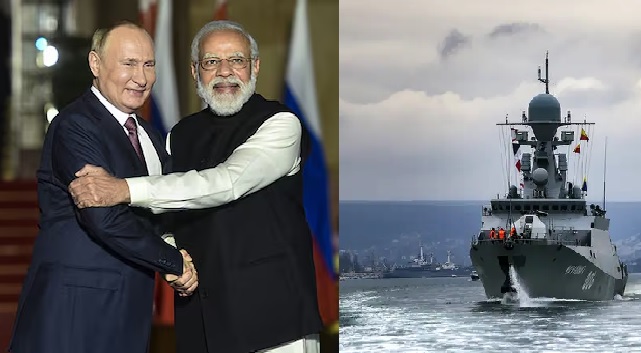
The testing campaign took place from INS Kavaratti (P31), a modern stealth ASW corvette of the Indian Navy’s Kamorta class. Over the course of the user evaluation, a total of 17 ERASR rockets were fired. Each trial assessed different mission profiles, fuze reliability, and overall weapon effectiveness. All performance parameters were reportedly met with full success.
These tests validate the rocket’s readiness for frontline naval deployment. The Navy is expected to proceed with full-scale induction in the coming months.
Indigenous Development Effort
The ERASR is the result of collaboration among several DRDO laboratories:
-
ARDE Pune (Armament Research and Development Establishment) – Lead developer
-
HEMRL Pune (High Energy Materials Research Laboratory) – Propulsion and energetic materials
-
NSTL Visakhapatnam (Naval Science and Technological Laboratory) – Warhead and systems integration
This achievement is a strong demonstration of India's growing ability to develop complex naval weapon systems in-house.
Industrial Production and Future Outlook
Production of the ERASR rocket will be carried out by:
-
Bharat Dynamics Limited (BDL), Hyderabad
-
Solar Defence & Aerospace Limited, Nagpur
This public-private production model ensures both scalability and participation of India’s private defence sector.
Defence Minister Rajnath Singh and DRDO Chairman Dr. Samir V. Kamat praised the successful trials and lauded the efforts of the DRDO scientists, naval engineers, and industrial partners for delivering a strategic capability within India’s growing arsenal.
Strategic Importance
Anti-submarine warfare has long been a critical domain for the Indian Navy, especially given the growing undersea threats in the Indian Ocean Region. The ERASR significantly enhances the Navy’s capacity to detect and neutralize enemy submarines at longer ranges—thereby offering tactical superiority.
By replacing imported systems with a fully indigenous solution, India not only reduces dependence on foreign technologies but also ensures adaptability and sustainability in future naval warfare scenarios.
With the successful completion of these trials, the ERASR is poised to become a key component of India’s naval combat system. Its upcoming induction will mark yet another leap forward in the country’s mission of “Aatmanirbharta” (self-reliance) in defence technologies.
✍️ This article is written by the team of The Defense News.