Indian Navy Receives ‘Taragiri’, the Third Nilgiri-Class Stealth Frigate from MDL
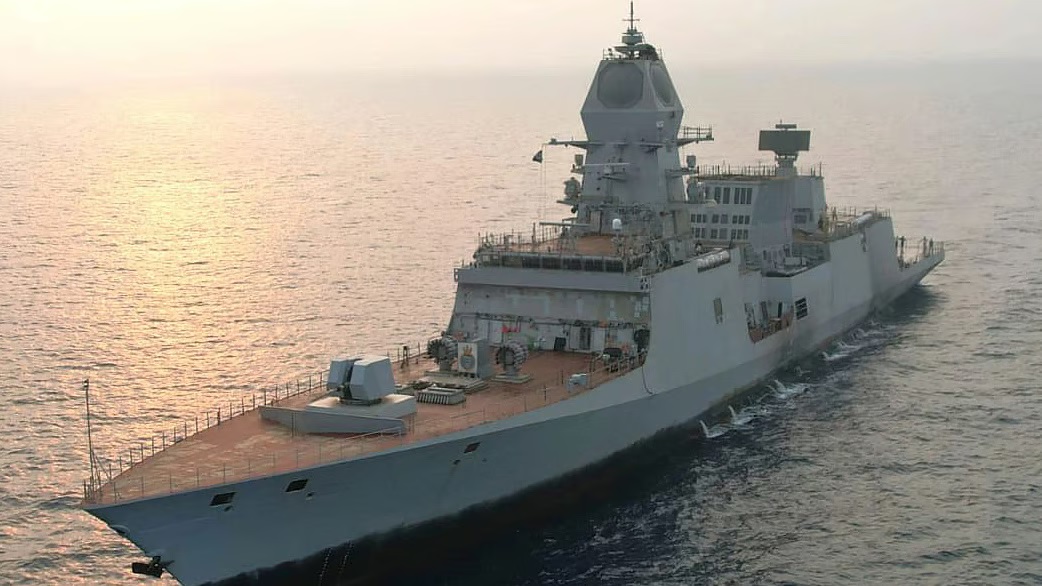
On 28 November 2025, The Indian Navy’s Nilgiri-class frigate programme reached another major milestone today as Mazagon Dock Shipbuilders Ltd. (MDL) handed over INS Taragiri, the third stealth frigate built by the Mumbai shipyard under Project 17A. The delivery marks a decisive step in India’s push to expand and modernise its surface combatant fleet with indigenously designed and constructed warships.
The moment Taragiri’s commissioning pennant was hoisted on MDL’s quayside, the Navy’s seven-ship Nilgiri-class plan moved firmly into its final phase. Designed by the Warship Design Bureau and built jointly by MDL and Garden Reach Shipbuilders & Engineers (GRSE), the class represents India’s most advanced generation of multi-role frigates, combining stealth shaping, next-generation weapons, and a high degree of automation.
A Programme of Seven: Four at MDL, Three at GRSE
Project 17A, approved in 2015 as the follow-on to the Shivalik-class frigates, set out to deliver seven next-generation stealth frigates for the Indian Navy. Under this plan, Mazagon Dock Shipbuilders Ltd. (MDL) is constructing four ships — Nilgiri, Udaygiri, Taragiri, and Mahendragiri — while Garden Reach Shipbuilders & Engineers (GRSE) in Kolkata is building the remaining three — Himgiri, Dunagiri, and Vindhyagiri.
With a total value of around ₹45,000 crore, Project 17A ranks among India’s most ambitious indigenous warship programmes. MDL’s share stands at more than ₹21,000 crore, and GRSE received its largest-ever surface-combatant order worth over ₹19,000 crore. Dividing the construction between the two shipyards not only eased the industrial load but also allowed faster build times, supported parallel production, and strengthened India’s growing expertise in modular shipbuilding.
Taragiri: A Modern Stealth Frigate
INS Taragiri carries the legacy of the earlier Leander-class frigate of the same name, but in form and capability, it is a completely new platform.
Built with high-strength indigenous DMR 249A steel, Taragiri features sharp angular surfaces and reduced acoustic and infrared signatures, representing the Navy’s latest thinking in surface combatant stealth technology. With a displacement of around 6,700 tonnes, a 149-metre hull, and accommodation for more than 220 personnel, the ship is configured for long deployments across the Indian Ocean Region.
Its propulsion system is a CODAG configuration, combining two GE LM2500+ gas turbines with diesel engines to allow sprint speeds of up to 28–32 knots and extended endurance for blue-water missions. This makes the ship suited for escort duties, carrier battle group operations, and independent missions in distant waters.
On the combat side, the ship fields a formidable mix of offensive and defensive systems. The Barak-8 long-range surface-to-air missile system, housed in a 32-cell VLS, forms its primary air-defence shield. For sea-strike roles, the ship is armed with eight BrahMos supersonic cruise missiles, giving it powerful anti-ship and land-attack capability. Anti-submarine warfare is handled by twin 324 mm torpedo tubes, RBU-6000 rocket launchers, and the Maareech torpedo defence suite. The ship’s sensors include the MF-STAR S-band AESA radar and a long-range air-surveillance system, along with the DRDO’s Shakti electronic warfare suite.
A large flight deck and hangar allow Taragiri to operate a multi-role helicopter, adding another dimension to its anti-submarine, surveillance, and targeting capabilities.
Building the Fleet: The Nilgiri-Class Timeline
With INS Taragiri now delivered, the Nilgiri-class programme is steadily shifting from construction to fleet integration. The class is moving through its final stages, with four ships already in the Navy’s hands and the remaining three progressing through trials and outfitting. Based on current records and official projections, the induction timeline of all seven frigates unfolds as follows.
At MDL, the lead ship INS Nilgiri became the first of the class to enter service. Laid down in December 2017 and launched in 2019, she was commissioned in January 2025 and now serves with the Eastern Naval Command. She was followed by INS Udaygiri, which entered the water in 2022 and was delivered in mid-2025 before being commissioned in August that year. With today’s handover of INS Taragiri, MDL’s third frigate moves into her pre-commissioning phase, with formal induction expected by the end of 2025. The final MDL-built ship, INS Mahendragiri, launched in September 2023 and is currently in the fitting-out stage, with commissioning anticipated around the first quarter of 2026.
Meanwhile in Kolkata, GRSE has already delivered its first ship, INS Himgiri, which was commissioned alongside Udaygiri in August 2025. The second GRSE-built frigate, INS Dunagiri, launched in 2022 and is preparing for trials, with induction expected in early 2026. The last ship of the class, INS Vindhyagiri, launched in August 2023, remains in advanced outfitting and is projected to join the fleet by the third quarter of 2026.
By the time Mahendragiri, Dunagiri, and Vindhyagiri complete their trials and enter service through 2026, the Indian Navy will field a full seven-ship Nilgiri-class squadron. Equipped with BrahMos, Barak-8 missiles, and cutting-edge sensors, the class will significantly expand India’s maritime reach, strengthen deterrence, and enhance the Navy’s ability to dominate key sea lanes across the Indian Ocean Region.
A Major Step for Indigenous Warship Construction
The Project 17A programme is widely seen as a technological and industrial leap for India. Both shipyards have used modular construction techniques, new outfitting infrastructure, and a supply chain of hundreds of Indian MSMEs to deliver the ships.
For MDL, Taragiri’s handover adds to an enviable track record of producing frontline warships including destroyers, submarines, and frigates. For GRSE, the P17A order has boosted its capacity to handle large combatants, ensuring readiness for future naval projects.
With Taragiri now joining the Navy’s modernisation drive, the Nilgiri-class is rapidly taking shape as the backbone of India’s next-generation surface fleet. Once all seven ships are in service, they will significantly strengthen the Navy’s ability to project power, defend sea lanes, and operate seamlessly across the Indian Ocean Region — an increasingly critical theatre for India’s maritime interests.
About the Author
Aditya Kumar:
Defense & Geopolitics Analyst
Aditya Kumar tracks military developments in South Asia, specializing in Indian missile technology and naval strategy.