Indian Minorities Foundation Rebukes USCIRF report for ‘Distorting’ India’s Religious Landscape
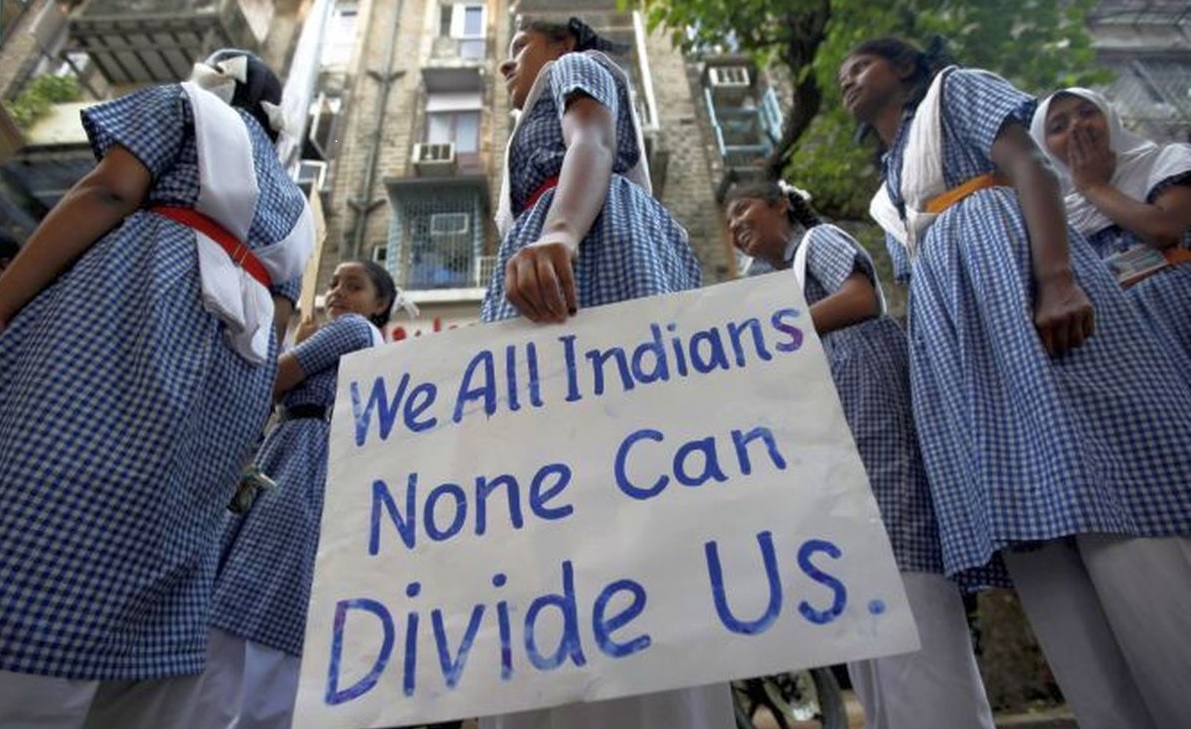
The Indian Minorities Foundation (IMF) has issued a strong condemnation of a report prepared by the United States Commission on International Religious Freedom (USCIRF). In a statement released on Thursday, the IMF emphasized that the USCIRF’s attempt to categorize India alongside authoritarian regimes such as Afghanistan, Cuba, North Korea, Russia, and China disregards and overlooks the country’s democratic structure, robust civil society, and rich pluralistic heritage.
“This mischaracterization undermines USCIRF’s credibility and understanding of India’s religious freedom landscape,” the statement said.
The IMF was particularly critical of the USCIRF’s attempt to designate India as a “country of particular concern (CPC)”. This designation, the IMF pointed out, has consistently failed to obtain the US State Department’s approval since 2020, highlighting what it described as the USCIRF’s ‘misdirected activism’.
In its latest report, the USCIRF has again raised concerns over religious freedom in India. However, the IMF argued that comparing India with non-democratic regimes reflects a fundamental misunderstanding of the country’s federal structure. Unlike authoritarian states, India’s federalism allows its states considerable autonomy in law enforcement, much like the American system.
The IMF’s statement emphasized that these flawed comparisons diminish the USCIRF’s credibility and fail to acknowledge India’s complex and nuanced reality. It also expressed puzzlement over comments made by US Secretary of State Antony Blinken, who spoke of an increase in anti-conversion laws despite no new such laws being passed during the report’s focus period. Additionally, Blinken’s reference to hate speech was seen as inconsistent, given the hateful rhetoric sometimes directed at India and its leaders from North America.
“This hateful speech includes instances that have glorified violence and celebrated the assassination of a former Prime Minister of India. It would appear perhaps that the line blurs between free speech and hate speech depending on the country of origin,” the IMF said.
The IMF also addressed the report’s unsubstantiated claims regarding the demolition of homes and places of worship belonging to minority communities. The foundation clarified that these incidents were related to illegal constructions rather than religious persecution.
Furthermore, the IMF criticized the USCIRF for being influenced by NGOs and activists affected by regulations unrelated to religion. By conflating the secular issue of foreign funding regulations with violence against minorities, the USCIRF report was seen as indirectly supporting foreign funding to NGOs in India.
Ironically, the report’s preamble dedicated a section to ‘malign foreign influence’, a concept that the IMF argued could equally apply to the USCIRF’s actions in support of foreign-funded NGO activism.
The IMF also took issue with the USCIRF’s characterization of the ethnic violence in Manipur, accusing the report of giving a communal twist by falsely labeling Meitis as Hindus and Kukis as Christians, thereby exacerbating ethnic tensions.
Two specific issues underscored the IMF’s argument that the USCIRF’s judgments on religious freedom disrespected India’s unity and territorial integrity. The first was the USCIRF’s comments on Kashmir in the context of Article 370. The IMF argued that the revocation of Article 370 aimed at integrating Jammu and Kashmir more closely with the rest of India, fostering economic development, and ensuring equal rights for all residents. This move, upheld by the Supreme Court, reflected its constitutionality and was a step towards restoring statehood with elections already in process.
The second issue concerned the Khalistani movement and the USCIRF’s adoption of the term “transnational repression,” a phrase used by Khalistan advocates. The IMF suggested that the USCIRF’s framing of the issue as one of religious freedom was misleading and unhelpful.
In conclusion, the IMF accused the USCIRF of disproportionately focusing on perceived negatives and ignoring the broader context of religious freedom and social harmony within India, the world’s largest democracy. The IMF warned that the USCIRF’s approach risks exacerbating tensions rather than fostering understanding and resolution.
✍️ This article is written by the team of The Defense News.