Indian Coast Guard to Commission 38 New Radar Stations Under Coastal Surveillance Network Phase II by Year-End
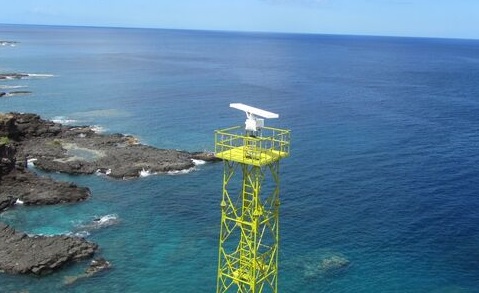
The Indian Coast Guard (ICG) is set to operationalise Phase II of its Coastal Surveillance Network (CSN), adding 38 new radar stations across the country’s coastline by the end of this year. The move marks a significant expansion of India’s maritime domain awareness and coastal security architecture, strengthening defences against threats ranging from terrorism and piracy to smuggling and illegal fishing.
The Coastal Surveillance Network project was launched after the 26/11 Mumbai terror attacks, when terrorists exploited gaps in coastal monitoring to enter Indian waters. Phase I of the project, completed earlier, established 46 radar stations covering key stretches of the western and eastern seaboards. With the addition of Phase II sites, the network will grow to 84 radar stations, providing near-continuous coverage along India’s 7,516-kilometre coastline, including island territories.
Each station will be equipped with radar, day-night cameras, and communication equipment, feeding real-time data to the National Command Control Communication and Intelligence (NC3I) network, headquartered in Gurugram. This data is further integrated with inputs from the Indian Navy, Marine Police, and other maritime agencies, creating a layered and coordinated surveillance mechanism.
Senior Coast Guard officials have confirmed that Phase II will focus on filling gaps in coverage along sensitive stretches, particularly around Lakshadweep, Andaman & Nicobar Islands, and the Odisha–West Bengal coast, while also adding redundancy to ensure uninterrupted monitoring in case of equipment failure.
The 38 new radar stations will be strategically located as follows:
-
Andaman & Nicobar Islands – 10 stations
-
Lakshadweep & Minicoy Islands – 6 stations
-
Eastern Coast (Odisha, Andhra Pradesh, Tamil Nadu, West Bengal) – 12 stations
-
Western Coast (Maharashtra, Goa, Gujarat, Kerala, Karnataka) – 10 stations
Officials say that once operational, the upgraded CSN will allow authorities to track vessels as small as fishing boats up to 25 nautical miles from shore, helping to detect suspicious movements at an early stage. The system will also be integrated with Automatic Identification System (AIS) data to monitor commercial shipping.
By the time Phase II is completed, the Indian Coast Guard will have a surveillance network capable of giving near-seamless visibility across the entire Indian Ocean coastline. Maritime experts note that such capability not only strengthens national security but also supports search and rescue missions, disaster response, and marine environment protection.
The expansion of the CSN is part of India’s larger effort to become a net security provider in the Indian Ocean Region (IOR). With rising Chinese naval activity and continued concerns over seaborne terrorism, the operationalisation of 38 new radar stations by year-end is expected to significantly boost India’s maritime security posture.
✍️ This article is written by the team of The Defense News.