Indian Army to Receive Starstreak Air Defence Missiles from Thales Soon
Title:
In a significant step to boost India’s short-range air defence capabilities, Thales is set to begin deliveries of its Starstreak Man-Portable Air Defence Systems (MANPADS) to the Indian Army in the coming weeks. The deal, confirmed earlier under the Indian government’s emergency procurement route, is aimed at filling immediate operational gaps amid growing concerns over aerial threats, especially from drones, helicopters, and low-flying aircraft.
Details of the Deal
The procurement is part of India's 4th tranche of emergency capital acquisitions approved in 2022 and 2023. Under this mechanism, the Indian Army was authorized to fast-track purchases of critical systems with a ceiling of ₹300 crore per deal, bypassing lengthy bureaucratic procedures. The Starstreak MANPADS deal, finalized with UK-based defence major Thales, is estimated to be worth over ₹200 crore (approx. $25 million), though official figures remain undisclosed due to security reasons.
Thales has reportedly completed testing and pre-shipment formalities, and initial deliveries are expected to begin before the end of 2025, with full induction planned within the following 12 months. Training for Indian Army personnel on the usage and maintenance of the system has already begun in select regiments.
Why Starstreak?
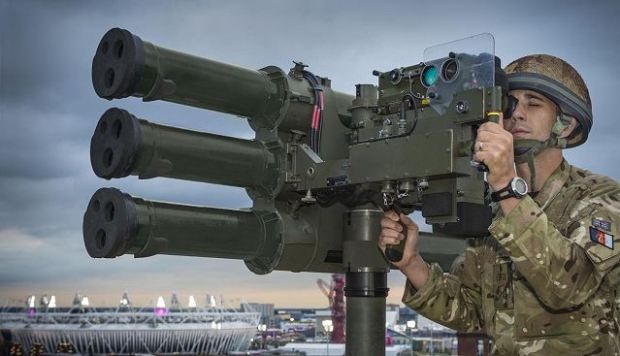
Starstreak is one of the fastest short-range surface-to-air missile systems in the world, with missiles flying at over Mach 3 (three times the speed of sound). It employs a unique design—three dart-like projectiles launched from a single missile that are guided by a laser beam. Unlike traditional infrared-guided missiles, Starstreak is extremely resistant to countermeasures such as flares and electronic jamming.
Key features include:
-
Effective range: Up to 7 km
-
Target set: Fast jets, attack helicopters, drones
-
Guidance: Laser beam-riding, eliminating the risk of jamming
-
Speed: > Mach 3, making it one of the fastest interceptors in its class
The system can be shoulder-fired by a single operator or launched from a lightweight multiple launcher (LML) tripod platform, giving it tactical versatility across mountain and desert terrain.
Strategic Importance
India has been seeking to modernize its Very Short Range Air Defence (VSHORAD) systems for over a decade. Most of the Indian Army's inventory still relies on legacy Soviet-origin Igla-M systems. The delayed indigenous VSHORAD program by DRDO and HAL’s SAMHO are still under development, leading to multiple emergency procurements in the interim.
In recent years, India has also procured Igla-S systems from Russia and tested Israeli Spyder-SR systems. However, Starstreak stands out for its speed, resistance to jamming, and effectiveness against small, fast-moving aerial targets—a critical need given the rising drone incursions on both western and northern borders.
Indo-UK Defence Cooperation
The Starstreak deal further strengthens the growing defence partnership between India and the UK. Thales, which has a longstanding footprint in India, has expressed interest in local manufacturing and technology transfer under the Make in India initiative. There have been discussions around co-producing Starstreak systems or certain components, potentially in collaboration with Bharat Dynamics Limited (BDL) or other DPSUs.
The induction of Starstreak MANPADS comes at a crucial time when the nature of aerial threats is evolving rapidly. From drone swarms to low-flying cruise missiles, short-range air defence is now a frontline capability. Thales' Starstreak will provide the Indian Army with a potent and modern weapon system to counter these threats effectively—offering speed, accuracy, and survivability in complex combat environments.
This marks not only a tactical upgrade but also a strategic shift in how India is approaching rapid procurement and modern battlefield readiness.
✍️ This article is written by the team of The Defense News.