Indian Army Unveils SapperScout 2.0 , A Next-Generation UGV for High-Risk Battlefield Missions
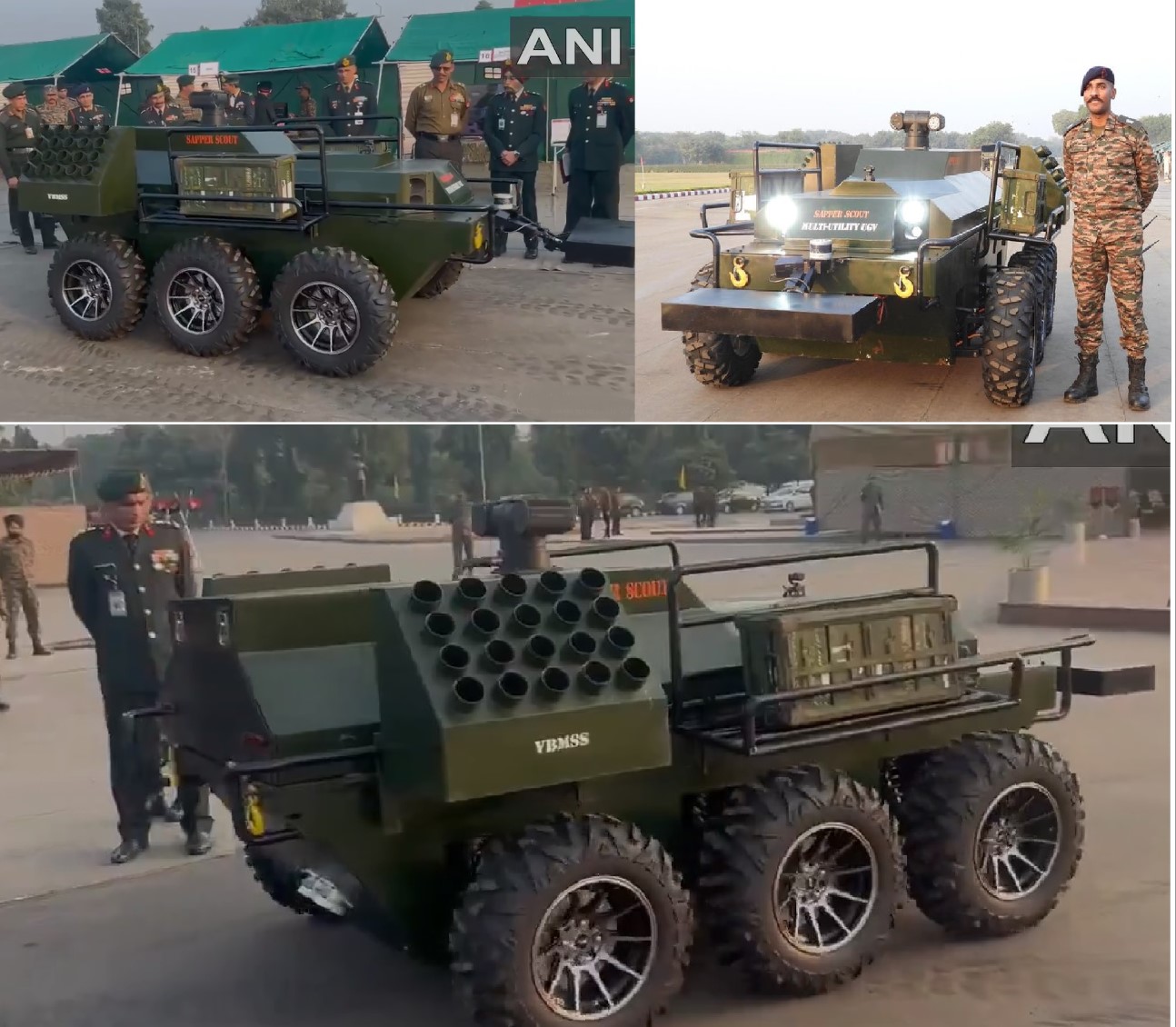
In a significant boost to India’s combat engineering and ground operations capability, the Indian Army—working in collaboration with Bharat Electronics Limited (BEL)—has introduced the SapperScout 2.0, an Advanced Unmanned Ground Vehicle (UGV) designed to take on some of the most dangerous battlefield tasks while keeping soldiers out of harm’s way. The platform represents a major leap in the Army’s push toward autonomous and robotic systems for modern warfare.
A UGV Built for the Most Dangerous Missions
According to early disclosures, SapperScout 2.0 has been engineered primarily for combat engineering, infantry support and operations in hazardous zones where deploying soldiers risks heavy casualties. Its modular, rugged design enables the system to handle multiple mission profiles across terrains that would otherwise be inaccessible or too dangerous for humans.
The Army highlights that the UGV is intended to reduce risk to sappers, increase operational mobility, and automate numerous high-risk engineering and reconnaissance activities.
Mission Roles and Capabilities
SapperScout 2.0 has been built with a wide mission envelope and multi-role flexibility:
-
Mine Detection & Explosive Hazard Identification using GPR, metal detectors and multi-sensor fusion
-
Payload Carriage, including ammunition, sensors, supplies or mine-laying equipment
-
Combat Reconnaissance & ISR with real-time visual intelligence for battlefield commanders
-
Mine Scattering, enabling safe and controlled deployment of mines
-
Casualty Evacuation, transporting wounded personnel from high-threat zones
-
Perimeter Security, including surveillance and intrusion alerts
-
Weaponized or Counter-UAS Variants, supported by plug-and-play modular payloads
Defence officials note that the robotics platform can be adapted for border security, urban warfare, counter-terrorism operations, and humanitarian disaster rescues.
Rugged 6×6 All-Terrain Mobility
The SapperScout 2.0 is built on a 6×6 independent-drive platform with articulated suspension, ensuring that all wheels maintain ground contact even over rocks, rubble, or uneven slopes. High-torque electric motors allow the UGV to climb obstacles and negotiate debris, making it suitable for deserts, high-altitude mountains, semi-urban rubble and muddy fields.
Its 100–250 kg payload class allows the system to transport mines, medical stretchers, heavy supplies or detachable weapon modules.
Advanced Control & Autonomy
The UGV supports multiple levels of control:
-
Remote Teleoperation, providing safe standoff distance for operators
-
Semi-Autonomous Waypoint Navigation, where the vehicle follows preset routes
-
Environmental Sensing, powered by LIDAR, stereo cameras and ultrasonic sensors
These features enable the system to autonomously avoid obstacles, scan terrain and perform pre-programmed engineering tasks.
Sensor Suite for High-Risk Detection
The SapperScout 2.0 is equipped with a sophisticated sensor pack tailored for engineering roles:
-
Ground Penetrating Radar (GPR)
-
Metal Detection Units
-
Multi-Sensor Fusion System for buried object detection
-
Pan-Tilt EO/IR Camera Turret
-
Thermal Imagers for Night Operations
-
360° Situational Awareness Cameras
-
Encrypted Live Video Relay for commanders and control stations
These sensors make it one of the most capable mine and hazard detection UGVs in the region.
Additional Details: A Step Toward Indigenous Battlefield Robotics
Defence industry sources indicate that the SapperScout 2.0 is part of a broader push toward swarm-enabled, autonomous ground systems, which the Indian Army plans to integrate into future infantry and engineering battalions.
BEL is reportedly exploring:
-
AI-based target recognition
-
Improved battery endurance and hybrid power systems
-
Integration of loitering munitions or anti-drone jammers
-
Network-centric connectivity with battlefield command systems
Trials for ruggedization, endurance and electromagnetic hardening are expected to continue through 2026, after which the UGV could move toward limited-series production.
A New Era for Indian Combat Engineers
The SapperScout 2.0 marks a major milestone in the Army’s adoption of unmanned technologies. With its robust design and broad mission range, it promises to enhance operational safety, speed and precision—particularly in minefields, urban combat and counter-insurgency environments.
Defence analysts say the platform positions India among countries developing indigenous, modular UGVs capable of performing complex engineering and combat-support operations without risking soldiers’ lives.
About the Author
Aditya Kumar:
Defense & Geopolitics Analyst
Aditya Kumar tracks military developments in South Asia, specializing in Indian missile technology and naval strategy.