Indian Army Tests Robotic Dogs at Pokhran: A New Era of Border Surveillance and Combat Readiness
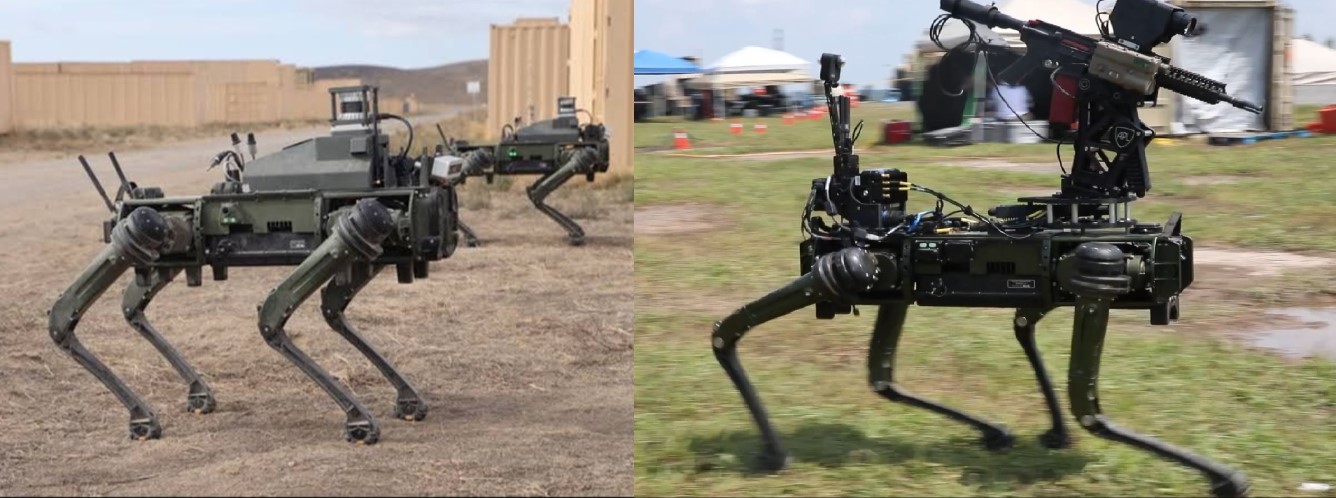
In a bold step towards modernizing its operational capabilities, the Indian Army recently conducted rigorous trials of robotic dogs, formally known as Multi-Utility Legged Equipment (MULE), at the Pokhran Field Firing Range in Jaisalmer. These advanced machines, designed to navigate diverse terrains and support soldiers in high-stress scenarios, signal a significant technological leap in the Army’s defense strategies, particularly along the country’s borders.
The trials, which ran from November 14 to 21, 2024, saw the participation of over 50 soldiers from the Battle Axe Division and 10 robotic dogs. This elite division, recognized for its strategic importance in forward operational areas, collaborated with these robotic systems to test their effectiveness in combat and logistical scenarios. The exercises were conducted in harsh desert conditions to evaluate the MULEs' versatility and endurance.
Technological Capabilities of Robotic Dogs
The MULEs are engineered with cutting-edge features that make them indispensable for modern military operations:
- Thermal Imaging and High-Resolution Cameras: These allow the robotic dogs to perform surveillance and reconnaissance even in low-light or obscured visibility conditions. This capability enhances nighttime operations, giving soldiers an edge in critical situations.
- Electro-Optical Systems and Radar Integration: These systems facilitate the detection of hidden threats and enable the monitoring of enemy movements, ensuring safety and strategic advantages.
- Payload Capacity: With the ability to carry up to 12 kilograms, these robotic systems can transport essential equipment or small arms, reducing the logistical burden on soldiers.
- Extended Range and Battery Life: The robots can operate for over 10 hours after just a one-hour charge and can be controlled from distances of up to 10 kilometers.
During the exercises, the robotic dogs demonstrated their ability to detect enemy positions using mounted cameras, transport weapons, and conduct surveillance over vast areas. These capabilities were particularly emphasized during tasks simulating challenging scenarios in mountainous terrains and forward desert posts.
Enhancing Safety and Efficiency
One of the primary objectives of these trials was to integrate human soldiers with robotic systems, aiming to boost operational efficiency while minimizing risks. The MULEs proved invaluable in scouting potentially dangerous areas, thus protecting soldiers from direct exposure to hostile environments. Their ability to function autonomously or under remote control ensures flexibility in adapting to varying battlefield conditions.
Real-Time Applications and Future Deployment
The successful testing of robotic dogs at Pokhran underscores the Army's commitment to embracing advanced technology for operational readiness. Plans are already underway to deploy these robotic units along India's borders, particularly in areas with difficult terrains where traditional methods of surveillance and logistics are less effective.
In parallel with robotic dogs, the Army is also experimenting with logistics drones to improve supply chain efficiency in high-altitude and remote regions. This dual approach showcases the Army's dedication to creating a tech-forward defense ecosystem.
A Step Towards Modern Warfare
The integration of MULEs aligns with global trends in military modernization, where robotics and automation play a critical role in enhancing combat capabilities. By reducing the reliance on human soldiers for high-risk missions and ensuring real-time intelligence, these robotic systems act as force multipliers, enabling the Army to tackle threats with greater precision and safety.
As the Indian Army prepares to deploy these advanced systems on its borders, the trials at Pokhran mark a pivotal moment in the evolution of its operational strategy. This move not only strengthens national security but also places India at the forefront of military innovation.
✍️ This article is written by the team of The Defense News.