Indian Army Successfully Tests Akash Prime Missile at 15,000 Feet in Ladakh, Hits Moving Targets
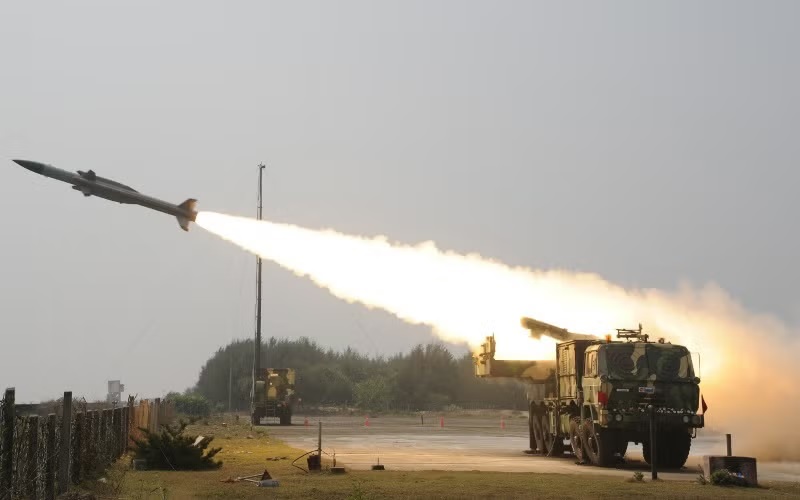
The Indian Army has successfully conducted high-altitude trials of the Akash Prime surface-to-air missile system in the Ladakh sector. The test was carried out at a height of over 15,000 feet, showcasing the missile's effectiveness in challenging terrain and thin air conditions.
According to defence officials, the test was conducted by the Army Air Defence Corps along with senior scientists from the Defence Research and Development Organisation (DRDO). During the trial, the Akash Prime missile scored two direct hits on fast and manoeuvring aerial targets, proving its precision and agility in a high-altitude environment.
Officials stated that “The Akash Prime system demonstrated its operational readiness by scoring two direct hits against fast, manoeuvring target aircraft under difficult high-altitude conditions.”
What is Akash Prime?
Akash Prime is an upgraded version of the original Akash missile system. It is designed to better detect and destroy aerial threats like fighter jets, drones, and helicopters, even under extreme weather or terrain conditions. The missile comes with an improved seeker, allowing it to lock onto targets with greater accuracy, especially in difficult environments like high-altitude zones or deserts.
It uses command guidance and a phased array radar system to track and guide the missile until it hits the target. The system can work independently or as part of a group, making it flexible for different combat situations.
Proven in Combat: Operation Sindoor
The Akash Prime system has already been tested under real battlefield conditions. During Operation Sindoor, which took place on the night of May 8–9, the Indian Army used it to successfully counter a wave of drone attacks and ceasefire violations by Pakistan along the Western border and the Line of Control (LoC) in Jammu and Kashmir.
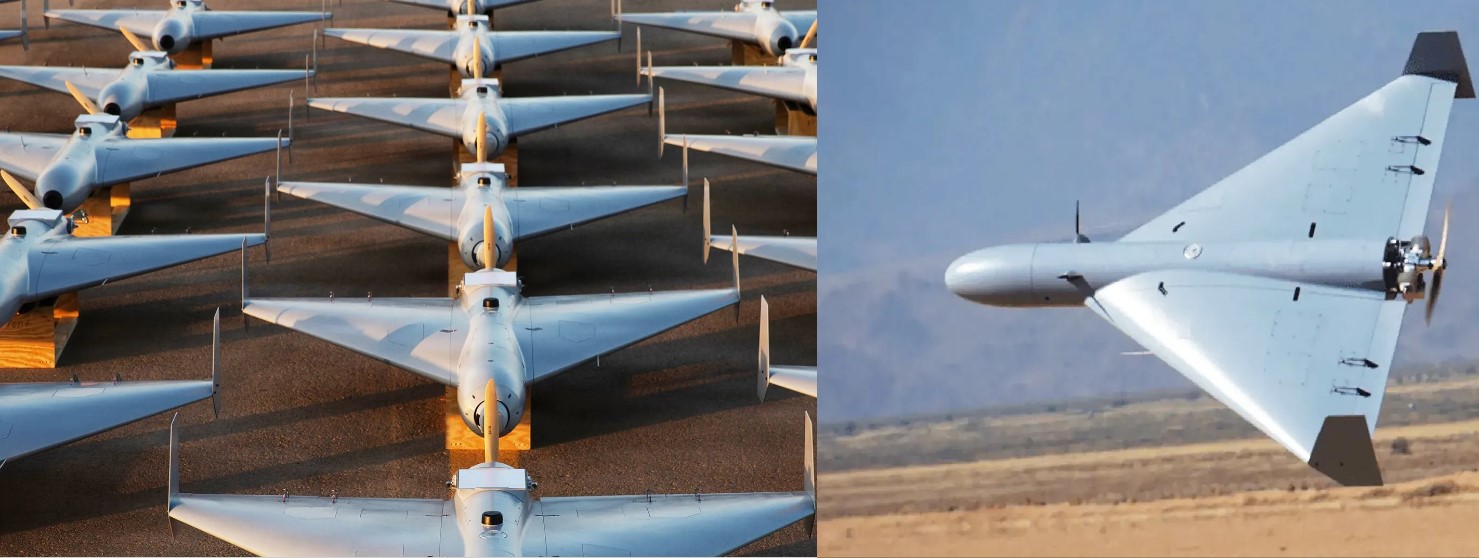
According to Army sources, more than 50 Pakistani drones were shot down during this large-scale operation. These included Chinese-origin aircraft and Turkish-made drones used by Pakistani forces. The Indian Armed Forces also managed to repel coordinated attacks on multiple military installations across northern and western India during the same period.
In retaliation, Indian forces neutralised an Air Defence system in Lahore, showcasing the strategic effectiveness of India's air defence assets.
Part of a Bigger Plan
The success of Akash Prime in Ladakh is part of a larger plan by the Indian Army to strengthen its layered air defence network. Officials confirmed that the third and fourth regiments of the Akash system are likely to be formed using the Akash Prime variant.
This development also aligns with India’s commitment to Aatmanirbhar Bharat (self-reliant India) in defence production. The Akash Prime, developed entirely within India, is a key symbol of how Indian technology is now capable of meeting modern battlefield needs.
Why It Matters
-
High-altitude success: Testing at 15,000 feet proves the system can operate in Himalayan battle zones.
-
Combat-ready: Already deployed in real conflict situations.
-
Indigenous tech: Fully developed in India by DRDO, supporting domestic defence manufacturing.
-
Flexible operations: Can be used independently or in networked mode, day or night.
With this successful test, India has taken another confident step in securing its skies and building a robust air defence shield, especially in sensitive border regions like Ladakh.
✍️ This article is written by the team of The Defense News.