Indian Army Signs ₹168 Crore Deal For First HAPS UAV To Keep 24/7 Watch On Pakistan Airbases
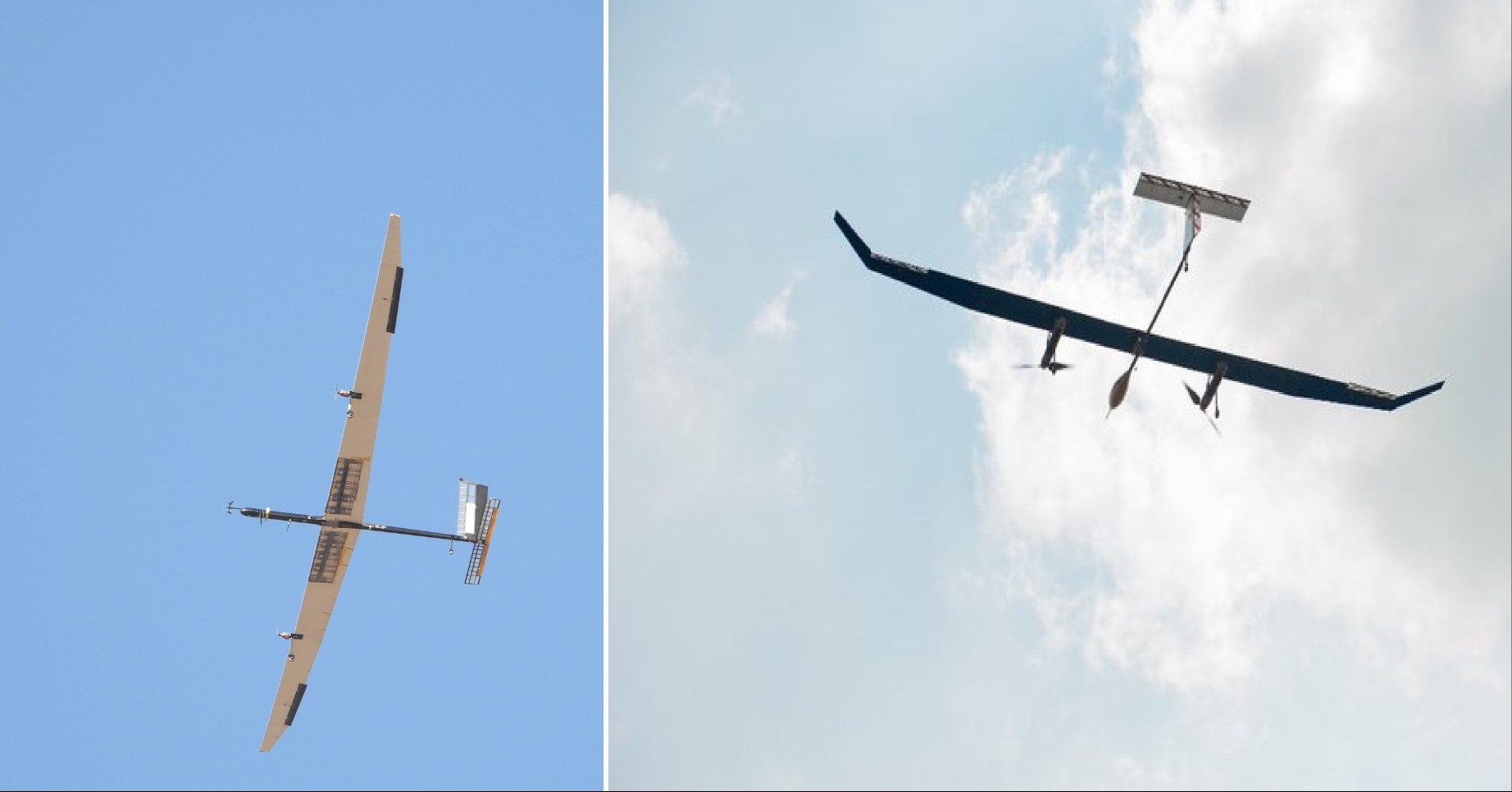
NEW DELHI : In a transformative shift for India’s border surveillance capabilities, the Indian Army has signed a landmark ₹168 crore ($20 Million) contract with Bengaluru-based defense pioneer NewSpace Research & Technologies (NRT). The deal marks the first-ever procurement of High Altitude Pseudo Satellite (HAPS) technology—specifically the Medium Altitude Persistent Surveillance System (MAPSS)—capable of remaining airborne for days without refueling.
The procurement, executed under the Ministry of Defence’s iDEX (Innovations for Defence Excellence) initiative, introduces a new era of "stratospheric warfare" where solar-powered sentinels will provide a permanent "eye in the sky" over India’s western frontier.
Strategic Advantage: "No Hiding Place" for Adversaries
Defense sources indicate that the primary operational mandate for these solar-powered platforms is to maintain an unbroken vigil over the Punjab and Sindh sectors. Unlike traditional satellites, which have predictable orbit gaps, or standard drones that must return for fuel, the NRT HAPS/MAPSS can "park" over a specific region for extended durations.
"This capability effectively removes the 'fog of war' for our planners," a senior defense official stated. "We will now possess the ability to detect every single takeoff and landing from critical Pakistani airbases instantly. Whether it is a fighter jet scrambling from Sargodha or a transport aircraft lifting off from Karachi, the data will be available to Indian command centers in real-time."
This persistent stare capability is expected to neutralize the element of surprise often relied upon by adversaries, allowing the Indian Air Force (IAF) and Army to counter-mobilize before an enemy aircraft even crosses the border.
Technical Specifications: The NRT Solar Platform
Developed indigenously by NewSpace Research & Technologies, the platform represents a leap in aerospace engineering. While often termed a "drone," its operational profile is closer to a low-orbit satellite.
-
Platform Name: MAPSS (Medium Altitude Persistent Surveillance System) – A tactical derivative of the HAPS program.
-
Propulsion: Fully Electric, Solar-Powered (Day/Night Cycle capable).
-
Endurance: 48+ hours to several days (Current Block); Future strategic versions aim for 90-day endurance.
-
Operational Altitude: 60,000 ft – 65,000 ft. The aircraft flies above most weather systems and conventional short-range air defense envelopes.
-
Stealth Features:
-
Acoustic: Near-silent operation due to electric motors.
-
Thermal: Negligible heat signature compared to jet engines, making it invisible to heat-seeking missiles.
-
Radar: Built with composite materials offering an extremely low Radar Cross Section (RCS).
-
-
Payloads: Advanced Synthetic Aperture Radar (SAR), Electro-Optical/Infra-Red (EO/IR) sensors, and Electronic Intelligence (ELINT) suites to intercept enemy communication.
Post-Operation Sindoor Reality
The urgency for such technology was reportedly driven by lessons learned during Operation Sindoor (mid-2025), where the need for continuous, deep-penetration surveillance without risking manned aircraft became apparent. The solar UAVs fill the critical gap between space-based satellites and conventional MALE (Medium Altitude Long Endurance) drones like the Heron or Reaper.
A "Swarm" in the Stratosphere
This ₹168 crore contract is viewed as a validation order. Sources confirm that the Indian Armed Forces have a combined roadmap (IAF and Army) to eventually induct over 50 such platforms.
This proposed fleet would create a "mesh network" in the sky—a data-sharing web where multiple solar drones communicate with each other to track moving targets across hundreds of kilometers.
"NewSpace Research has demonstrated that Indian R&D can beat global timelines," said an industry observer. "Deploying a solar-powered asset that can stay aloft for days was once the domain of NASA or Airbus. Now, it is an operational reality for the Indian Army."
Deliveries of the first systems are expected to commence within the next 12 months, with immediate deployment planned for the high-altitude deserts of Ladakh and the plains of Rajasthan.
About the Author
Aditya Kumar:
Defense & Geopolitics Analyst
Aditya Kumar tracks military developments in South Asia, specializing in Indian missile technology and naval strategy.