Indian Army Releases RFI for 20 Tactical UAVs Under Make-in-India Framework
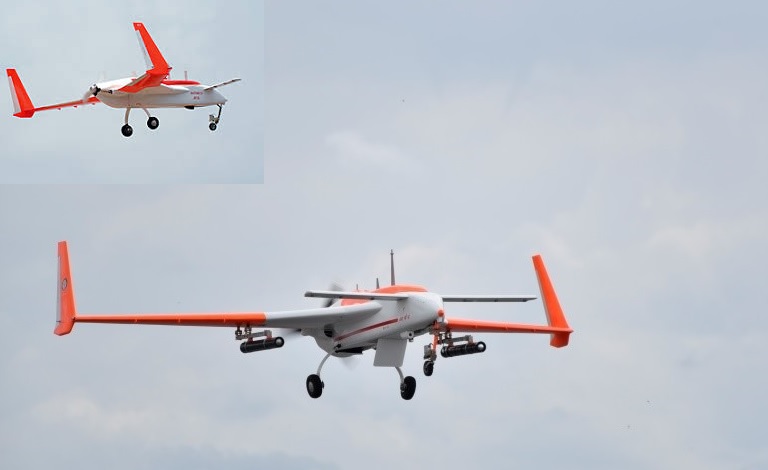
The Indian Army has issued a Request for Information (RFI) to begin procurement of 20 Tactical Remotely Piloted Aircrafts (RPAs)—10 units for operations in the plains and 10 units for high-altitude / mountainous sectors—signalling a fresh push to expand day-night, all-terrain ISR coverage with indigenous platforms. The RFI framework places the requirement in the “Make in India” and Atmanirbhar Bharat spirit, while noting that the exact MAKE category for the buy will be decided later in the process.
What the RFI Says the Army Wants
According to details reported from the RFI, the tactical RPAs are expected to remain operational by day and by night, and function across “commonly encountered” weather conditions in Indian terrain sets—from plains to high mountains. The RFI also lays out demanding environmental thresholds, including the ability to operate in strong winds of up to 60 kt in high-altitude areas and 30 kt in plains, withstand rainfall of up to 20 mm per hour, and tolerate gusts of up to 10 kt during take-off and landing, with operations also expected within non-thunderous clouds.
A central theme is modularity. The RFI emphasises a modular and scalable design to support future upgrades with minimal modifications, without degrading performance of any system or sub-system. It also calls for the platform to fly with at least two different payload types simultaneously, indicating that the Army is looking for a multi-mission “one airframe, many sensors” approach rather than single-role drones.
On payloads, the RFI’s “shopping list” spans advanced surveillance and electronic-intelligence roles, referencing packages such as EO/IR cameras, COMINT, ELINT, SAR, FOPEN radar, and communication relay payloads—suggesting the Army is designing requirements not only for imaging, but also for communications and signals-domain awareness.
Why 800 kg MTOW Matters
The Army’s stated requirement band—up to 800 kg MTOW—sits in a tactical “sweet spot”: large enough to carry meaningful multi-sensor payloads and stay aloft for longer periods, but still smaller and more deployable than MALE-class systems that demand larger infrastructure and higher lifecycle costs. This weight class also aligns with the Army’s stated emphasis on mobility and reduced dependence on fixed runways, as highlighted in reporting around the RFI.
How This Fits Into the Army’s Larger Drone Expansion
The RFI emerges as the Army continues to formalise drones as a routine combat support layer across units. Reporting tied to the same procurement push notes the Army has raised 380 dedicated ASHNI platoons for drone operations, with each platoon comprising 20 trained soldiers, alongside a broader force structure that includes 380 infantry units (excluding Para/Para SF battalions). In that context, a 20-unit tactical RPA induction could be positioned as a higher-capability surveillance tier meant to complement smaller quadcopters/FPV drones and loitering systems already proliferating at unit level.
What Happens Next
The stated purpose of the RFI is to help finalise Services Qualitative Requirements (SQRs), identify probable Indian vendors, and decide the eventual procurement category under the Make framework. With the Army explicitly splitting the buy into 10 plains and 10 high-altitude systems, the eventual selection will likely hinge on which platform can prove stable performance under the RFI’s harsh wind and weather thresholds, while carrying two payload types together and retaining growth headroom for future upgrades
✍️ This article is written by the team of The Defense News.