Indian Army Nears World-First Induction of Ramjet-Powered Artillery Shells with 100-km Reach
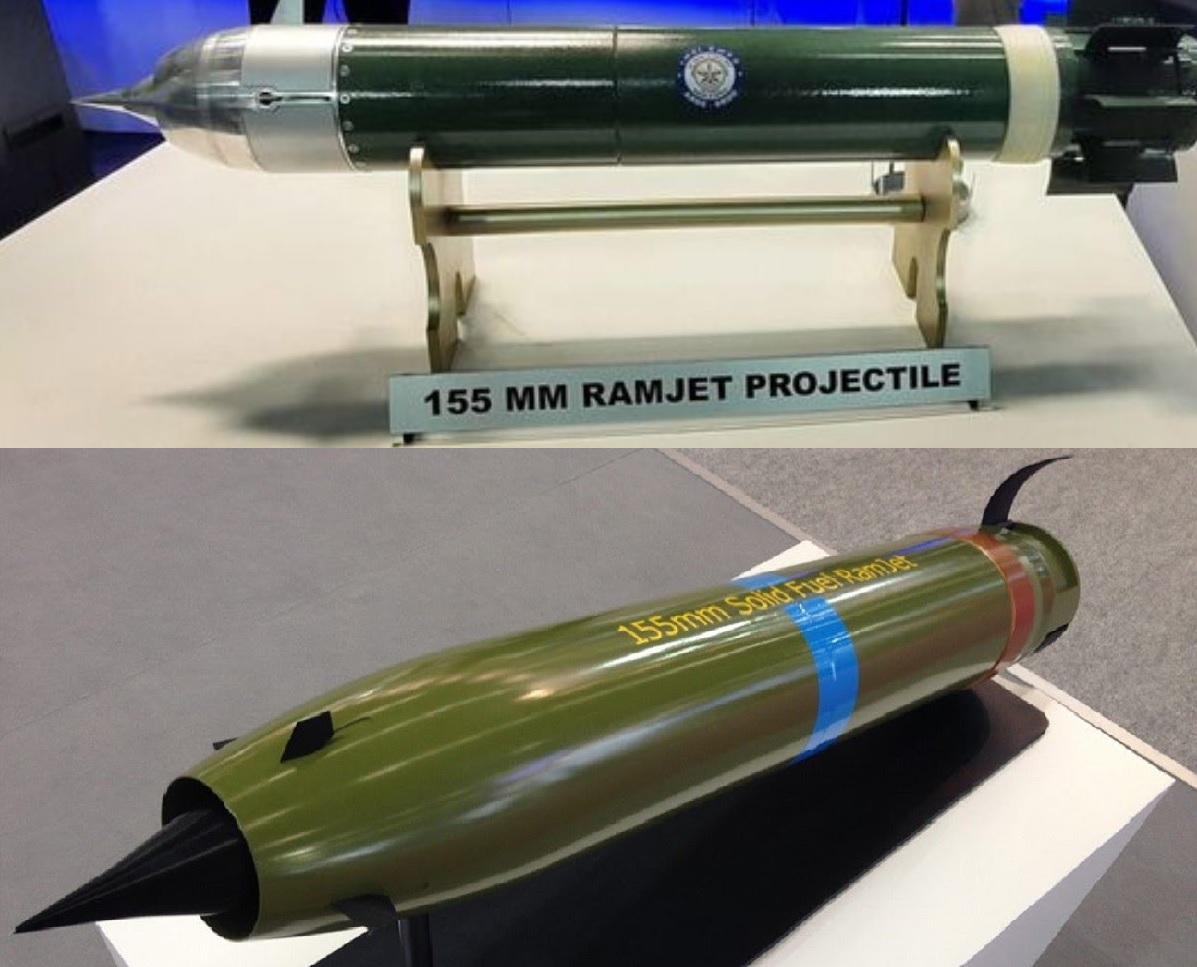
New Delhi : The Indian Army is on the cusp of a global breakthrough in artillery technology, with ramjet-powered 155 mm artillery shells emerging from developmental trials that could soon see India become the first military in the world to induct this advanced munition into service. The initiative underscores India’s drive for defence self-reliance and modernisation amid evolving security challenges.
A Leap in Artillery Capability
The ramjet-powered 155 mm shells, developed in collaboration with Indian Institute of Technology Madras (IIT Madras) under the aegis of the Army Technology Board, represent a significant enhancement over conventional artillery ammunition. Unlike standard shells that follow a purely ballistic path after muzzle exit, ramjet artillery continues to produce thrust during flight, enabling it to travel much farther while maintaining speed and impact lethality.
In ramjet propulsion, the shell is fired from a gun to supersonic speeds (around Mach 2). Once moving at this velocity, ambient air is compressed through an inlet and mixed with onboard fuel, generating continuous thrust without the need for compressors or turbines — a technique traditionally used in missiles but now being adapted to gun-launched rounds.
Successful Trials and Continued Refinement
Developmental firing tests have been carried out at the Pokhran Field Firing Ranges in Rajasthan, where the ramjet-assisted shells demonstrated promising performance. While these initial tests have been successful, officials confirm that the system remains in the development and optimisation phase, with key technical challenges such as combustion stability, air intake efficiency and maintaining sustained thrust under extreme gun-launch conditions still being refined before user trials and formal induction.
The design philosophy behind the shell emphasises retrofittability: the ramjet propulsion unit can be added to existing 155 mm shells, allowing integration with the Army’s current artillery catalogue without requiring a new calibre or dedicated platform. This makes it compatible with a range of guns such as the M777 ultra-light howitzer, Dhanush, ATAGS and the K9 Vajra-T systems already in service.
Expected Performance and Variants
While exact figures are still under validation, initial operational versions are expected to achieve ranges of approximately 60–80 km, a significant improvement over conventional 155 mm rounds. Future variants with advanced optimisation could exceed 100 km, giving Indian artillery a deep-strike capability previously associated only with rocket and missile systems.
Strategic Significance in Modern Warfare
Artillery remains a core component of battlefield firepower, with the 155 mm calibre serving as the backbone of medium artillery in modern armies. The induction of ramjet-powered shells will dramatically extend the reach of tube artillery, enabling longer-range strikes deep into adversary territory, quicker response times and enhanced counter-battery effectiveness. This is particularly relevant in the context of India’s strategic environment, where extended range and rapid precision fires are critical along contested frontiers with Pakistan and China.
In contrast to rockets and guided missiles, these shells can be launched from standard field guns, offering speed of deployment, logistical simplicity and interoperability with existing assets. Combined with other modernisation efforts — including precision guidance kits and improved fire-control systems — ramjet artillery could reshape artillery tactics and doctrine in the decades ahead.
Indigenous Innovation and Global Impact
The project aligns with the Indian government’s Atmanirbharta (self-reliance) initiative, highlighting collaboration between academic institutions and the armed forces to push the boundaries of indigenous defence technology. If inducted, India will join a select group of nations globally developing extended-range artillery but stand alone in operationalising ramjet propulsion in 155 mm ammunition.
Defense analysts suggest that the successful deployment of such rounds could redefine global artillery capabilities, influencing how major armies conceptualise medium-calibre firepower and challenging traditional distinctions between tube artillery and rocket/missile systems.
As the Indian Army continues to refine this technology, the world watches a new chapter in artillery evolution — one that could see India at its forefront.
About the Author
Aditya Kumar:
Defense & Geopolitics Analyst
Aditya Kumar tracks military developments in South Asia, specializing in Indian missile technology and naval strategy.