India to Get New Russian-Designed Nuclear Plant Using VVER-1200 Technology
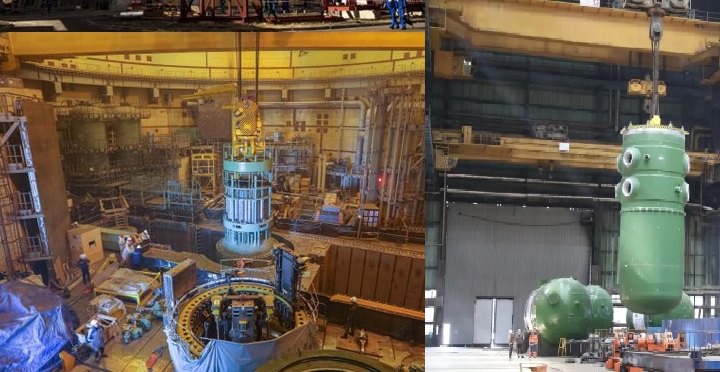
In a significant boost to Indo-Russian strategic cooperation, Russia is developing the technical specifications for a new nuclear power plant in India that will be powered by VVER-1200 reactors, one of the most advanced nuclear technologies currently in commercial operation. The move underscores both nations’ commitment to expanding clean, reliable, and high-capacity nuclear energy as a cornerstone of their long-term energy partnership.
Indo-Russian Nuclear Collaboration
Officials from Rosatom, Russia’s state nuclear corporation, confirmed that discussions are underway with India’s Department of Atomic Energy (DAE) to finalize the framework for the new project. The upcoming power plant, expected to feature VVER-1200 Generation III+ reactors, will mark a major technological upgrade over the VVER-1000 units currently operational at the Kudankulam Nuclear Power Plant (KNPP) in Tamil Nadu.
This collaboration represents a natural progression of decades-long cooperation between the two countries in the field of civil nuclear energy. Kudankulam’s first two units (1,000 MW each) are already supplying power to the Indian grid, while four more units are in various stages of construction. The new plant, featuring the VVER-1200, could either form an extension of Kudankulam or be established as a separate site altogether.
What is the VVER-1200?
The VVER-1200 (Water-Water Energetic Reactor) is Russia’s flagship Generation III+ pressurized water reactor (PWR) and one of the most advanced civilian nuclear reactors currently deployed worldwide. It represents an evolution of the proven VVER-1000 design but incorporates significant upgrades in safety, efficiency, and operational lifespan.
Developed under the AES-2006 project by Rosatom, the VVER-1200 delivers 1,200 megawatts of electric power (MWe) — a 20% increase over its predecessor — while operating with enhanced thermal efficiency and reduced fuel consumption.
Key Features and Specialties
The VVER-1200 has been designed to meet the highest international safety standards, with a special focus on passive safety mechanisms that can function even in the event of a complete power failure. Its key specialties include:
-
Passive Cooling Systems: The reactor can automatically remove residual heat from the core without operator intervention or external power for up to 72 hours, a feature designed after lessons from incidents such as Fukushima.
-
Core Catcher Technology: A built-in device that safely contains molten core material in the unlikely event of a core meltdown.
-
Double Containment Structure: Enhanced resistance to both external impacts (such as aircraft crashes) and internal overpressure.
-
Seismic and Environmental Safety: Designed to withstand earthquakes up to magnitude 8 and adapted for various climatic conditions.
-
Extended Lifespan: Operational life of up to 60 years, extendable to 80 years with mid-life upgrades.
-
Load-Following Capability: The VVER-1200 can adjust its output to meet grid demands, enabling it to work in tandem with renewable sources like solar and wind.
How It Differs from the Older VVER-1000
The VVER-1200 represents a generational leap forward from the VVER-1000 reactors used at Kudankulam. While both belong to the same family of Russian pressurized water reactors, the new model offers a range of technical and operational advantages:
| Feature | VVER-1000 | VVER-1200 |
|---|---|---|
| Electrical Output | 1,000 MWe | 1,200 MWe |
| Reactor Type | Gen III | Gen III+ |
| Safety Systems | Active (requires power) | Passive & Active (self-operating) |
| Operational Life | 40 years | 60–80 years |
| Thermal Efficiency | ~32% | ~37% |
| Manpower Requirement | High | 30% lower |
| Accident Tolerance | Limited | Designed to handle extreme scenarios |
In essence, the VVER-1200 combines Russian reactor reliability with cutting-edge automation and safety redundancy, making it one of the most mature Generation III+ designs currently in global operation — alongside Western systems like France’s EPR and the U.S. AP1000.
Global Success and Operational Record
Rosatom has already deployed VVER-1200 units in several countries, including Belarus, Turkey, China, Bangladesh, and Egypt. The design has accumulated over 100 reactor-years of safe operation. Plants like Novovoronezh-II and Leningrad-II in Russia have demonstrated strong performance records, with average availability factors exceeding 90%.
The VVER-1200 is also the first Russian reactor to fully comply with the IAEA’s Generation III+ safety requirements, giving it a strong position in global export markets.
Strategic and Economic Significance for India
For India, adopting the VVER-1200 design offers multiple strategic advantages:
-
Higher Power Output: Each unit will add around 1.2 GW of base-load capacity, significantly increasing India’s clean energy portfolio.
-
Technology Transfer & Localisation: The new deal is expected to expand domestic manufacturing under the “Make in India” initiative, involving Indian suppliers in the reactor’s construction and component production.
-
Enhanced Safety Standards: The inclusion of Generation III+ safety systems aligns with India’s strong emphasis on nuclear safety and regulatory transparency.
-
Reduced Carbon Footprint: Each reactor unit can prevent approximately 5–6 million tonnes of CO₂ emissions annually compared to coal plants.
-
Energy Security: Nuclear power provides India with a stable, low-carbon energy source independent of fossil fuel imports.
India aims to triple its nuclear power capacity by 2047, and partnerships like this with Russia are central to that goal.
Russia’s Broader Nuclear Diplomacy
For Russia, the collaboration reinforces its global leadership in nuclear exports and technology partnerships. Rosatom remains one of the few companies capable of delivering a “full-cycle” nuclear solution — from reactor design and construction to fuel supply, maintenance, and decommissioning.
By advancing the VVER-1200 project in India, Russia strengthens its long-term presence in South Asia’s energy landscape while countering Western and Asian competitors in the global nuclear market.
About the Author
Aditya Kumar:
Defense & Geopolitics Analyst
Aditya Kumar tracks military developments in South Asia, specializing in Indian missile technology and naval strategy.