India to Begin Mass Production of Astra Mk2 Missiles with Dual Public-Private Assembly Lines

India is preparing to enter a new era in air combat capability with the planned mass production of the Astra Mk2 beyond-visual-range air-to-air missile (BVR-AAM). Designed and developed by the Defence Research and Development Organisation (DRDO), the Astra Mk2 is set to become the backbone of the Indian Air Force’s long-range air combat arsenal. In a significant move to accelerate delivery and support self-reliance in defence, the Ministry of Defence will implement a dual production strategy involving both public and private sector players.
The Astra Mk2 missile is a significant upgrade over its predecessor, the Astra Mk1, boasting an extended range of 160 km compared to the Mk1’s 110 km. This range expansion, combined with a suite of advanced technologies, makes the Mk2 a formidable weapon in modern air warfare. One of its most critical enhancements is the dual-pulse rocket motor. This innovative system allows the missile to conserve fuel in its mid-course and then ignite a second thrust during its terminal phase, giving it the power to chase down highly maneuverable enemy aircraft in the final moments before impact.
Equipped with a state-of-the-art Active Electronically Scanned Array (AESA) seeker, the Astra Mk2 can detect, lock onto, and engage targets with pinpoint precision, even in complex electronic warfare environments. Its smokeless propulsion system ensures a low visual and infrared signature, enhancing its stealth capability. The missile can reach speeds of Mach 4.5, or about 5,500 km/h, putting it in the same league as the world’s most advanced BVR missiles, such as the AIM-120 AMRAAM and the European Meteor.
India’s decision to mass-produce the Astra Mk2 reflects deep confidence in its performance. The Indian Air Force is expected to place an initial order for over 500 missiles, which will be integrated across a wide range of platforms, including the Su-30MKI, Rafale, MiG-29K, and the indigenous Tejas Mk1A. This broad integration strategy will help significantly reduce India’s dependence on foreign missiles such as the Russian R-77 and the French MICA.
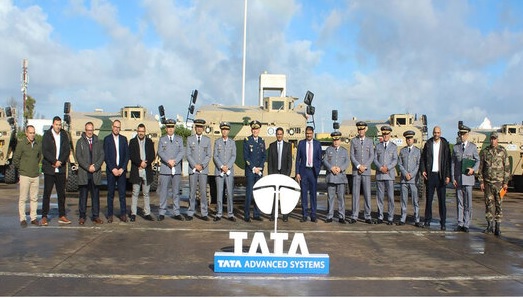
To meet this high demand, India is implementing a dual-track production strategy. Bharat Dynamics Limited (BDL), the public sector missile manufacturing giant, will manage one production line. Alongside BDL, a second line is being created within the private sector, with companies like Larsen & Toubro and Tata Advanced Systems expected to play a central role. This strategy is not only intended to boost production speed but also to foster healthy competition and innovation between the sectors, while building a resilient supply chain.
This approach is closely aligned with the government’s “Aatmanirbhar Bharat” (self-reliant India) initiative. By involving private industry and relying heavily on domestic supply chains—over 85% of the Astra Mk2’s components are locally sourced—the project aims to build long-term industrial capability and strengthen India’s position as a defence exporter. Several small and medium enterprises are expected to be drawn into the production ecosystem, offering a boost to local manufacturing and technological development.
Operationally, the Astra Mk2 will provide India with a crucial strategic edge, especially in the context of rising regional tensions. It is seen as a direct response to China's PL-15, which is believed to have a range exceeding 200 km, and Pakistan’s AIM-120C missiles. With the Astra Mk2 paired with advanced AESA radars aboard aircraft like the Rafale and Su-30MKI, the Indian Air Force will be able to engage enemy fighters from a safe stand-off distance, enhancing survivability and mission effectiveness.
Despite its promise, the path ahead will require careful coordination between the DRDO, BDL, and private partners to ensure the missile's performance meets military expectations. Scaling up production while maintaining rigorous quality control and ensuring timely integration into various aircraft fleets are challenges that must be carefully managed.
Still, the upcoming induction of the Astra Mk2 marks a major leap for India’s defence capabilities—one that combines cutting-edge technology, strategic foresight, and industrial innovation.
✍️ This article is written by the team of The Defense News.