India and Pakistan to Conduct Naval Exercises in Arabian Sea, August 11-12, 2025
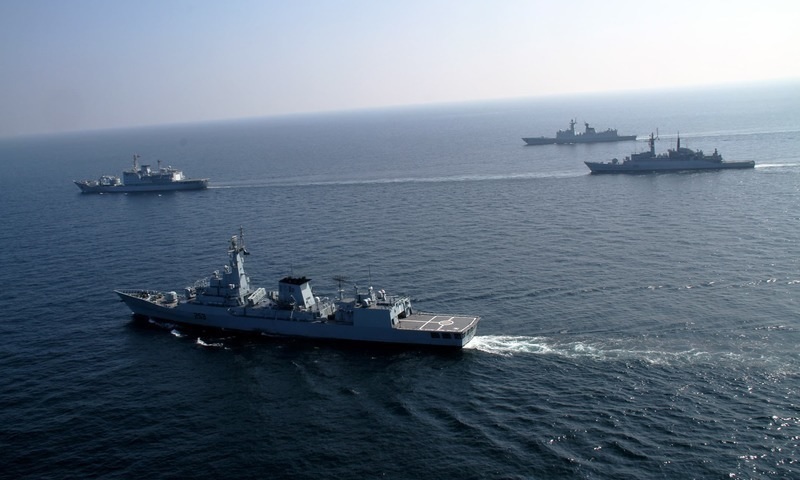
In a development that has drawn significant attention due to its timing and proximity, the navies of India and Pakistan are set to conduct separate naval firing exercises in the Arabian Sea on August 11 and 12, 2025. The exercises, positioned approximately 60 nautical miles apart, highlight the ongoing strategic posturing between the two nations in a region critical for maritime security and trade. This article explores the details of these exercises, their context, and their implications, drawing on official notifications and recent regional developments.
Details of the Naval Exercises
Indian Navy Exercises
The Indian Navy has announced a firing drill in the northern Arabian Sea, scheduled for August 11 and 12, 2025, off the coasts of Porbandar and Okha in Gujarat. According to official notifications, the exercise will take place between 11:30 AM and 1:30 PM on August 11, involving an unspecified warship. The Navy has issued a Notice to Airmen (NOTAM) to restrict air traffic over the designated maritime zone during the drill, ensuring safety for cargo vessels, oil tankers, and foreign naval ships passing through the area. While specific details about the warship or the type of missile to be tested have not been disclosed, the exercise is expected to involve live firing and maneuvers, potentially including aircraft, to demonstrate operational readiness.
Pakistan Navy Exercises
Simultaneously, the Pakistan Navy has announced a two-day firing exercise within its territorial waters, starting at 4:00 AM on August 11 and continuing until 3:00 PM on August 12, 2025. Like India, Pakistan has issued a NOTAM to restrict air traffic over its exercise zone. The Pakistan Navy has not revealed details about the missiles or weapon systems involved, but the exercise is seen as a demonstration of its operational capabilities. The proximity of the exercise—approximately 60 nautical miles from the Indian drill zone—has raised concerns due to the sensitive maritime boundary shared by the two nations.
Proximity and Timing
The exercises are notably close, occurring just 60 nautical miles apart, a rare occurrence that underscores the strategic significance of the Arabian Sea. This region is a vital corridor for maritime trade, connecting the Persian Gulf to global shipping routes, and is crucial for both nations' security interests. The simultaneous scheduling of these drills, while described as routine by defense officials, has drawn attention due to its timing, coming just months after a significant military confrontation between India and Pakistan.
Context: Operation Sindoor and Recent Tensions
The naval exercises follow a period of heightened tensions between India and Pakistan, primarily triggered by the April 22, 2025, terror attack in Pahalgam, Jammu and Kashmir, which claimed 26 civilian lives. In response, India launched Operation Sindoor on May 7, a coordinated tri-services offensive targeting terror infrastructure linked to groups like Jaish-e-Mohammed and Lashkar-e-Taiba in Pakistan and Pakistan-occupied Jammu and Kashmir. The operation involved precision strikes by the Indian Army, Air Force, and Navy, resulting in the elimination of over 100 terrorists and the destruction of nine terror targets.
During Operation Sindoor, the Indian Air Force neutralized Pakistani missile and drone capabilities, downed six fighter jets, and destroyed an AWACS aircraft, while India also conducted retaliatory strikes on 11 Pakistani airbases following Pakistan’s drone and missile attacks. A ceasefire was reached on May 10, 2025, after direct communication between the Directors General of Military Operations of both countries, with no third-party mediation. Indian Prime Minister Narendra Modi described the operation as a decisive response, emphasizing that India would not tolerate terrorist attacks and that nuclear threats from Pakistan would not deter its actions.
Despite the ceasefire, Operation Sindoor is reported to be ongoing, with India maintaining its focus on countering terrorism. The naval exercises, therefore, serve as a continuation of military vigilance and a signal of readiness in a region marked by fragile peace.
Strategic Significance of the Arabian Sea
The Arabian Sea is a critical maritime domain for both India and Pakistan, serving as a key route for global trade, particularly oil and gas shipments from the Persian Gulf. For India, the region is vital for securing its western coastline, including major ports like Porbandar and Mumbai, and maintaining dominance in the Indian Ocean Region. For Pakistan, the Arabian Sea provides access to its primary port, Karachi, and is essential for its maritime security and economic interests. The proximity of the exercises—within 60 nautical miles—highlights the delicate balance of power in this shared maritime space, where both nations seek to assert their presence.
The Indian Navy’s exercise is likely to involve advanced warships, such as the recently commissioned INS Vikrant, India’s second aircraft carrier, and possibly stealth frigates like INS Tamal, which recently participated in exercises with the Royal Moroccan Navy. Pakistan, meanwhile, is developing its indigenous Jinnah-class warships, designed for anti-surface, anti-submarine, and anti-air warfare, signaling its intent to bolster its naval capabilities.
Implications and Observations
While both navies have emphasized that these exercises are routine, the timing and proximity have raised concerns among analysts. The drills occur against the backdrop of Operation Sindoor and ongoing tensions, suggesting a strategic signaling of strength and readiness. Indian Defense Minister Rajnath Singh’s remarks post-Operation Sindoor about the Navy’s role in potential future surgical strikes, and Prime Minister Modi’s assurance to the Naval Chief that “your turn will come,” indicate that India views its navy as a critical component of its defense strategy against Pakistan.
Pakistan’s decision to conduct simultaneous exercises, supported by its recent naval advancements and alliances (e.g., summoning a Turkish warship during Operation Sindoor), reflects its intent to counterbalance India’s naval dominance. The involvement of a Turkish warship in Karachi during the May conflict also suggests Pakistan’s efforts to strengthen regional partnerships.
The close proximity of the exercises increases the risk of miscalculation, particularly given the history of confrontations in the region. However, the issuance of NOTAMs by both nations indicates a degree of transparency to avoid unintended escalations, ensuring that commercial and military air traffic is diverted from the exercise zones.
The simultaneous naval exercises by India and Pakistan in the Arabian Sea on August 11-12, 2025, reflect the complex dynamics of their relationship, marked by competition, strategic posturing, and a fragile ceasefire following Operation Sindoor. While described as routine, the proximity of the drills—60 nautical miles apart—and their timing underscore the ongoing military preparedness in a region vital to both nations’ security and economic interests. As the Arabian Sea remains a flashpoint for India-Pakistan relations, these exercises serve as a reminder of the need for vigilance, communication, and restraint to prevent escalation in an already tense geopolitical landscape.
✍️ This article is written by the team of The Defense News.