India Test-Fires Mach 8 Hypersonic Cruise Missile, May Become World’s Second Nation After Russia to Succeed
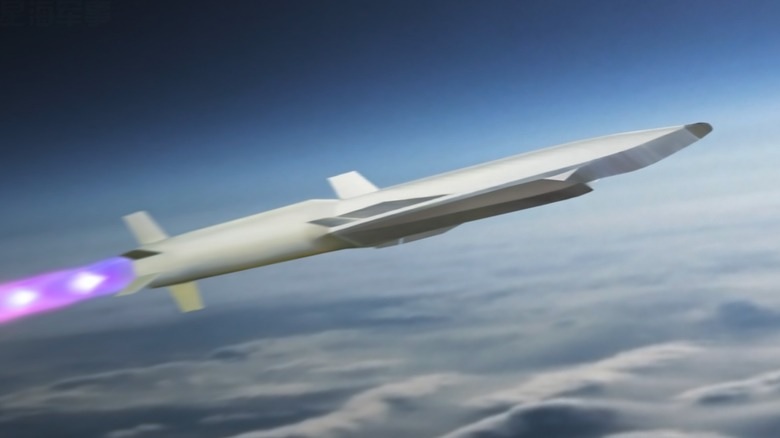
In a quiet but powerful step forward, India has successfully test-fired its first long-range hypersonic cruise missile, marking a major breakthrough in missile technology. Developed under a top-secret project codenamed Project Vishnu, the missile—known as the Extended Trajectory Long Duration Hypersonic Cruise Missile (ET-LDHCM)—reached speeds of Mach 8, or roughly 11,000 km/h, and is capable of striking targets as far as 1,500 km away.
This feat places India on the brink of joining an exclusive club. So far, only Russia has been able to successfully develop and operationalize a hypersonic cruise missile—specifically the 3M22 Zircon, which has already been inducted into service with the Russian Navy. While the United States, China, France, and others are still in the development race, India’s successful test puts it in a strong position to become the second country in the world to field such a weapon.
What Makes This Missile Special?
At the heart of the ET-LDHCM is a scramjet engine—an air-breathing propulsion system that uses oxygen from the atmosphere instead of carrying its own oxidiser. This keeps the missile lighter, faster, and more efficient, allowing it to sustain extreme speeds for longer durations.
In November 2024, DRDO conducted a 1,000-second ground test of this scramjet engine. It confirmed the system could withstand extreme conditions, including temperatures exceeding 2,000°C caused by atmospheric friction at hypersonic speeds.
Designed for Flexibility, Built for the Future
The ET-LDHCM is designed to be launched from multiple platforms—including land-based launchers, naval vessels, and aircraft—making it versatile for deployment across all three branches of India’s military. It can carry both conventional and nuclear warheads, with payloads up to 2,000 kg.
A standout feature is its in-flight manoeuvrability, which allows the missile to change direction mid-flight. This capability makes it extremely difficult for modern air defense systems to detect, track, and intercept.
Project Vishnu: India’s Hypersonic Ambition
The ET-LDHCM is the flagship of Project Vishnu, an ambitious and mostly classified programme by DRDO aimed at developing at least 12 different hypersonic weapons systems, including offensive strike missiles and interceptors.
According to a senior DRDO scientist involved in the project:
“The first scramjet test in November 2024 ran for 1,000 seconds. That showed the engine could do what we needed.”
Looking ahead, India plans to induct hypersonic glide vehicles into military service by 2027–2028, with the ET-LDHCM expected to become fully operational by 2030.
A defining feature of this missile is its completely indigenous design. Developed with significant contributions from Indian startups, SMEs, and private contractors, the project is a major milestone in India's push for Atmanirbhar Bharat (self-reliance in defence).
Advanced heat-resistant and anti-oxidation coatings, co-developed with the Department of Science and Technology, ensure the missile remains structurally stable during high-speed flight and can operate in naval environments as well.
India’s hypersonic missile success sends a strong signal—both regionally and globally. As nations compete to dominate the next frontier of missile technology, India has quietly surged ahead. While others still work through development and testing stages, India now stands shoulder to shoulder with Russia in this advanced arena.
This isn't just about power projection—it's about reducing dependence on foreign weapon systems, shaping regional deterrence, and ensuring that India remains a technologically capable and self-reliant defence force for the decades to come.
✍️ This article is written by the team of The Defense News.