India Surpasses Japan to Become World’s 3rd Largest Solar Power Generator
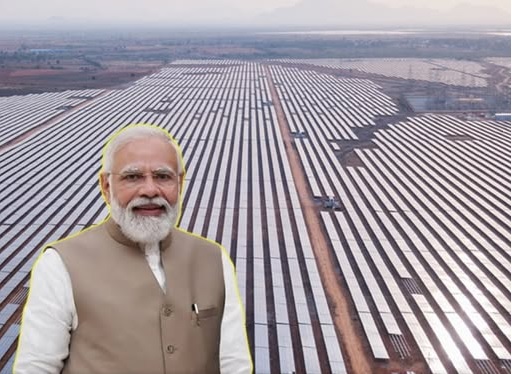
In a historic milestone for clean energy, India has overtaken Japan to become the third-largest country in the world in terms of solar power generation, according to data released by Ember, a global energy think tank. This achievement highlights India’s rapid growth in renewable energy and marks a major step toward its ambitious climate and energy goals.
As of the first half of 2025, India generated approximately 122 terawatt-hours (TWh) of solar electricity over the past 12 months—just ahead of Japan's 118 TWh, placing it behind only China and the United States in global solar output. This feat reflects India’s accelerated push for solar installations and infrastructure development across the country.
Top 5 Countries by Solar Power Generation (2025, Annual Output in TWh)
-
China – ~584 TWh
-
United States – ~238 TWh
-
India – ~122 TWh
-
Japan – ~118 TWh
-
Germany – ~59 TWh
A Decade of Rapid Growth
India’s rise to the third position has been driven by strong government support, falling solar panel prices, increased private investment, and large-scale solar parks developed under the National Solar Mission. From generating less than 10 TWh a decade ago, India has scaled up its capacity dramatically, reaching over 82 GW of installed solar capacity by mid-2025. The country has also added an average of 12–15 GW annually over the last three years.
Strategic Focus on Solar Energy
The Indian government has been prioritizing solar as a key pillar of its energy transition. Programs like PM-KUSUM (for rural solarization), Solar Rooftop Phase II, and ultra-mega solar parks in states like Rajasthan, Gujarat, and Karnataka have played a crucial role. In addition, the International Solar Alliance (ISA), headquartered in Gurugram, continues to position India as a global solar leader.
According to the Ministry of New and Renewable Energy (MNRE), solar power now accounts for nearly 17% of India's total electricity generation capacity, a remarkable shift considering coal still dominates the energy mix. However, the government has pledged to reach 500 GW of non-fossil fuel capacity by 2030, with solar playing a central role.
Ahead of Schedule
Analysts had predicted that India would surpass Japan in solar power output by 2026. However, faster-than-expected commissioning of new solar farms and rising demand for clean electricity in urban and rural areas alike helped India achieve this landmark ahead of time.
Japan, while still a technological leader in solar innovation, has seen a slowdown in new installations due to land constraints and policy uncertainty, creating space for India's rise.
Global and Domestic Impacts
India’s leap to the No. 3 spot globally is expected to:
-
Strengthen its voice in international climate negotiations.
-
Boost domestic industries involved in solar module manufacturing under the PLI (Production-Linked Incentive) scheme.
-
Reduce dependence on fossil fuel imports, saving billions in energy costs.
-
Support millions of jobs in installation, manufacturing, and operations.
With the momentum firmly in its favor, India is now setting its sights on overtaking the U.S. as the second-largest solar generator in the long term. To achieve that, the country will need to tackle challenges such as grid integration, battery storage, and domestic manufacturing of solar cells and modules—areas where policy and innovation will play a critical role.
Nevertheless, India’s achievement of surpassing Japan is a significant endorsement of its energy transition strategy. As global attention turns toward decarbonization and climate resilience, India has cemented its place as one of the leading forces in the solar revolution.
✍️ This article is written by the team of The Defense News.