India Successfully Tests Agni-5 Missile Amid Extensive NOTAM in Bay of Bengal

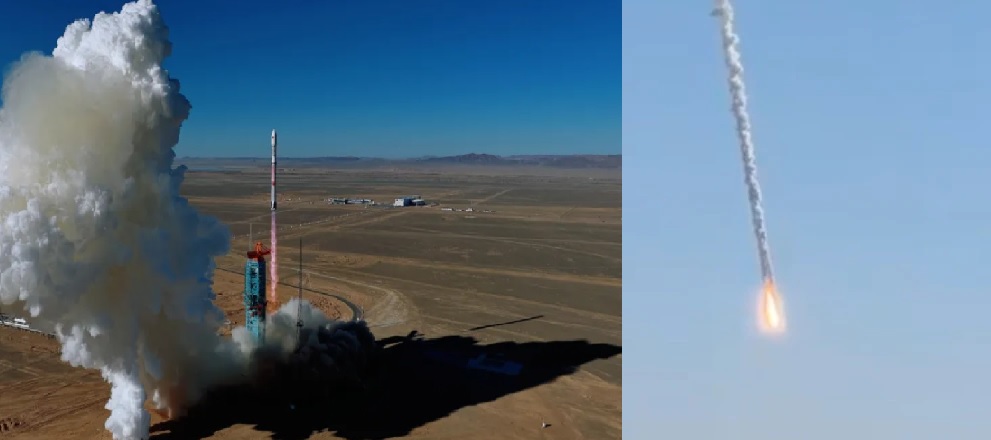
In a significant boost to India's strategic defense capabilities, the Ministry of Defence announced on Wednesday, August 20, 2025, that the country had successfully test-fired the Intermediate Range Ballistic Missile 'Agni-5' from the Integrated Test Range at Chandipur in Odisha. "The launch validated all operational and technical parameters. It was carried out under the aegis of the Strategic Forces Command," the MoD stated in an official release. This test marks another milestone in India's indigenous missile development program, showcasing the nation's advancing prowess in ballistic missile technology.
The successful firing comes on the heels of a prominent Notice to Airmen (NOTAM) issued for the Bay of Bengal region, which had sparked widespread speculation among defense analysts and observers. The NOTAM, effective from August 20 to 21, 2025, designated a vast no-fly zone extending approximately 4,795 kilometers into the Indian Ocean from the Odisha coast. This extensive corridor, one of the longest ever notified by India for such activities, was intended to ensure aviation safety during the high-stakes missile trial. Issued from the Abdul Kalam Island launch site, the warning covered a danger zone of about 2,530 nautical miles initially, but was later revised to nearly 4,790 kilometers, fueling discussions about the potential testing of advanced long-range systems.
Defense experts noted that such a prolonged NOTAM suggests preparations for a missile with intercontinental capabilities, aligning with the Agni-5's reported range of over 5,000 kilometers, which classifies it as an Inter-Continental Ballistic Missile (ICBM) despite some reports labeling it as intermediate-range. The Agni-5, developed by the Defence Research and Development Organisation (DRDO), features advanced technologies including multiple independently targetable re-entry vehicles (MIRV) in some variants, enabling it to deliver payloads with high precision over vast distances. This capability enhances India's nuclear deterrence posture, particularly in the context of regional security dynamics.
The NOTAM was first reported around August 11, 2025, with initial coordinates indicating a 1,560-kilometer zone in the Bay of Bengal. Subsequent updates extended the restricted area significantly, prompting analyses that the test might involve an upgraded version of the Agni series, such as the Agni-5 MIRV or even speculative mentions of the Agni-6. Social media and open-source intelligence trackers highlighted the unusual length of the corridor, comparing it to previous tests like the 2022 Agni-5 trial, which had a NOTAM range of around 5,400 kilometers.
Conducted under the Strategic Forces Command, the launch on August 20 validated the missile's operational readiness, including guidance systems, propulsion, and re-entry mechanisms. The MoD emphasized that all technical parameters were met, underscoring the reliability of the three-stage, solid-fueled missile, which can carry a nuclear warhead weighing up to 1.5 tons. This test is part of India's ongoing efforts to strengthen its second-strike capabilities, amid evolving geopolitical tensions in South Asia and beyond.
The Bay of Bengal has long served as a primary testing ground for India's missile programs due to its expansive maritime area, minimizing risks to populated regions. Previous NOTAMs for similar tests have been issued for systems like the Agni-4 and K-4 submarine-launched ballistic missiles. The recent extension of the danger zone also coincided with international observations, including port calls by foreign naval vessels in nearby areas, raising questions about potential surveillance activities.
As India continues to indigenize its defense arsenal, the successful Agni-5 test and the associated NOTAM highlight the nation's commitment to maintaining a credible minimum deterrence. With the missile now nearing full induction into the armed forces, this development is poised to reshape strategic equations in the region.
✍️ This article is written by the team of The Defense News.