India Successfully Tests 3,500-km Range K-4 Submarine-Launched Ballistic Missile From INS Arihant
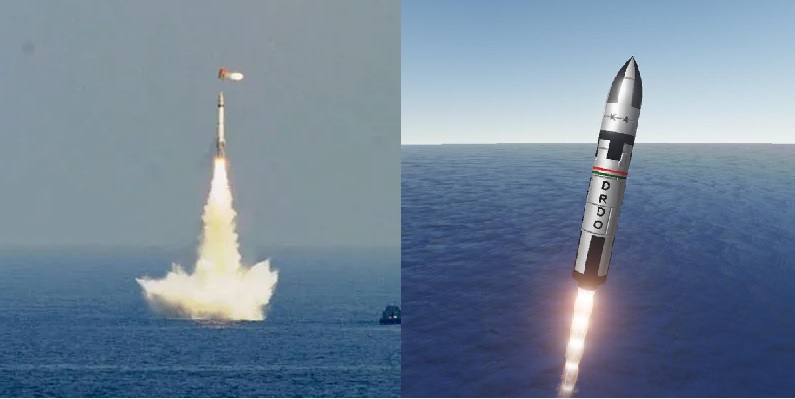
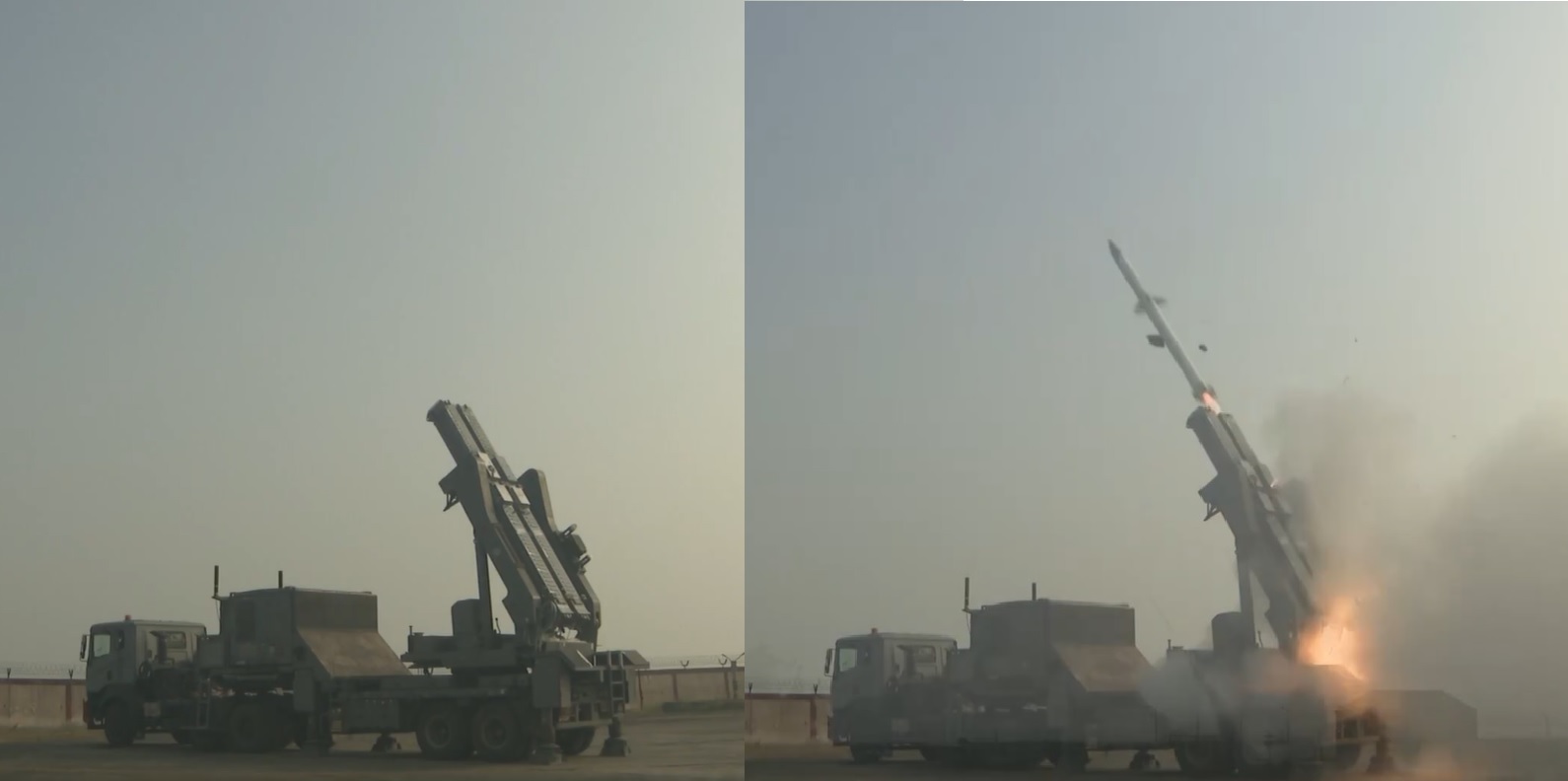
India has carried out a reported user trial of the K-4 submarine-launched ballistic missile (SLBM) variant from its nuclear-powered ballistic missile submarine (SSBN) INS Arihant in the Bay of Bengal on December 23, in what would mark another step toward deepening the sea leg of its nuclear triad. The reported launch, circulating widely across open-source defence watchers and social media accounts, described a test to a range of roughly 3,500 km, consistent with known parameters of the K-4 system.
India’s Ministry of Defence has not issued a fresh, detailed public statement on the December 23 event as of Wednesday morning (IST). In recent years, official readouts on SSBN-related “user training” launches have tended to be brief, with operational details such as exact range, flight profile, and submarine location kept tightly held.
Why the K-4 Matters to India’s Nuclear Triad
The K-4 is an intermediate-range SLBM developed by the Defence Research and Development Organisation (DRDO) for deployment on Arihant-class SSBNs. With a commonly reported maximum reach of about 3,500 km, K-4 significantly extends India’s sea-based strike envelope compared with the shorter-range K-15 (Sagarika), and is central to strengthening a survivable, retaliatory second-strike posture from beneath the ocean surface.
India’s nuclear triad—air-delivered weapons, land-based ballistic missiles, and sea-based missiles—is designed to ensure that a credible retaliatory capability remains available even if one leg is degraded. Official Indian statements in prior SLBM launches have explicitly linked SSBN operations to a “robust, survivable and assured retaliatory capability,” aligning with India’s declared doctrine of credible minimum deterrence and its “No First Use” posture.
The Platform: INS Arihant and the Bay of Bengal Test Corridor
INS Arihant is India’s lead Arihant-class SSBN, built under the Advanced Technology Vessel (ATV) programme at Visakhapatnam. Open sources describe the class as carrying four vertical launch tubes, configurable for either multiple K-15 missiles or fewer, larger K-4 missiles—an arrangement that reflects the trade-off between payload count and strike range.
The Bay of Bengal has long served as India’s primary strategic missile test corridor, with prior K-4 developmental launches—many conducted from submerged pontoons before operational submarine trials—also associated with the eastern seaboard test architecture.
What Is Known About the K-4 System
Open technical descriptions characterize K-4 as a two-stage, solid-fuel SLBM, designed for cold launch from underwater before ignition and flight on a ballistic trajectory. While specific figures are often treated as sensitive, widely cited open sources place its length at around 12 metres and its weight near 17 tonnes, with modern guidance packages intended to improve accuracy.
The missile’s range class around 3,500 km is the most strategically consequential detail, because it allows patrol areas to be chosen for survivability while still holding distant targets at risk, reducing the pressure to move SSBNs closer to adversary shorelines.
The Broader SSBN Push: More Boats, More Patrol Options
The reported December 23 launch comes amid signals that India is preparing to expand its SSBN force structure. In early December, Indian media reports quoted the Navy Chief as saying a third SSBN, identified as INS Aridhaman, is expected to be commissioned “soon” or early next year—an addition that would increase patrol availability and deepen the credibility of continuous at-sea deterrence.
India commissioned its second Arihant-class SSBN, INS Arighaat, in August 2024, with official messaging at the time explicitly framing the platform as a reinforcement of the nuclear triad and deterrence posture.
Regional Signalling and Indian Ocean Scrutiny
Strategic analysts have warned that undersea deterrence operations are increasingly visible to rival powers through maritime surveillance, and that missile tests can become focal points for monitoring activity in the Indian Ocean. In a December 19 commentary, Chatham House flagged escalation risks around a possible K-4-related test dynamic in the region, underscoring how deterrence moves are now closely watched by multiple nuclear-armed states.
Separately, open-source reporting in mid-December pointed to airspace and sea warnings consistent with a long-range test window over the Bay of Bengal—often a precursor pattern for Indian missile trials—though such notices do not, by themselves, confirm which system is being tested.
What to Watch Next
If the December 23 event is formally acknowledged, attention will likely focus on whether it was a routine “user training” launch, a validation of a specific K-4 configuration, or part of a broader sequence intended to support higher SSBN readiness as additional boats join the fleet. For India’s deterrent posture, the key takeaway is the same: regularized SLBM operations from operational submarines are the clearest signal that the sea-based leg of the triad is moving from milestone launches toward repeatable, doctrine-aligned capability.
✍️ This article is written by the team of The Defense News.