India Set to Approve Five Powerful New 11,000-Tonne Destroyers as China Expands Its Navy
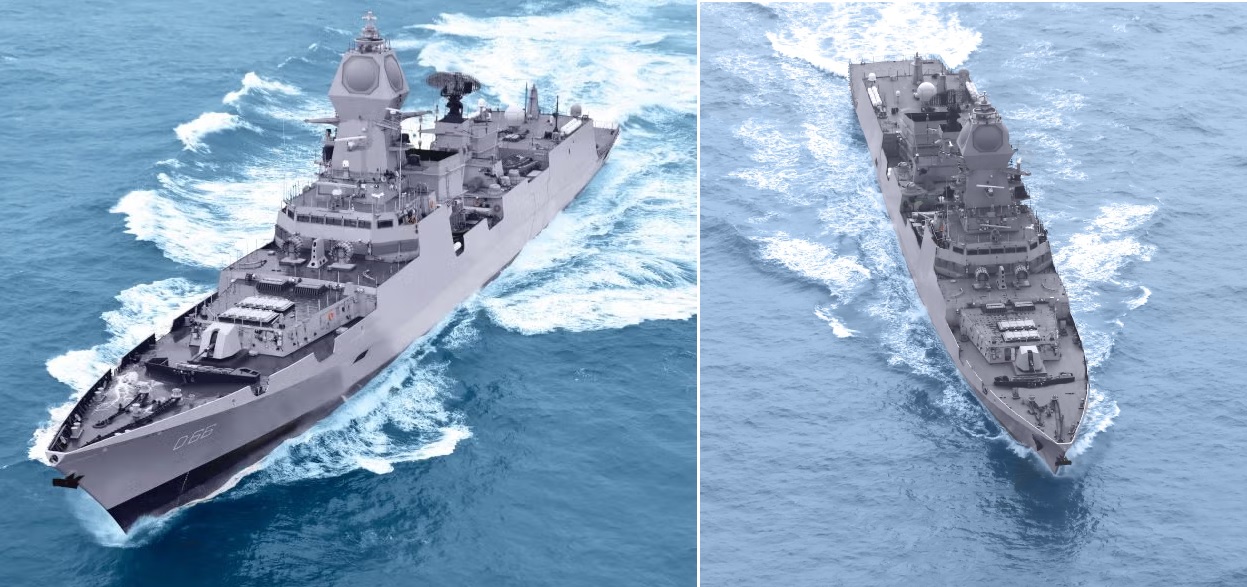
The Indian Navy is preparing to take a major leap in surface-combatant capability, with plans to secure Acceptance of Necessity (AoN) for five next-generation, 11,000-tonne destroyers within the current financial year. Vice Admiral Sanjay Vatsayan, Vice-Chief of the Naval Staff, confirmed on Thursday that design work for the new class is complete, and contract awards are expected within the next two years once approvals are in place.
A New Generation of Smart, Heavily Armed Warships
Although the Navy has not publicly released the full spectrum of upgrades planned for the new destroyers, reports indicate a dramatic jump in capability over the current Visakhapatnam-class (P-15B). The upcoming vessels are expected to feature:
-
Enhanced air-defence systems with larger missile loads
-
Long-range strike weapons, potentially including land-attack options
-
Advanced anti-ship missiles
-
Next-generation sensors and radar suites
-
Higher power generation designed to support future directed-energy weapons
-
Deep integration with autonomous vessels, UAVs, and underwater drones
Vice Admiral Vatsayan said that many of these “smart technologies” were evaluated on a trial platform and refined for incorporation into the future class. “We have consolidated the systems needed for smart ships of the future,” he noted.
Strategic Context: China’s Rapid Naval Expansion
The Navy’s disclosure comes at a time of accelerating naval modernization across Asia, led by China. Days before India’s announcement, the People’s Liberation Army Navy (PLAN) commissioned Fujian, its third and most advanced aircraft carrier and the world’s largest non-nuclear warship. Fujian is widely considered a force multiplier that strengthens China’s growing blue-water operational profile.
A recent report to the US Congress underscores the scale of China’s expansion. The PLAN’s battle force:
-
Surpassed 370 ships in 2024
-
Is expected to rise to 395 ships in 2025
-
Could reach 435 ships by 2030
China also continues building specialized platforms; in mid-2025, it unveiled an amphibious assault ship designed as a drone carrier, further broadening its naval capabilities.
China–Pakistan Naval Nexus and Indian Vigilance
China, Pakistan’s largest arms supplier, is simultaneously strengthening Islamabad’s maritime fleet. Eight submarines are on order for the Pakistan Navy, with the first—PNS Hangor—slated for induction in the first half of 2026.
Asked about the development, Vice Admiral Vatsayan said:
“We are aware that China is supplying ships and submarines to Pakistan. We are monitoring everything closely and working on strengthening the defence. We know what kind of anti-submarine warfare (ASW) capabilities we need to counter such threats.”
Building Indian, Buying Foreign Only When “Unavoidable”
Reiterating the Navy’s strong push for self-reliance, the Vice Chief said the upcoming destroyers will be more capable than the Visakhapatnam-class and will be built domestically. The Navy, he emphasized, imports platforms or systems “only when absolutely unavoidable.”
India’s shipyards are already operating at high capacity. As of now, 52 warships are under construction across Indian shipyards and are expected to be delivered within the next two to three years.
A Major Step Toward Maritime Superiority
The new destroyer program represents one of the most significant naval developments in recent years. With larger hulls, advanced weapons, and futuristic energy systems, the 11,000-tonne class is set to become the backbone of India’s surface fleet in the 2030s.
As regional waters grow more contested—with China expanding aggressively and Pakistan modernizing rapidly—India’s planned destroyers signal a clear intention: to maintain a strong, technologically superior presence across the Indo-Pacific.
About the Author
Aditya Kumar:
Defense & Geopolitics Analyst
Aditya Kumar tracks military developments in South Asia, specializing in Indian missile technology and naval strategy.