India Seizes Pakistan-Bound Banned Chemicals from China, Raising Chemical Warfare Concerns
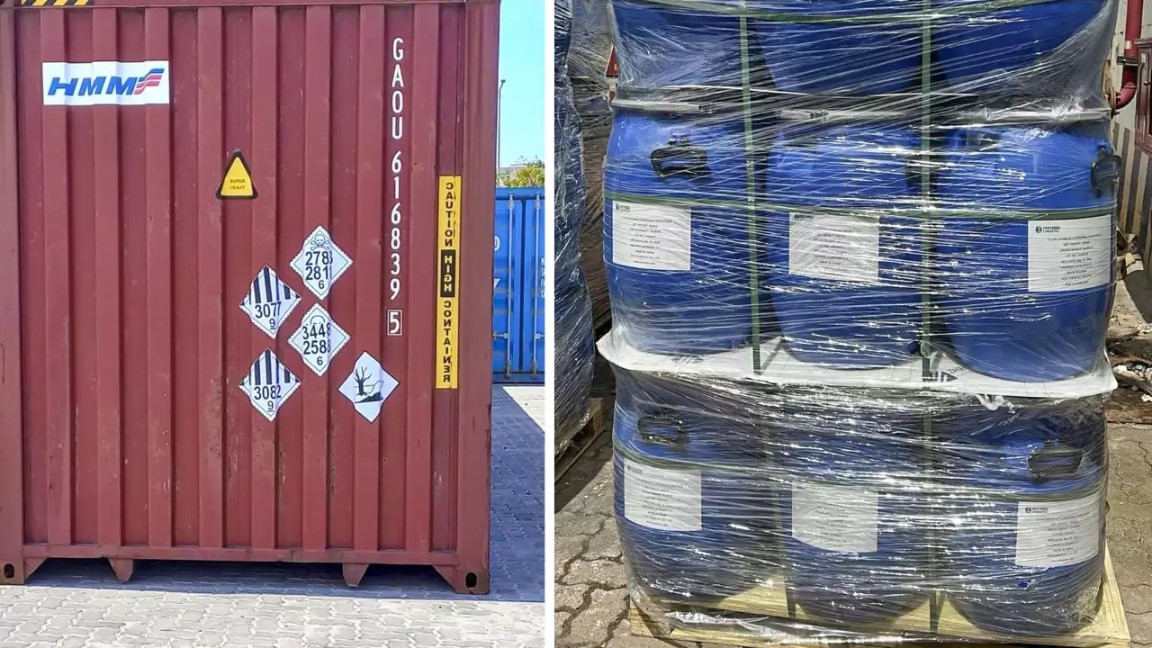
In a significant development, Indian security agencies have intercepted yet another Pakistan-bound consignment of banned chemicals from China, this time at a port in Tamil Nadu. The chemicals, used in tear gas and riot control, were found to be internationally prohibited and have sparked concerns over potential offensive chemical and biological warfare programs.
On April 18, 2024, a Chinese firm, Chengdu Shichen Trading Co. Ltd, shipped a substantial quantity of Ortho-Chloro Benzylidene Malononitrile (commonly known as CS gas) from Shanghai Port. This consignment, destined for Rohail Enterprises in Rawalpindi, Pakistan, weighed approximately 2,560 kilograms and was stored in 103 drums of 25 kilograms each. The cargo was loaded onto the carrier vessel Hyundai Shanghai, sailing under a Cyprus flag. After making its way to Kattupalli Port in Tamil Nadu, India, on May 8, 2024, the shipment was detained during a routine customs check.
The customs authorities discovered that the chemical was listed as a controlled substance under India’s export control list known as SCOMET. The investigation, which included consultations with experts, confirmed that the consignment contained Ortho-Chloro Benzylidene Malononitrile, a substance regulated by the Wassenaar Arrangement. While India is a signatory to this arrangement, aimed at controlling the export of arms and dual-use goods and technologies, both China and Pakistan are not.
This incident is not an isolated one. Just in March of the same year, security agencies at Mumbai's Nhava Sheva port intercepted another Karachi-bound ship from China. This consignment was linked to Pakistan’s nuclear and ballistic missile programs, further heightening concerns over the regional security dynamics.
The seized consignment in Tamil Nadu has been taken under the provisions of the Customs Act of 1962 and the Weapons of Mass Destruction and Delivery Systems (Prohibition of Unlawful Activities) Act of 2005. This act is instrumental in preventing the proliferation of weapons of mass destruction and their delivery systems.
The repeated attempts to transport banned substances from China to Pakistan suggest a troubling pattern. According to officials, Pakistan, with the help of its "all-weather friend" China, appears to be working on enhancing its offensive chemical and biological warfare capabilities. This collaboration between China and Pakistan poses a significant threat to regional stability and global security.
The international community remains vigilant, as the proliferation of such materials not only violates global treaties and norms but also poses a grave risk of these substances falling into the wrong hands. India's proactive stance in intercepting these shipments underscores the importance of stringent checks and international cooperation to prevent the spread of dangerous materials and ensure global security.
✍️ This article is written by the team of The Defense News.