India Secures Full Technology Transfer for Israeli Air LORA and Ice Breaker Missiles
In a historic breakthrough for India’s defense modernization and self-reliance goals, the Ministry of Defence (MoD) has finalized a complete technology transfer (ToT) agreement with Israel for two next-generation missile systems — the Air LORA quasi-ballistic missile and the Ice Breaker smart cruise missile.
This unprecedented deal grants India full access to source codes, blueprints, seeker technologies, and production methodologies, marking one of the most comprehensive defense technology transfers ever achieved with a foreign partner.
According to defense sources, a confidential Indian delegation recently concluded high-level meetings in Tel Aviv, sealing the foundation for indigenous production of both systems. The agreement is set to significantly bolster India’s precision-strike capabilities while reinforcing the ‘Atmanirbhar Bharat’ (self-reliant India) initiative in defense manufacturing.
Strategic Partnership and Domestic Production
Under the new framework, Bharat Electronics Limited (BEL) and Hindustan Aeronautics Limited (HAL) will jointly lead domestic production efforts, supported by the Defence Research and Development Organisation (DRDO).
-
BEL will oversee production of seekers, avionics, composite structures, and the guidance electronics for both systems.
-
HAL will manage aircraft integration, test validation, and system optimization for India’s current and future combat platforms, including the LCA Tejas Mk1A, Su-30MKI, and TEDBF (Twin-Engine Deck-Based Fighter).
-
DRDO will assimilate the transferred knowledge into indigenous missile programs such as the Next-Gen Cruise Missile (NGCM) and Pralay-ER initiatives.
Air LORA: Quasi-Ballistic Precision Weapon
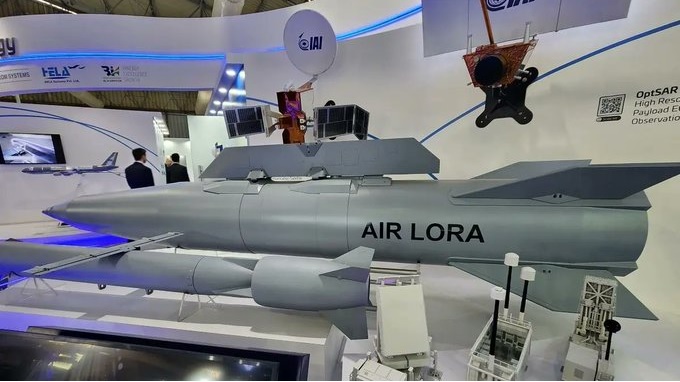
Developed by Israel Aerospace Industries (IAI), the Air LORA (Long Range Artillery) is a precision quasi-ballistic missile designed for deep-strike missions and hardened target destruction. Its advanced guidance suite allows it to perform terminal maneuvers with extremely high accuracy — making it a deterrence-class weapon for India’s future strategic arsenal.
Key Specifications – Air LORA:
-
Range: 400+ km
-
Warhead: 570 kg high-explosive or penetration-type
-
Speed: Approx. Mach 4.5
-
Circular Error Probable (CEP): <10 meters
-
Launch Platform: Air-launched from Su-30MKI, Rafale, and future AMCA aircraft
-
Guidance: INS/GPS hybrid with terminal electro-optical seeker
-
Flight Profile: Quasi-ballistic trajectory with in-flight retargeting capability
The Air LORA’s unpredictable flight path and high terminal velocity make interception by enemy missile defenses extremely difficult. Its integration into the Indian Air Force’s strike fleet will provide India with the ability to neutralize enemy radar installations, bunkers, and C4ISR nodes deep behind enemy lines.
BEL’s upcoming “Missile Electronics Integration Complex” in Bengaluru is expected to handle the production of the Air LORA’s composite airframe, precision guidance units, and terminal seekers.
Ice Breaker: AI-Powered Multi-Role Cruise Missile
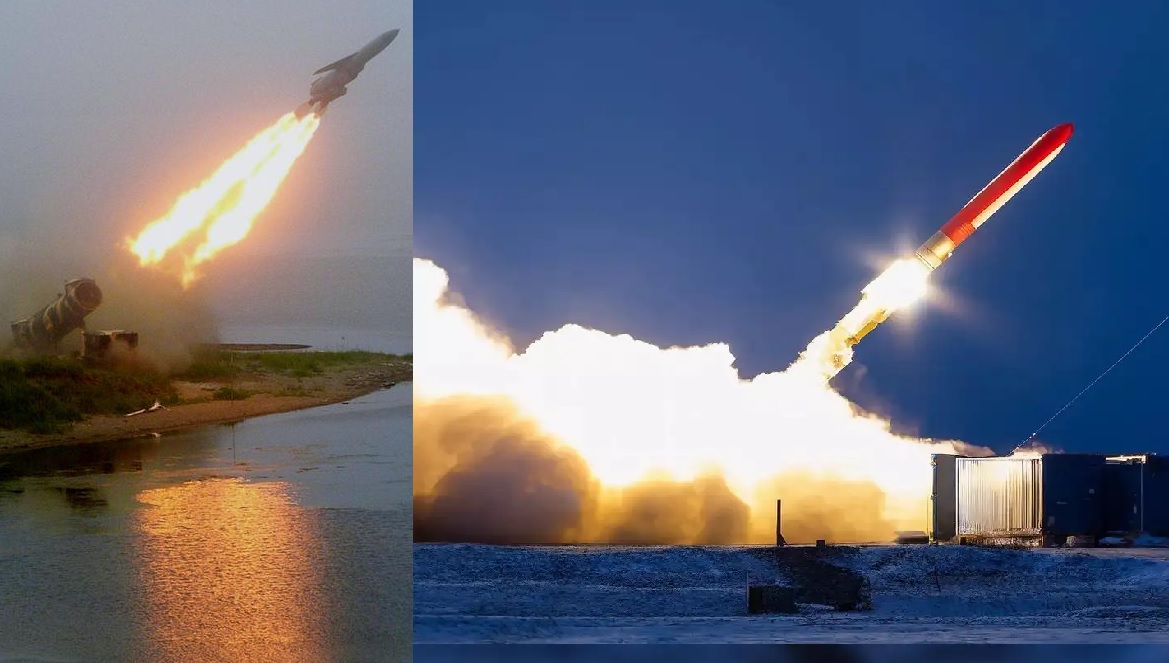
Complementing Air LORA’s ballistic punch, the Ice Breaker — developed by Rafael Advanced Defence Systems — is an AI-enabled multi-role cruise missile built for precision strikes across land and sea domains.
A successor to the proven Sea Breaker, the Ice Breaker uses machine learning algorithms for target recognition and flight optimization, allowing it to operate in GPS-denied and electronically jammed environments — a vital capability in modern warfare.
Key Specifications – Ice Breaker:
-
Range: 300+ km
-
Weight: ~400 kg
-
Speed: High subsonic
-
Warhead: 150 kg multi-purpose blast/penetration
-
Guidance: INS + EO/IR + AI-based image recognition
-
Navigation: GPS-independent with data-link for real-time control
-
Launch Platforms: LCA Tejas, Jaguar, Su-30MKI, TEDBF, and naval surface vessels
The Ice Breaker’s low radar cross-section, adaptive flight profile, and stealth shaping make it one of the most survivable cruise missiles in its class. It can autonomously loiter, identify, and engage moving or static targets, making it ideal for complex anti-ship and ground-strike missions.
HAL will integrate the Ice Breaker with Indian combat aircraft, leveraging experience gained from the Astra and BrahMos-A integration programs, while BEL will domestically produce electronic subsystems and targeting sensors.
Strengthening Deterrence on Both Fronts
The missile acquisition comes amid a shifting regional balance of power. China’s deployment of layered air defense systems along the Line of Actual Control (LAC) and Pakistan’s increasing use of GPS jamming and EW capabilities have accelerated India’s need for precision, long-range, and jam-resistant strike systems.
During Operation Sindoor (May 2025), Israeli-made Rampage air-launched missiles demonstrated exceptional performance despite GPS interference — directly influencing India’s decision to pursue the Air LORA and Ice Breaker under a full-technology framework.
These systems will not only serve as force multipliers for the Indian Air Force and Navy but will also reinforce India’s second-strike capability and strategic depth across both its northern and western theaters.
Economic and Industrial Impact
The overall procurement and ToT framework is estimated to be part of a $20 billion aerospace modernization package, to be submitted for Cabinet Committee on Security (CCS) approval by mid-2026.
The production model envisions a secure ecosystem of public and private suppliers, ensuring no dependency on foreign manufacturing nodes. Once full-scale production stabilizes, India aims to export both missile systems to friendly Indo-Pacific and African nations, expanding its footprint as a trusted defense exporter.
This approach aligns with India’s broader strategy under the ‘Make in India – Defence’ initiative, encouraging indigenous design, production, and intellectual property development.
A Leap Toward Strategic Autonomy
The Air LORA and Ice Breaker technology transfer marks a watershed moment in Indo-Israeli defense cooperation. Unlike earlier limited-licensing models, this agreement represents a full-spectrum ToT, enabling Indian engineers to independently replicate, modify, and innovate upon the acquired technologies.
For India’s defense industry, the deal signifies a transition from dependency to capability — a move from being a buyer of systems to a producer of technologies. It also strengthens India’s long-term missile development roadmap under Mission Shakti 2.0, which seeks to create an indigenous portfolio of next-gen strike and defense platforms.
The full technology transfer for the Air LORA and Ice Breaker missiles signals the emergence of India as a global missile power, capable of designing, producing, and exporting advanced precision-strike weapons. It demonstrates Israel’s strategic trust in India’s technological ecosystem and highlights how geopolitical partnerships are evolving beyond procurement into deep industrial collaboration.
As production begins under BEL, HAL, and DRDO leadership, these systems will not only enhance India’s deterrence posture but also propel its defense manufacturing ecosystem into a new era of self-reliant innovation and global competitiveness.
About the Author
Aditya Kumar:
Defense & Geopolitics Analyst
Aditya Kumar tracks military developments in South Asia, specializing in Indian missile technology and naval strategy.