India Plans ₹654 Billion Investment in Fighter Jet Engines to Power Indigenous Combat Aircraft by 2035
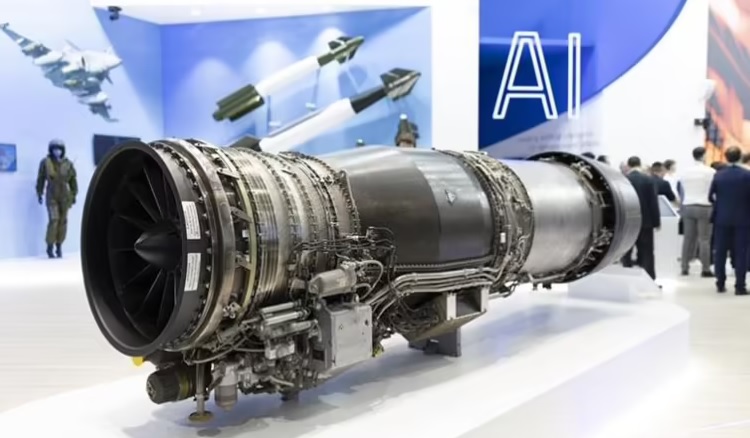
India is preparing to spend about ₹654 billion ($7.44 billion) over the next decade to acquire engines for its indigenous fighter aircraft fleet under development, marking one of the country’s most ambitious aerospace propulsion programs to date.
According to S.V. Ramana Murthy, Director of the Gas Turbine Research Establishment (GTRE), India will require nearly 1,100 engines for various fighter jet programs currently in different stages of design, testing, and production. The massive procurement plan will span until 2035, covering aircraft like the Light Combat Aircraft (LCA) Tejas Mk2, the Twin Engine Deck Based Fighter (TEDBF) for the Indian Navy, and the Advanced Medium Combat Aircraft (AMCA) — India’s first fifth-generation stealth fighter.
Building a Self-Reliant Engine Ecosystem
India’s attempts to design a home-grown fighter jet engine stretch back several decades. The Kaveri engine program, initiated in the 1980s to power the Tejas light combat aircraft, has faced repeated technical challenges and delays, forcing India to rely on foreign engines such as the GE F404 and F414 for operational Tejas variants.
Murthy acknowledged these shortcomings but emphasized that the lessons from the Kaveri project have laid the groundwork for the next phase of indigenous engine development. “There is a need to work on mission mode to create an ecosystem for indigenous fighter engines,” he said during a defence technology event in New Delhi.
He added that India must invest in high-altitude test facilities, thermal and vibration testing infrastructure, and a robust industrial supply chain to achieve true self-reliance in jet propulsion technology.
Derivatives and Future Applications
A derivative of the Kaveri engine is now being considered for India’s upcoming Unmanned Combat Aerial Vehicle (UCAV) project, tentatively named Ghatak. This effort aims to leverage existing technologies for smaller airframes and autonomous combat roles, potentially giving India its first indigenous powerplant for drone warfare systems.
Global Partnerships for AMCA
Murthy also confirmed that India is in talks with several international engine makers for co-development partnerships aimed at powering the AMCA. Leading contenders include France’s Safran, Britain’s Rolls-Royce, and U.S.-based General Electric.
While General Electric has already signed an agreement to manufacture its F414 engines in India for the Tejas Mk2, the AMCA engine is envisioned as a new-generation powerplant in the 110–120 kN thrust class, with stealth-compatible thermal management and advanced digital control systems.
The AMCA prototype, expected to roll out by 2028, will mark India’s entry into the elite club of nations capable of designing fifth-generation stealth fighters. The program’s success depends heavily on the timely development and integration of an indigenous or co-developed engine.
Opening the Defence Sector to Private Industry
In a significant policy shift, the Indian government announced that for the first time, private firms will be invited to bid on major fighter production contracts. This move aims to reduce dependence on Hindustan Aeronautics Limited (HAL) — the state-run aerospace giant that currently manufactures most of India’s military aircraft — and foster competition and innovation within the domestic defence ecosystem.
Companies such as Larsen & Toubro, Tata Advanced Systems, and Mahindra Defence are expected to participate, either independently or in joint ventures with foreign technology partners.
Strategic Push for Defence Self-Reliance
Prime Minister Narendra Modi’s “Atmanirbhar Bharat” (Self-Reliant India) initiative has made indigenous defence manufacturing a national priority. Over the past five years, India has progressively restricted imports of key defence components, including jet engines, avionics, and radar systems, while encouraging joint ventures and technology transfer agreements with global firms.
By 2035, India aims not only to replace foreign engines in its combat fleet but also to develop a fully indigenous propulsion ecosystem capable of supporting future programs like the 6th-generation fighter concept, advanced UCAVs, and long-range bombers.
A Decade of Opportunity and Challenge
Experts note that achieving engine self-reliance remains one of the hardest challenges in aerospace engineering. Nations like the U.S., Russia, and France took decades and tens of billions of dollars to master the technology. However, India’s renewed focus, budget allocation, and openness to partnerships are viewed as critical enablers of success.
If the planned ₹654 billion investment bears fruit, India could soon join a very exclusive club of nations — the United States, Russia, France, and China — that possess the capability to design, manufacture, and operate their own advanced fighter jet engines.
About the Author
Aditya Kumar:
Defense & Geopolitics Analyst
Aditya Kumar tracks military developments in South Asia, specializing in Indian missile technology and naval strategy.