India Plans 1st Stage of Deep Sea Mission Harbor Trials by September 2024
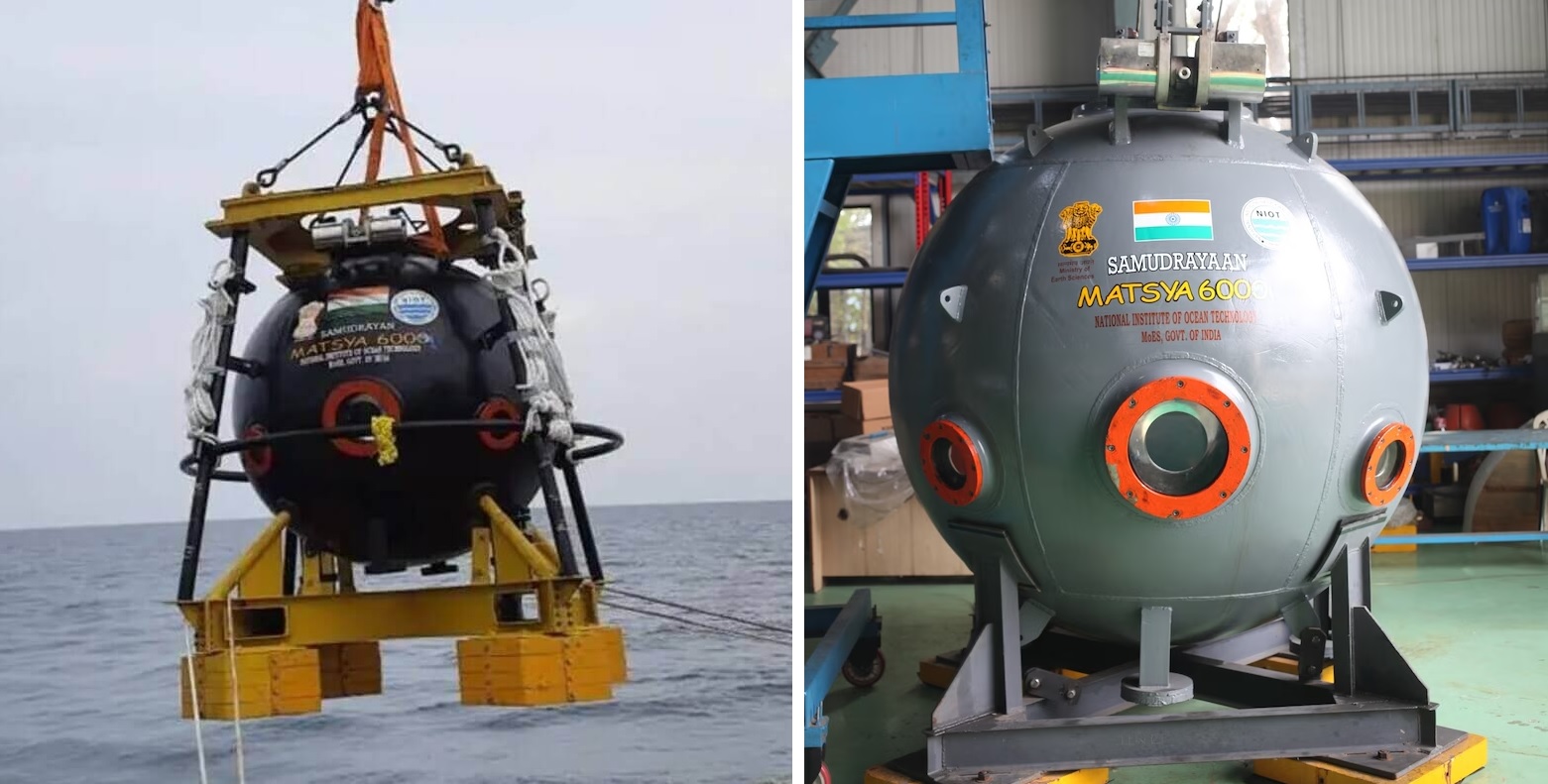
India is set to become the sixth country to launch its own Deep Sea Mission, aiming to explore and conserve marine biodiversity while developing ocean sciences and technologies.
India is making significant strides in ocean exploration with its ambitious Deep Sea Mission, announced by Dr. Jitendra Singh, Union Minister of State for Science and Technology, and Earth Sciences, in a recent meeting in New Delhi. The mission positions India as the sixth country to undertake such a comprehensive ocean exploration project.
The mission encompasses a broad range of objectives, from mineral exploration to the study of marine biodiversity. Dr. Singh emphasized the importance of this mission for developing a resilient blue economy that can support livelihoods dependent on ocean resources.
A key component of the mission is the development of Matsya 6000, a submersible vehicle capable of diving to depths of 6000 meters. This project, spearheaded by the National Institute of Ocean Technology (NIOT), is a testament to India's growing expertise in ocean technology. The Matsya 6000 is expected to undergo its first harbor trials by September 2024, with subsequent trials planned for completion by 2026.
The collaboration between NIOT and the Indian Space Research Organisation (ISRO) has led to significant advancements, such as the development of a titanium hull designed to withstand extreme underwater pressure. Additionally, efforts are underway to create self-floatation technology, enabling the submersible to remain submerged for up to 72 hours in emergency situations.
Dr. Singh highlighted the mission's potential to greatly impact India's economy through the exploration and commercial exploitation of rare earth metals and polymetallic nodules in the Indian seabed. He urged scientists and officials to focus on developing indigenous technology to reduce India's dependence on foreign resources.
The meeting, attended by Dr. M Ravi Chandran, Secretary of the Ministry of Earth Sciences, and other senior officials, showcased the progress made so far and set ambitious goals for the future. The Deep Sea Mission is not only a scientific endeavor but also a strategic initiative to harness the vast potential of India's marine resources.
By achieving this milestone, India joins an elite group of nations dedicated to advancing ocean sciences and technologies. The mission promises to contribute significantly to the understanding and conservation of marine biodiversity, paving the way for sustainable ocean resource management.
✍️ This article is written by the team of The Defense News.