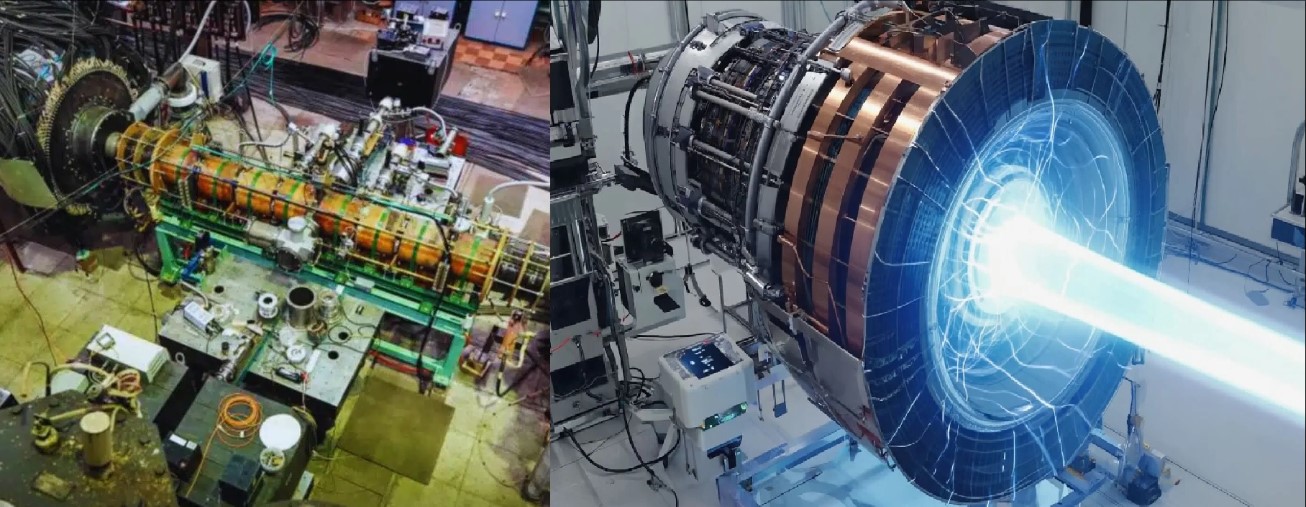
India Nears 800-km BrahMos Breakthrough with New Indigenous Ramjet Engine

India is on the verge of a major technological leap in its cruise missile program as the Defence Research and Development Organisation (DRDO) conducts final rounds of testing for an 800-kilometer range variant of the BrahMos—the world’s fastest operational supersonic cruise missile. According to The Times of India report dated October 20, 2025, the enhanced-range version will feature a modified indigenously developed liquid-fuel ramjet engine, a key step toward full self-reliance in one of India’s most complex weapons systems.
Sources cited by ToI revealed that the 800-km variant is “more or less developed” and undergoing final tests to validate the performance of its improved ramjet propulsion and hybrid navigation system, which combines an internal inertial navigation system (INS) with external global navigation satellite systems (GNSS). These refinements are designed to ensure higher accuracy, greater resilience, and resistance to jamming—an essential capability in modern electronic warfare environments.
From 280 km to 800 km: The Evolution of BrahMos
The BrahMos missile—named after the Brahmaputra and Moskva rivers—was initially restricted to a 280-km range to comply with the Missile Technology Control Regime (MTCR) before India became a member in 2016. Following this, DRDO and BrahMos Aerospace began gradually extending the missile’s range.
At Aero India 2017, then-DRDO chief Dr. S. Christopher announced the first extended-range version, capable of reaching 450 km, achieved by tweaking the flight trajectory and allowing the missile to cruise at higher altitudes. He also hinted at an 800-km variant, stating it could be realized within two and a half years.
A BrahMos official at the time confirmed that the increased range was achieved without changing the missile’s dimensions, instead using lighter composite materials and optimized fuel management to improve engine efficiency.
Developments on the Road to 800 km
Several key milestones paved the way for this extended-range BrahMos:
-
May 2018: DRDO tested BrahMos with non-metallic airframe components and a new indigenous fuel management system, crucial for range enhancement.
-
September 2020: The organization successfully flight-tested a BrahMos featuring a fully indigenous booster and airframe section, a major “Make in India” breakthrough.
-
July 2021 (MAKS Air Show, Russia): Russian defense sources confirmed that an 800-km BrahMos was under joint development with new components, particularly an upgraded booster for greater launch energy.
By 2021, DRDO had successfully indigenized major sub-systems of the missile, including the ramjet fuel tank, airframe, and pneumatic fuel supply systems. The final missing piece—an Indian-built ramjet engine—was under accelerated development.
The Indigenous Ramjet Engine: India’s Technological Leap
Initially, all BrahMos missiles were powered by Russian-made liquid-fuel ramjet engines produced at the Orenburg plant. However, in the last decade, DRDO’s Defence Research and Development Laboratory (DRDL) and BrahMos Aerospace embarked on an ambitious mission to replicate—and then improve—this technology domestically.
By 2021, India achieved full indigenization of the Russian LFRJ (Liquid Fuel Ramjet). In June 2024, BrahMos Aerospace CEO Atul Dinkar Rane confirmed that DRDO was prioritizing ramjet engine advancement, emphasizing that the achievement would significantly reduce per-unit missile costs while increasing reliability and performance control.
In May 2024, DRDO’s Defence Materials and Stores Research and Development Establishment (DMSRDE) achieved a crucial milestone by developing a new generation of liquid ramjet fuel in partnership with BPCL and Mineral Oil Corporation Pvt Ltd. The fuel was successfully tested on a Ramjet Test Bed at DRDL, confirming India’s ability to independently design and sustain the propulsion ecosystem of the BrahMos family.
What Enables the 800-km Range?
Analysts point to a combination of engineering refinements that have nearly doubled BrahMos’s reach:
-
Weight Reduction: Use of advanced carbon fiber composites and non-metallic airframe materials reduced structural weight, enabling more fuel storage without altering external dimensions.
-
Improved Booster: A more efficient solid-fuel booster stage that accelerates the missile to higher Mach speeds before the ramjet ignites.
-
Optimized Ramjet: The new liquid-fuel ramjet design offers better combustion efficiency and sustained thrust, allowing the missile to maintain speeds above Mach 3 for longer durations.
-
Enhanced Fuel Composition: The newly developed indigenous liquid fuel ensures higher energy density and thermal stability, crucial for long-endurance supersonic flight.
-
Integrated Navigation System: The INS-GNSS hybrid system ensures precise target tracking even in GPS-denied or jamming-heavy environments.
These enhancements make the 800-km BrahMos capable of striking deep strategic targets across mountain ranges or naval formations from standoff distances—without compromising accuracy or speed.
Strategic Implications
Once operational, the 800-km BrahMos will redefine India’s conventional deterrence capability. For land-based and ship-launched variants, it means the ability to strike farther inside enemy territory, including hardened bunkers, command centers, and airbases.
For the BrahMos-A (air-launched) version, the extended range will allow Indian Su-30MKI fighters to launch missiles from within Indian airspace, hitting high-value targets deep within adversarial regions.
This range expansion aligns with India’s goal of achieving full autonomy in missile propulsion, reducing dependency on Russia amid shifting geopolitical equations.
Old Russian-Made vs. Indian-Made BrahMos Ramjet: The Key Differences
| Feature | Russian-Made Ramjet | Indian-Made Ramjet |
|---|---|---|
| Origin | Manufactured in Orenburg, Russia | Fully developed and produced by DRDO & Indian industry |
| Fuel Type | Russia Conventional kerosene-based liquid fuel | Advanced indigenous liquid ramjet fuel (higher efficiency) |
| Material Composition | Predominantly metallic structure | Composite + metallic hybrid (lighter and stronger) |
| Efficiency | High thrust, moderate fuel efficiency | Optimized thrust-to-weight ratio and higher combustion efficiency |
| Range Capability | ~450 km max | Up to 800 km with improved endurance |
| Maintenance & Cost | Imported components, higher cost | Lower cost, domestic supply chain |
| Control & Customization | Limited by Russian design parameters | Fully modifiable for Indian operational needs |
| Integration | Partly dependent on Russian testing | Integrated with DRDO’s indigenous fuel, booster, and guidance systems |
In essence, the Indian-made ramjet engine is not just a copy of the Russian design—it’s an evolution. It combines lighter materials, superior fuel chemistry, and enhanced thermal management to deliver nearly double the range and better mission flexibility.
The upcoming 800-km BrahMos marks a decisive milestone in India’s missile modernization journey. What began as a joint Indo-Russian venture two decades ago is now transforming into a largely indigenous weapon ecosystem, driven by DRDO’s innovation and India’s industrial base.
With testing almost complete, the extended-range BrahMos is expected to enter service within the next two years, strengthening India’s position among the few nations capable of designing, producing, and fielding advanced supersonic cruise missiles with complete domestic propulsion technology—a true testament to India’s growing defense self-reliance.
About the Author
Aditya Kumar:
Defense & Geopolitics Analyst
Aditya Kumar tracks military developments in South Asia, specializing in Indian missile technology and naval strategy.