India Issues NOTAM for Possible Long-Range Missile Test Over 1,725 km Area in Bay of Bengal, Scheduled from Nov 27-30
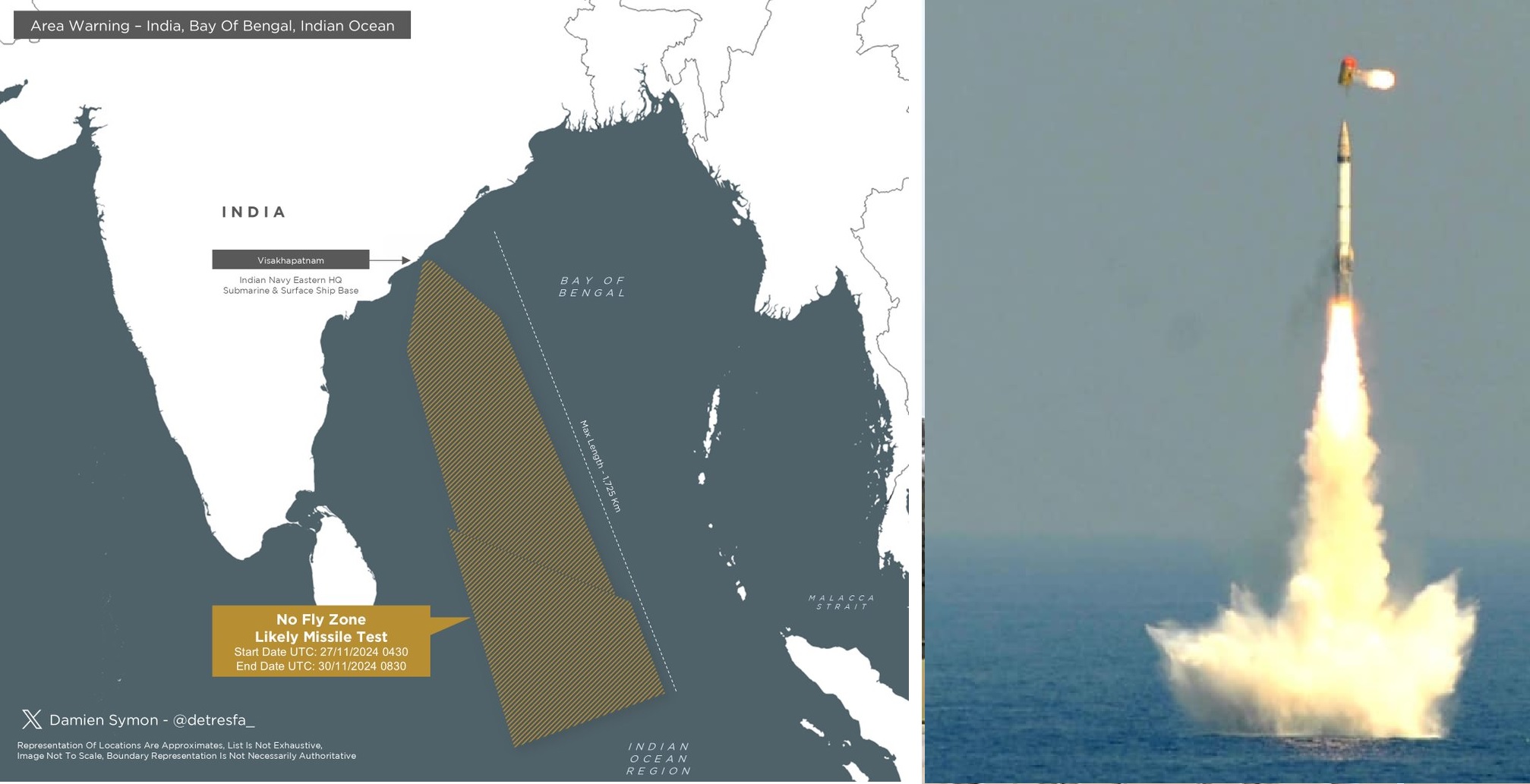
India has issued a Notice to Airmen (NOTAM) over a vast 1,725-kilometer stretch of the Bay of Bengal, indicating an upcoming missile test likely by the Indian Navy. Scheduled between November 27 and November 30, 2024, the test hints at significant advancements in India's long-range missile capabilities, sparking curiosity and speculation about the specific system being evaluated.
The area covered by the NOTAM suggests the possibility of testing a missile with an extended range, possibly exceeding 1,500 kilometers. While the exact missile remains undisclosed, defense analysts believe it could involve one of several advanced platforms under development.
Potential Missile Candidates
Among the candidates is the Indigenous Technology Cruise Missile (ITCM), a subsonic cruise missile boasting a 1,500-kilometer range. Designed for versatility, the ITCM can be launched from both surface ships and submarines, offering India a potent tool for deep-strike operations. The missile leverages indigenous propulsion technology, marking a step forward in self-reliant defense capabilities.
Another contender is a new indigenous long-range cruise missile, reportedly in development. Details about this missile remain classified, but it aligns with India’s broader goal of expanding its stand-off strike arsenal.
Alternatively, the test might involve a submarine-launched cruise missile (SLCM). India’s K-15 (B-05) missile, with a range of approximately 750 kilometers, is already a cornerstone of its sea-based deterrence. However, a new or upgraded SLCM variant could push the envelope, demonstrating India’s evolving second-strike capabilities.
Strategic Implications of the 1,725-kilometer Range
The distance covered in the NOTAM underscores the long reach of the missile system in question. A missile with such a range would significantly bolster India’s ability to project power in the Indo-Pacific region, ensuring the Navy can strike targets well beyond its immediate maritime boundaries. This aligns with India’s strategy of enhancing maritime dominance and securing its interests in the broader Indian Ocean region.
If the test involves a submarine-launched platform, it further highlights India's progress in sea-based nuclear deterrence, a critical component of its nuclear triad. A successful demonstration of such technology would reinforce India's strategic posture amid evolving regional security dynamics.
Broader Context and Significance
This test comes at a pivotal time as India intensifies its efforts to modernize its naval forces. From commissioning new warships to developing indigenous missile systems, India is actively enhancing its maritime strength. Such initiatives are crucial in maintaining a credible deterrent against potential adversaries and ensuring regional stability in the Indo-Pacific, an area of growing strategic contestation.
The development and testing of advanced missile platforms underscore India's commitment to indigenization in defense production, aligning with the “Make in India” initiative. By advancing its technological edge, India not only strengthens its defense capabilities but also sends a clear message about its readiness to safeguard its sovereignty and interests in an increasingly multipolar world.
As the scheduled test window approaches, the world will watch closely, recognizing the implications of this event for India’s strategic and technological trajectory. Whether it’s a new cruise missile or an enhancement of submarine-launched systems, the results will likely mark a significant milestone in India’s defense evolution.
✍️ This article is written by the team of The Defense News.