India Eyes Russia’s S-500 ‘Triumfator-M’ After S-400’s Stunning Success in Operation Sindoor

India’s recent military experience during Operation Sindoor has once again highlighted the importance of advanced air defence systems in protecting national security. Launched in May 2025, the operation was a swift and precise military response to a major terrorist attack in Pahalgam. The Indian Air Force (IAF) carried out targeted airstrikes on terrorist camps located in Pakistan and Pakistan-occupied Kashmir (PoK), sending a clear message against cross-border terrorism.
In retaliation, Pakistan unleashed a wave of missiles and drone attacks aimed at various regions across Jammu & Kashmir, Rajasthan, and Punjab. But what could have been a devastating onslaught was effectively neutralised by India’s deployment of the Russian-made S-400 Triumf air defence system. Its exceptional performance during the operation not only saved countless civilian lives but also safeguarded critical infrastructure along India’s western border.
The S-400 Triumf: A Game Changer for India
Developed by Russia’s Almaz Central Design Bureau, the S-400 has dramatically reshaped India’s air defence capabilities. This highly advanced system can detect incoming threats from up to 600 kilometres away and engage multiple aerial targets—including stealth aircraft, cruise missiles, and ballistic threats—at ranges of up to 400 kilometres.
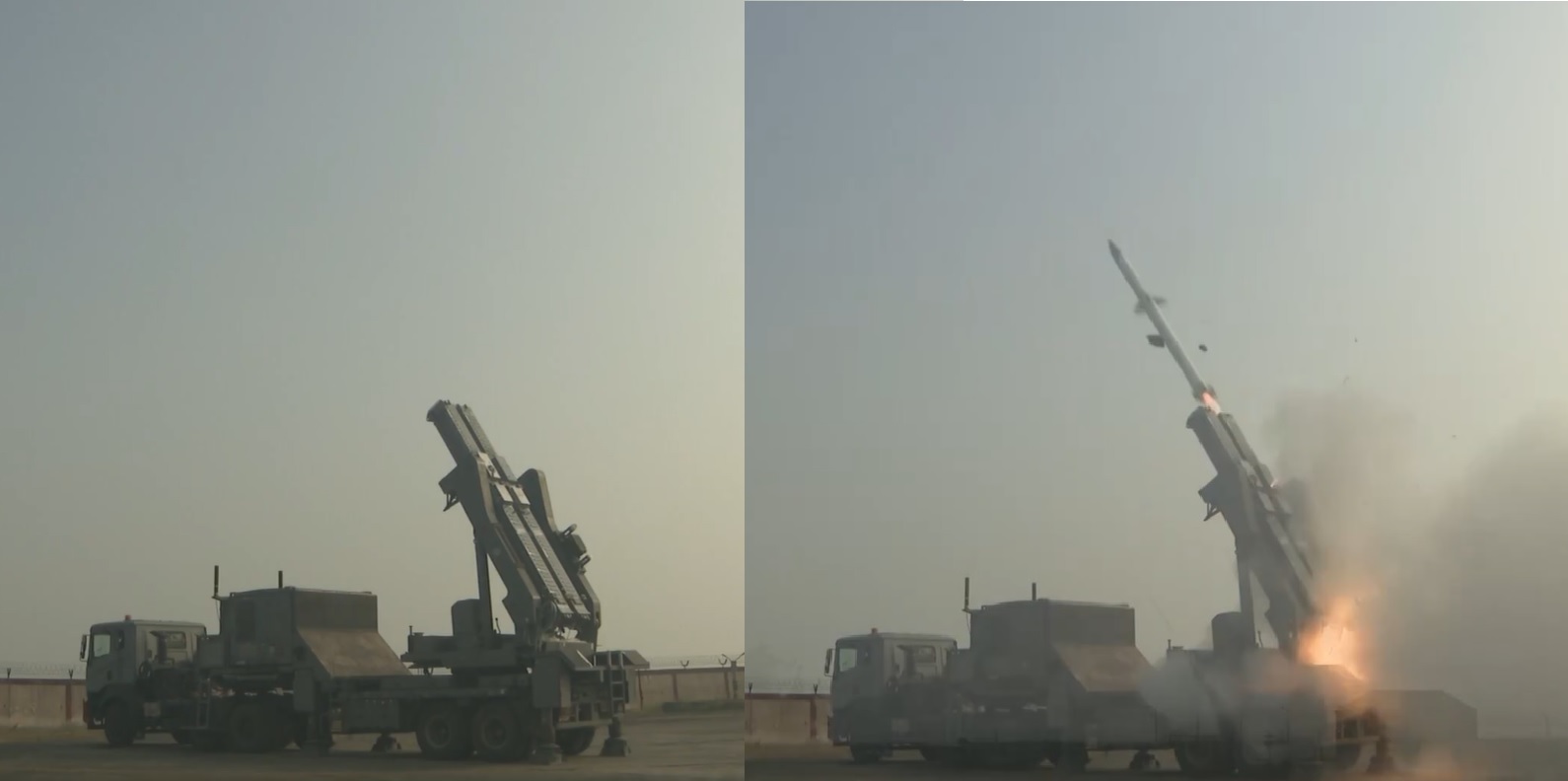
The S-400’s flexibility is another of its strong points. Its mobility allows Indian forces to swiftly reposition the system as tactical situations demand, offering unmatched operational versatility. During Operation Sindoor, its precise interceptions forced Pakistani fighter jets to abort or alter their flight paths and neutralised incoming missiles and drones before they could inflict damage.
India, impressed by the system’s battlefield success, has already placed additional orders for more S-400 units to strengthen its nationwide air defence grid.
India’s Growing Interest in the S-500 ‘Triumfator-M’
Encouraged by the stellar performance of the S-400, India is now actively exploring the possibility of acquiring an even more advanced system—the S-500 Prometheus, officially known as 55R6M Triumfator-M.
Introduced into the Russian Armed Forces in 2021, the S-500 represents a major leap in air defence technology. It’s not just an air defence system but a multi-domain shield capable of countering threats from both the atmosphere and near-space. It’s designed to intercept hypersonic missiles, advanced drones, and even satellites in low Earth orbit—a capability that surpasses anything currently in India’s arsenal.
S-500 Specifications and Capabilities
Here’s a look at what makes the S-500 so formidable:
-
Detection Range: Up to 2,000 kilometres for ballistic targets
-
Interception Range: Can intercept targets as far as 600 kilometres away
-
Multi-Target Tracking: Can track and engage up to 10 targets simultaneously
-
Types of Targets: Hypersonic glide vehicles, fifth-generation stealth fighters, high-speed drones, ballistic missiles, and low Earth orbit satellites
-
Missile Interceptors: Equipped with 77N6-N and 77N6-N1 hit-to-kill interceptors capable of direct-impact destruction
-
Response Time: Rapid reaction capabilities to counter high-speed and multi-directional aerial assaults
This combination of high detection range, multi-target engagement, and the ability to tackle hypersonic and space-based threats makes the S-500 one of the world’s most advanced air defence systems.
The Geopolitical Challenge
While India’s interest in the S-500 is clear, acquiring the system won’t be a straightforward affair. The United States’ Countering America’s Adversaries Through Sanctions Act (CAATSA), passed in 2018, allows Washington to impose sanctions on countries making significant defence deals with Russia.
Although India received a waiver for its earlier purchase of the S-400, there’s no certainty that the US would offer a similar exemption for the S-500. This creates a tough decision for Indian policymakers, who must carefully balance the strategic advantage of enhanced air defence with the risk of potential diplomatic and economic fallout.
Why the S-500 Could Be a Wise Move for India
The modern battlefield is evolving rapidly, with countries developing hypersonic missiles, drone swarms, and space-based weapons systems. In such a changing threat environment, India cannot afford to rely solely on existing systems, no matter how capable.
The S-500’s ability to defend against next-generation threats—especially hypersonic and space-based weapons—would give India a significant strategic edge. It would not only secure Indian airspace but also project power and deterrence capability in the region.
If India moves forward with this procurement, it would become the first foreign nation to acquire the S-500, reflecting both its strong defence ties with Russia and its growing emphasis on futuristic military technology.
Operation Sindoor reaffirmed the crucial role of advanced air defence systems in modern conflicts, with the S-400 proving its worth under live combat conditions. Now, as India considers stepping up its defensive shield with the acquisition of the S-500 Triumfator-M, it stands at a strategic crossroads.
The decision will involve navigating complex geopolitical realities but could offer India a significant boost in its ability to deter and defend against increasingly sophisticated aerial and space-based threats in the years to come.
✍️ This article is written by the team of The Defense News.