India Enters AI-Driven Infantry Warfare With 40,000 Indigenous Negev NG7 LMGs From 2026
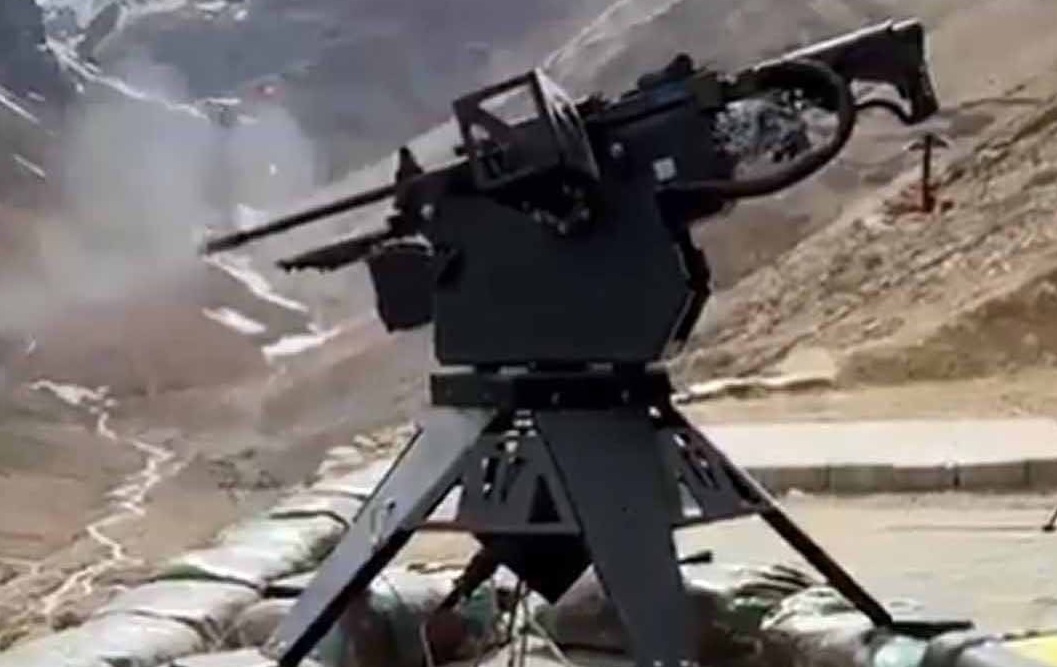
India’s long-running effort to modernise its infantry has reached a pivotal moment as indigenous manufacturing and artificial intelligence (AI) converge on the battlefield. The domestically produced 7.62×51mm Negev NG7 light machine gun (LMG), manufactured by Adani Defence & Aerospace under licence from Israel Weapon Industries, is emerging as a cornerstone of this transformation. With large-scale deliveries scheduled from early 2026 and autonomous variants already tested at extreme altitudes, the programme signals a structural shift in India’s ground combat capabilities.
Meeting the Infantry’s Operational Requirements
The Indian Army’s requirement for a modern LMG has been shaped by operational experience across counter-insurgency theatres and high-altitude deployments along the Line of Actual Control (LAC). The Negev NG7, chambered for the 7.62×51mm NATO round, delivers the range, penetration and accuracy required for contemporary infantry combat.
Its design supports both belt-fed and magazine-fed operation, enabling soldiers to transition between sustained suppressive fire and controlled close-quarters engagements. The availability of a semi-automatic firing mode enhances controllability, particularly in urban, mountainous and confined environments.
At approximately 7.95 kilograms, the NG7 is significantly lighter than legacy general-purpose machine guns, a critical advantage in high-altitude warfare, where mobility, endurance and rapid repositioning often decide tactical outcomes.
Indigenous Production and Scale of Induction
Adani Defence’s small-arms manufacturing facility in Gwalior is preparing to commence deliveries of the first batch of around 40,000 Negev NG7 LMGs from early 2026. Officials associated with the programme indicate that indigenous content has already crossed 75 per cent, with plans to raise it to nearly 90 per cent as additional components, materials and sub-systems are localised.
The production effort extends beyond assembly of imported kits. It includes domestic machining, quality assurance, supplier ecosystem development, and process transfer, aligning with India’s broader push for sustainable defence manufacturing capacity.
AI-Enabled Autonomous Variant: A Battlefield Force Multiplier
What distinguishes the NG7 programme from previous infantry inductions is the parallel development of an AI-enabled autonomous configuration. In recent trials conducted at altitudes exceeding 14,000 feet, the system demonstrated its ability to function as a robotic sentry in extreme weather conditions.
Integrated with thermal and optical sensor suites, the AI-enabled NG7 successfully scanned terrain, detected potential targets, and maintained continuous surveillance through fog, snow and low-visibility environments—without direct human control. These trials were conducted in conditions representative of forward high-altitude posts, where manpower deployment is logistically demanding and operationally risky.
While Adani Defence provides the weapon platform, the AI algorithms, sensors and control architecture have been developed by Indian firms, including BSS Materiel. Defence analysts view this capability as especially relevant for bunker defence, perimeter security and border surveillance roles.
The Kanpur–Gwalior Firepower Corridor
The NG7 induction is underpinned by a rapidly expanding domestic defence industrial base. Through PLR Systems, its joint venture with IWI, Adani Defence has established South Asia’s largest ammunition and missile manufacturing complex in Kanpur, complemented by a dedicated small-arms hub in Gwalior.
Together, these facilities form what industry officials describe as the Kanpur–Gwalior firepower corridor, offering end-to-end indigenous capability spanning ammunition, infantry weapons and associated sub-systems. The integrated model is designed to ensure supply chain resilience, rapid scalability, and operational readiness during crises.
A Broader Aerospace and Defence Transformation
The infantry weapons programme is part of a wider aerospace and defence expansion by the Adani Group. Key focus areas include aircraft structures and composites, unmanned aerial vehicles (UAVs), counter-drone systems, defence electronics, and AI-enabled surveillance and intelligence platforms.
Strategic acquisitions such as Air Works for defence aircraft maintenance and investments in flight simulation and training infrastructure underscore a long-term effort to enhance force readiness across the Army, Navy and Air Force. Industry estimates place cumulative investments at over ₹10,000 crore.
Strategic Implications for India’s Armed Forces
For the Indian armed forces, the convergence of indigenous production and artificial intelligence represents more than incremental modernisation. It supports a gradual doctrinal shift from manpower-intensive deployments to technology-driven force multipliers, particularly in static defence and surveillance roles.
Autonomous and semi-autonomous systems are increasingly viewed as essential to maintaining round-the-clock vigilance in inhospitable terrain, while reducing risk to personnel and optimising force allocation.
The Road Ahead
As India continues its push toward Aatmanirbhar Bharat in defence, the Negev NG7 programme stands out as a model combining licensed manufacturing, deep indigenisation, and domestic AI innovation. Modern warfare, military planners argue, is no longer defined solely by calibre or numbers, but by intelligent, networked and locally sustained systems.
In that context, the emergence of an AI-enabled, Made-in-India light machine gun marks a significant milestone in the evolution of India’s infantry combat power—and offers a clear indication of the future direction of the country’s ground forces.
✍️ This article is written by the team of The Defense News.