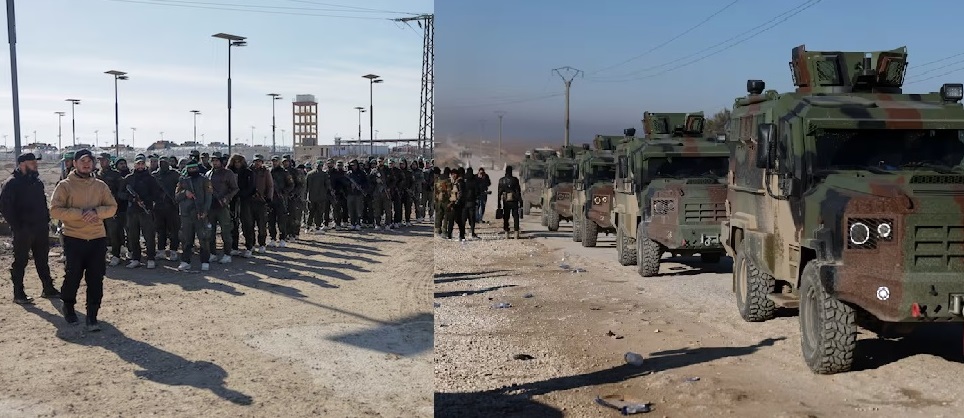
India Conducts Drone Strike on Terror Camps in Myanmar, 26 Militants Killed
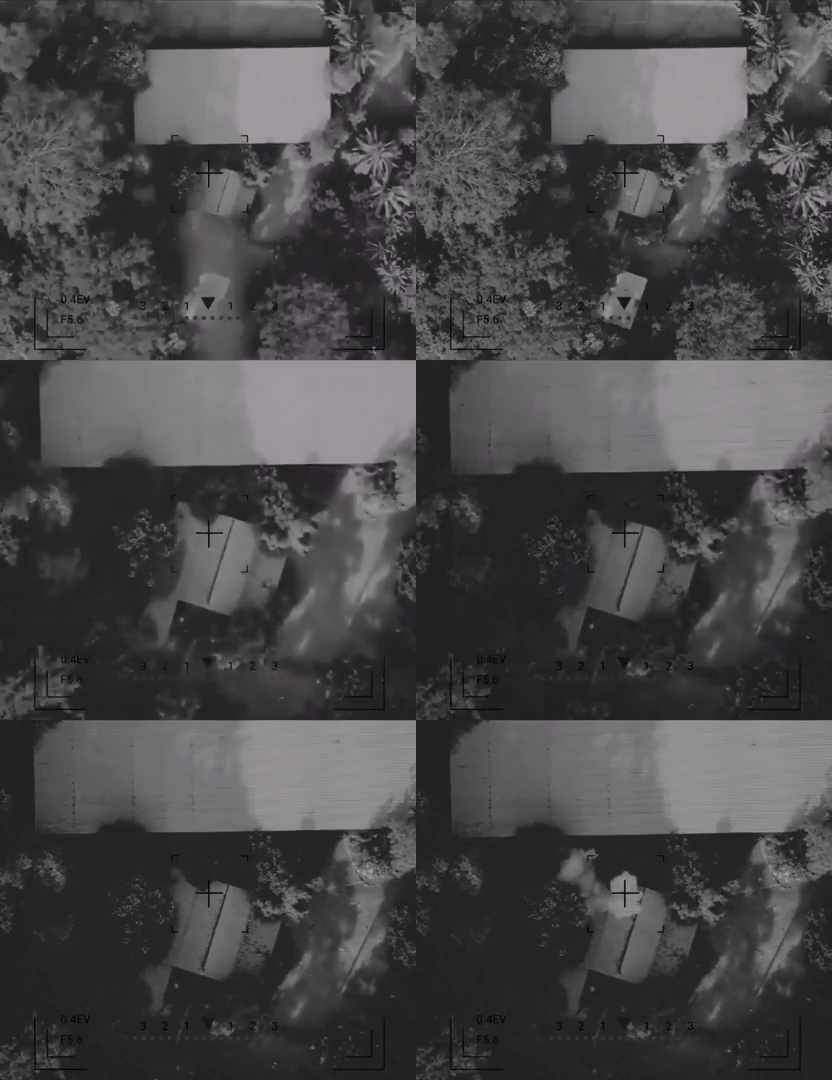
In a stunning display of precision and intelligence dominance, India has reportedly carried out a drone strike deep inside Myanmar’s Sagaing Region, targeting militant camps belonging to NSCN (K-YA) — the Yung Aung faction of the National Socialist Council of Nagaland (Khaplang). The strike, which is said to have also hit joint facilities used by ULFA (I) and the People’s Liberation Army (PLA) of Manipur, marks one of the most significant cross-border counter-insurgency actions in recent years.
According to emerging reports, the drone assault inflicted heavy casualties, with the NSCN (K-YA) itself admitting to the death of 26 militants, including two senior leaders. A top field commander is believed to be among those killed. The camps were reportedly located in the Taga area of Sagaing, a known safe haven for several anti-India insurgent groups operating under the umbrella of the United Liberation Front of Western South East Asia (UNLFWSEA).
While there has been no official statement from the Indian Armed Forces or the Ministry of Defence, the scale and precision of the attack have left little doubt about the level of coordination and technological prowess behind it. The drones used in the operation remain unidentified, with local sources in Myanmar referring to them as “unknown aircraft.”
A Message Beyond Borders
The strike sends an unmistakable message — India’s patience with cross-border insurgency sanctuaries has limits. The Myanmar-based camps had long served as logistical and training hubs for anti-India militants who carried out ambushes and attacks across the Northeast, particularly in Arunachal Pradesh and Nagaland.
Analysts believe this operation follows a similar pattern to India’s 2015 surgical strike in Myanmar, when para-commandos crossed the border to neutralize NSCN(K) militants after they ambushed Indian soldiers in Manipur. However, this time, the use of drones indicates a new phase in India’s counter-insurgency doctrine — one that blends deniability with technological precision.
The message is not just for militants operating from Myanmar, but also for anti-India networks based in Pakistan and beyond. The strike underscores New Delhi’s resolve to neutralize threats wherever they emerge, without the need for overt declarations or publicity.
Technological and Tactical Shift
The success of this operation, if officially confirmed, highlights India’s growing unmanned aerial warfare capabilities. Over the past few years, India has significantly expanded its drone fleet, acquiring systems like the Heron Mk2, MQ-9B Reaper, and indigenous drones such as Tapas-BH-201 and AURA stealth UCAV. The integration of precision-guided munitions and real-time surveillance has given Indian forces the ability to strike swiftly and silently across difficult terrain — a critical advantage in the complex jungles along the Indo-Myanmar border.
Reports also suggest that the strike could have been supported by satellite and SIGINT (signals intelligence) inputs, possibly from the Defence Intelligence Agency and RAW’s Aviation Research Centre, which have been monitoring militant activity in the region for months.
Regional Implications
Myanmar’s Sagaing Region, currently embroiled in civil conflict between the junta and pro-democracy resistance groups, has become increasingly lawless — providing fertile ground for Indian insurgents to regroup. The tacit cooperation between Indian and Myanmar security agencies has historically enabled limited joint operations, though Naypyidaw’s ongoing instability has complicated coordination.
If confirmed, this operation demonstrates India’s ability to act unilaterally when required, a move that reinforces its strategic autonomy and deterrence posture. It also comes amid rising Chinese influence in Myanmar, where Beijing’s shadowy support for certain insurgent elements has raised alarms in New Delhi.
A Silent Strike, a Loud Message
While the Indian government remains silent, the impact on the ground is undeniable. The NSCN(K-YA)’s acknowledgment of casualties is rare and indicative of the severe blow they’ve suffered. The loss of senior leadership could cripple their cross-border coordination, while the destruction of logistics hubs will hinder supply chains to other Northeast militant outfits.
In essence, this drone-based surgical strike is more than a tactical success — it’s a strategic signal to every actor exploiting porous borders or foreign safe havens. It reinforces India’s doctrine of “offensive defense”, blending modern warfare technology with the age-old principle of deterrence through decisive action.
About the Author
Aditya Kumar:
Defense & Geopolitics Analyst
Aditya Kumar tracks military developments in South Asia, specializing in Indian missile technology and naval strategy.