India Clears 1,000 SPICE-1000 Precision Strike Kits in $8.7 Billion Defence Approval

New Delhi : India has approved the acquisition of around 1,000 SPICE-1000 precision guidance kits from Israel as part of a sweeping $8.7 billion (approximately ₹79,000 crore) defence procurement package aimed at strengthening the combat capabilities of the armed forces.
The decision was taken by the Defence Acquisition Council (DAC), chaired by Defence Minister Rajnath Singh, which granted Acceptance of Necessity (AoN) for a wide range of critical military equipment for the Army, Navy and Air Force. The package spans air-launched weapons, sensors, communications systems and other force-multipliers, with the SPICE-1000 approval marking a significant boost to India’s deep-strike precision warfare capability.
Transforming ‘Dumb’ Dombs into Smart Standoff Weapons
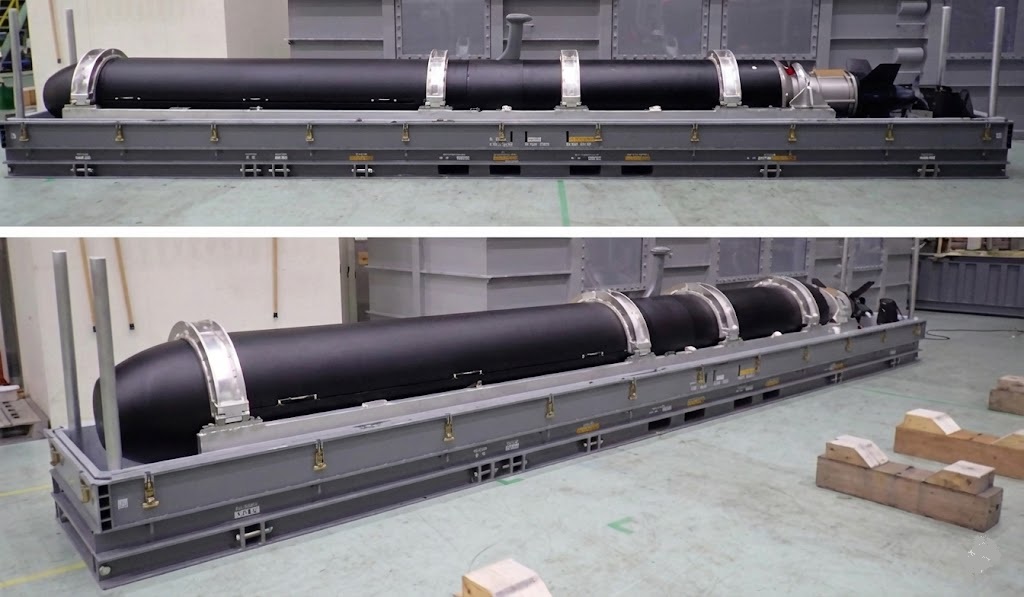
The SPICE-1000—short for Smart, Precise Impact, Cost-Effective—is a precision guidance kit developed by Israeli defence firm Rafael Advanced Defense Systems. The kit converts standard 1,000-lb (≈450-kg) unguided bombs into long-range, all-weather, standoff glide weapons.
Once released from a combat aircraft, the SPICE-1000 can strike targets at distances exceeding 100 kilometres, depending on launch altitude and flight profile. This standoff range allows Indian Air Force aircraft to engage high-value targets without entering heavily defended airspace, significantly reducing risk to pilots and platforms.
Jam-resistant, Autonomous Precision
A defining feature of the SPICE system is its multi-mode guidance architecture. The weapon combines inertial navigation and satellite guidance with an electro-optical scene-matching seeker, enabling it to autonomously recognise and lock onto targets in the terminal phase. This design ensures high accuracy even in GPS-denied or electronically jammed environments, a growing concern in modern warfare.
Once launched, the weapon is fire-and-forget, requiring no further guidance from the aircraft. Mission planning data, including target imagery, can be uploaded prior to sortie, allowing flexible and precise engagement of fixed, hardened or high-value targets.
Combat-proven Lineage for the Indian Air Force
India is already familiar with the SPICE family. The Indian Air Force first used SPICE precision weapons during the Balakot airstrike in February 2019, when Mirage-2000 fighter jets employed the larger SPICE-2000 variant against terrorist infrastructure across the border. The operation established the system’s credibility in real combat conditions.
The approval of the SPICE-1000 represents a logical expansion of this capability, offering similar accuracy with greater flexibility across a wider range of aircraft and mission profiles.
Procurement Pathway And Strategic Context
The DAC’s clearance is an approval-stage decision, not a final contract. The acquisition will now move into subsequent phases, including commercial negotiations and contract signing. The projected quantity—approximately 1,000 kits—suggests intent to build substantial war-reserve stocks rather than a limited niche capability.
Strategically, the decision reinforces India’s emphasis on stand-off precision strike, particularly in scenarios involving dense air-defence networks and electronic warfare threats. It also highlights the continuing depth of India–Israel defence cooperation, with Israel remaining one of India’s most important suppliers of advanced air-launched munitions and sensor technologies.
A Sharper Edge for India’s Air Power
With this approval, India moves closer to fielding a larger inventory of long-range, jam-resistant precision weapons capable of striking deep and accurately while keeping pilots out of harm’s way. As contracts are finalised and deliveries follow, the SPICE-1000 is set to become a key element of the Indian Air Force’s evolving strike doctrine in the years ahead.
About the Author
Aditya Kumar:
Defense & Geopolitics Analyst
Aditya Kumar tracks military developments in South Asia, specializing in Indian missile technology and naval strategy.