India Approves ₹2,500 Crore Project for 100-Tonne XLUUVs, Plans 500-Tonne Armed Autonomous Submarines
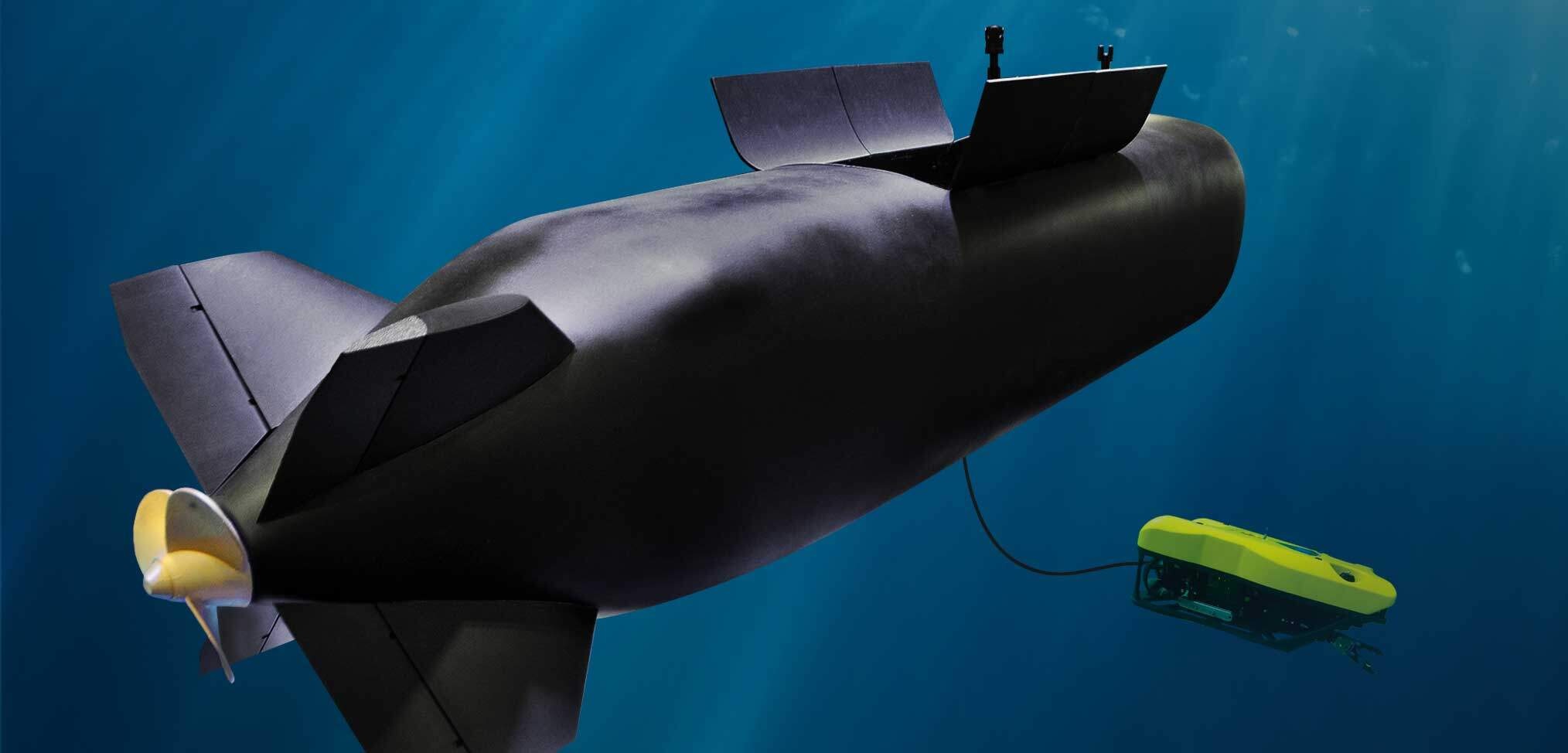
In a landmark decision that could redefine India’s undersea warfare capabilities, the Ministry of Defence has approved the development of 100-tonne Extra-Large Unmanned Underwater Vehicles (XLUUVs), marking the country’s most ambitious leap yet into autonomous naval combat technology.
Backed by a budget of approximately ₹2,500 crore (about $290 million), the programme will be spearheaded by the Defence Research and Development Organisation (DRDO). The first XLUUV prototypes will be engineered for long-duration stealth missions, enabling the Indian Navy to operate deep in contested waters without risking human lives.
A Three-Tier Unmanned Force
The 100-tonne XLUUVs will be multi-role platforms, designed for deep-sea surveillance, covert intelligence gathering, strategic mine deployment, and anti-submarine warfare (ASW). These large drones are expected to dramatically extend the Navy’s operational reach across the Indian Ocean Region (IOR) and into the Indo-Pacific, where China’s naval presence has been steadily increasing.
But this is only phase one. The Navy’s roadmap already points towards the future development of a 500-tonne armed autonomous submarine—a far more formidable platform that will shift the focus from reconnaissance to direct combat operations. This massive hunter-killer is expected to be armed with both lightweight torpedoes for submarine interception and heavyweight torpedoes capable of sinking large warships.
Such a vessel will be able to operate alongside manned submarines or conduct independent long-range patrols deep within hostile waters. Equipped with advanced artificial intelligence-driven navigation and targeting systems, ultra-quiet propulsion, and extended endurance, it will be designed to breach heavily defended maritime zones and strike strategic targets.
Alongside these larger vessels, the Navy is also developing a 20-tonne unmanned underwater vehicle (UUV) optimised for shallow-water and coastal missions. This smaller platform will monitor chokepoints, survey enemy ports, and provide base security, plugging a critical gap in near-shore defence.
Strategic Implications
Together, the 20-tonne, 100-tonne, and 500-tonne classes will form a layered unmanned undersea fleet—each tailored to a specific operational niche. This fleet will not only strengthen peacetime maritime domain awareness but also provide the Navy with rapid-response strike options during crises.
Analysts believe the programme could act as a force multiplier for India’s naval strategy, especially as its manned submarine fleet undergoes gradual modernisation. Autonomous vehicles can remain on patrol for weeks or even months, creating a persistent undersea presence and reducing the risk to human crews in high-threat areas.
With this move, India joins a small group of global powers—including the United States, China, and the UK—that are pushing the boundaries of unmanned underwater warfare. The U.S. Navy’s Orca XLUUV, for example, is already undergoing trials, while China is investing heavily in long-range unmanned submarines to expand its influence in the Pacific.
For India, the adoption of such advanced platforms is more than just a technological upgrade—it is a strategic necessity in an era where control of the undersea domain is becoming as critical as air superiority. As geopolitical tensions rise in the Indo-Pacific, these stealthy, AI-enabled systems could provide the edge needed to safeguard India’s vast maritime interests.
✍️ This article is written by the team of The Defense News.