India Activates a New Space Shield: Digantara to Deploy Private Missile Early-Warning Satellites by 2026–27
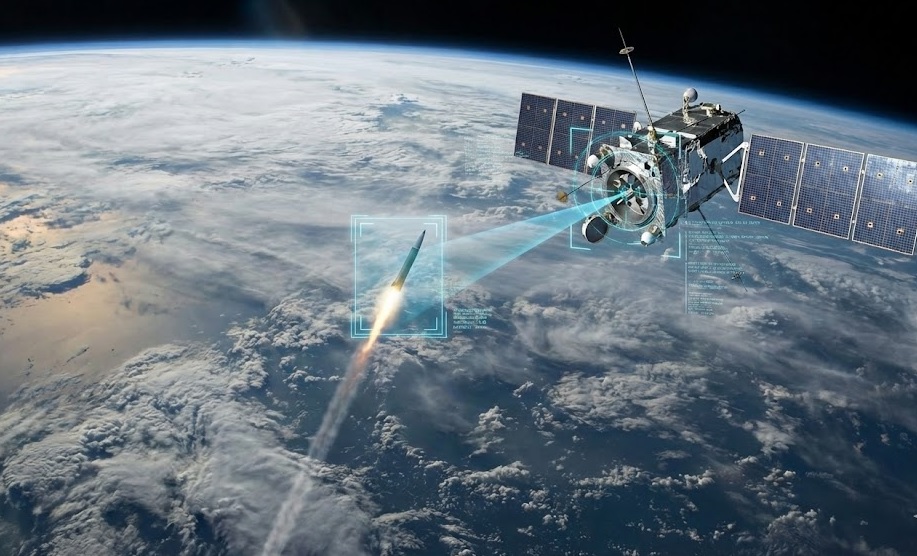
In a major leap for India’s strategic deterrence and private defence capability, Digantara has announced plans to build India’s first privately developed space-based missile early-warning system, marking the company’s transition from orbital safety to frontline national security. The programme, internally known as Albatross, is targeted for operational deployment between 2026 and 2027, according to company officials.
The move comes on the back of Digantara’s recently closed USD 50 million Series-B funding round, one of the largest raises by an Indian space startup to date. The capital infusion is being channelled into satellite manufacturing scale-up, advanced sensor development, and global expansion across the United States and Europe, while simultaneously positioning the company for upcoming Indian government and allied defence tenders.
From Space Debris to Strategic Deterrence
Digantara’s rise began with space situational awareness (SSA)—the ability to track orbital debris, satellites, and fast-moving objects in Earth’s increasingly congested orbits. That capability was demonstrated with the launch of its SCOT (Space Camera for Object Tracking) satellite in January 2025, which validated high-precision optical sensing and real-time tracking from low Earth orbit.
Those same technologies are now being repurposed for a far more consequential role: missile early warning. Engineers at Digantara have adapted their infrared and optical payloads to detect the intense heat plume generated during the boost phase of missile and rocket launches, enabling detection seconds after ignition, rather than minutes later when a weapon enters radar range.
What Is Albatross—and Why It Matters
Albatross is designed as a space-based launch-detection satellite, capable of spotting missile and rocket firings at the source, well before they approach Indian airspace. Unlike ground-based radars constrained by terrain, line-of-sight limitations, and the curvature of the Earth, a space-based sensor has an unobstructed vantage point.
According to programme details, Albatross will be capable of detecting and tracking ballistic missiles, cruise missiles during their boost phase, guided multiple-launch rocket systems (GMLRS), and large-scale saturation rocket attacks. Within seconds of detection, command centres can receive data on launch location, trajectory, velocity, missile class, and probable impact zone—crucial inputs for rapid defensive decision-making.
AIRA: Fusing Space and Ground Intelligence
Albatross is not a standalone satellite but a key node in Digantara’s broader surveillance architecture known as AIRA—Advancement of Space Assets through Intelligence & Recognition of Ambiguity. Data from Albatross satellites is fused with inputs from Skygate, Digantara’s network of ground-based sensors, to generate a near real-time three-dimensional trajectory map of hostile projectiles.
This fused intelligence can significantly enhance the reaction window for India’s layered air-defence ecosystem, including interceptor and surface-to-air missile systems. While Digantara’s platform is not a missile shield like Israel’s Iron Dome or Arrow systems, it acts as a critical early-warning layer, compressing detection timelines and improving interception probabilities.
A Startup at the Strategic Core
What makes the initiative especially notable is its origin. Founded in 2018 by a team that includes former scientists and engineers from ISRO and DRDO, Digantara represents a new generation of Indian defence-technology firms operating outside the traditional public-sector framework.
Until recently, missile early-warning systems were the exclusive domain of superpowers and state-run defence programmes. Digantara’s Albatross mission signals a shift, showcasing how India’s maturing private space sector is beginning to address strategic-grade military requirements once thought unreachable for startups.
Looking Ahead to 2026–27
With satellite launches planned over the next two years, Digantara aims to demonstrate a persistent, space-based missile detection capability aligned with India’s broader push for Atmanirbhar Bharat in high-technology defence. If successfully deployed, Albatross would place India among a select group of nations with indigenous, space-enabled early-warning infrastructure—this time, powered by the private sector.
Once focused on watching space debris, Digantara is now turning its sensors toward something far more critical: the earliest moments of a threat to national security.
✍️ This article is written by the team of The Defense News.