India Achieves Historic 5,000-Metre Deep-Sea Dive in Indo–French Mission
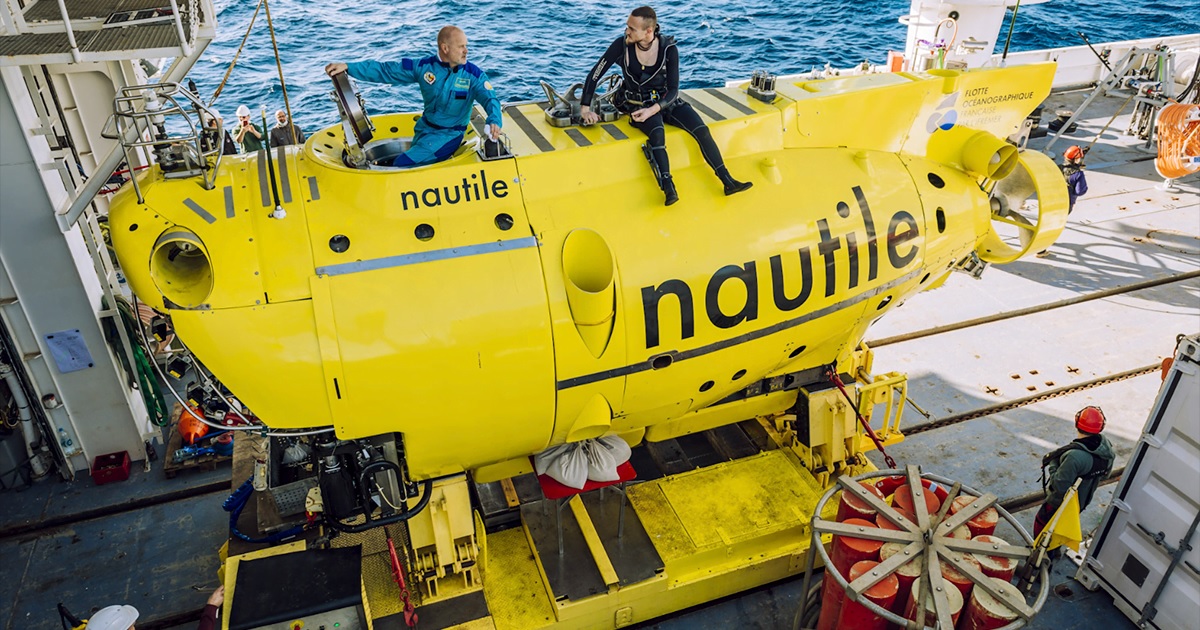
India has taken a giant leap in deep-ocean exploration, successfully sending two Indian aquanauts to depths of up to 5,000 metres in the North Atlantic Ocean aboard the French crewed submersible Nautile on August 5 and 6. The milestone marks the deepest manned dives ever undertaken by Indian explorers and is a crucial step toward the country’s upcoming Samudrayaan mission.
On August 5, R Ramesh, a scientist from the National Institute of Ocean Technology (NIOT), descended to 4,025 metres. The following day, Commander (Retd) Jatinder Pal Singh reached a record-breaking 5,003 metres. Each dive lasted nearly nine to ten hours, including a 2.5-hour descent, around four hours of operations on the seabed, and a 2.5-hour ascent.
The missions involved extensive training in deep-sea navigation, trajectory tracking, vehicle handling, and real-time communication. The Nautile, operated by the French marine research institute Ifremer, is capable of diving up to 6,000 metres and houses three people. Equipped with powerful lights, high-definition cameras, and two robotic arms, it can conduct up to six hours of operational work at the seabed during each dive.
During the expedition, the aquanauts tested the submersible’s robotic manipulators, collected samples from the ocean floor, and planted both the Indian and French national flags at depth, symbolising international cooperation in ocean science.
This mission is seen as critical preparation for Samudrayaan, India’s first manned ocean mission under the Deep Ocean Mission program. Scheduled for 2027–28, it will send three Indian aquanauts to 6,000 metres aboard the indigenously developed Matsya-6000 submersible. The vessel, designed with a titanium sphere, will have a 12-hour operational endurance and emergency support for up to 96 hours.
With this achievement, India moves closer to joining an elite group of nations—the United States, Russia, China, France, and Japan—capable of crewed deep-sea exploration. Officials say the mission will help strengthen India’s blue economy, advance deep-sea mining capabilities, and expand scientific knowledge of unexplored marine ecosystems.
“This successful deep dive demonstrates India’s readiness for its own 6,000-metre mission and reflects the growing expertise of our scientists and engineers in extreme underwater operations,” an NIOT official said.
The expedition also aligns with India’s agreements with the International Seabed Authority to explore mineral-rich deep-sea regions between 4,000 and 5,500 metres, a step towards securing strategic undersea resources.
✍️ This article is written by the team of The Defense News.