ISRO’s PSLV to Launch ESA’s Proba-3: A Precision Space Mission Set for December 4
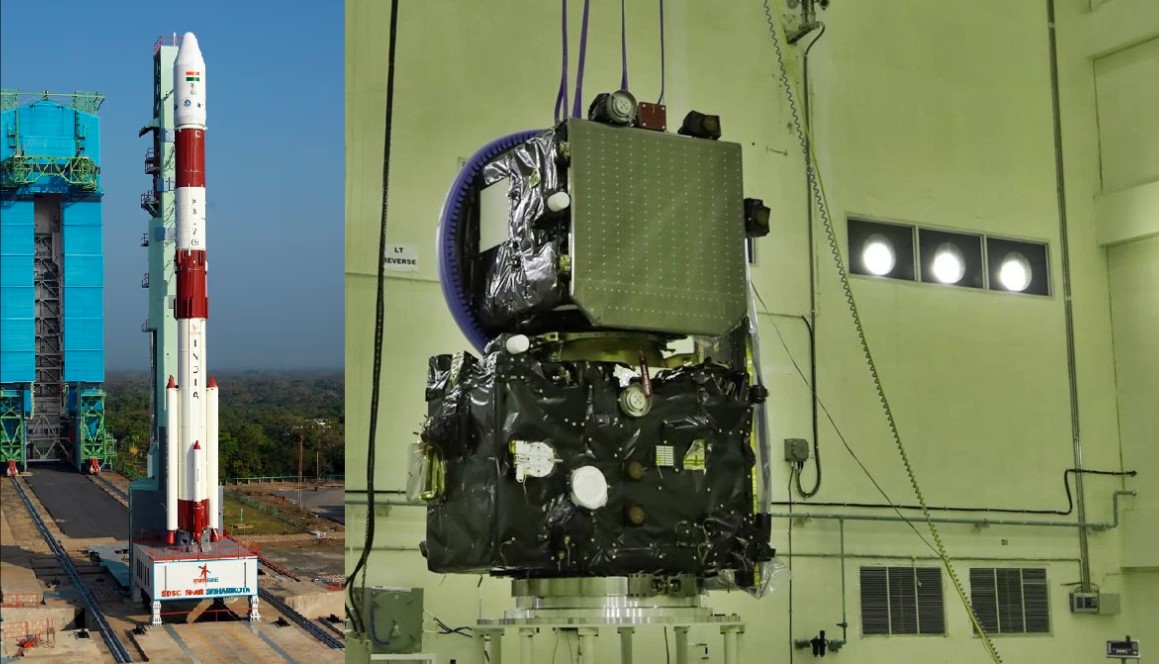
The Indian Space Research Organisation (ISRO) is preparing for a landmark mission with the launch of the European Space Agency’s (ESA) Proba-3 satellites aboard the trusted PSLV-XL rocket. Scheduled for December 4, 2024, the launch will take place from the Satish Dhawan Space Centre in Sriharikota, India. This mission stands out as the world’s first precision formation-flying operation, aiming to advance space exploration and solar science.
Mission Overview and Key Objectives
Proba-3 consists of two spacecraft designed to work in unison: the Occulter Spacecraft (OSC) weighing 200 kg and the Coronagraph Spacecraft (CSC) weighing 340 kg. Together, these satellites will create an artificial solar eclipse in space. This maneuver enables unprecedented observations of the Sun’s corona, providing insights into solar wind origins and space weather. The pair will maintain a precise 150-meter separation, operating as if they were a single rigid structure—an engineering feat that tests advanced formation-flying and rendezvous technologies.
Technical and Orbital Details
The Proba-3 satellites will be placed in a highly elliptical orbit, with an apogee of 60,530 km and a perigee of 600 km. This orbit has an inclination of 59 degrees and a period of 19.7 hours. Key payload operations will occur around apogee, where the satellites’ precise formation will be maintained for extended durations. A dedicated antenna at Santa Maria des Azores and a ground station in Redu, Belgium, will support mission operations.
ISRO’s PSLV-XL, the upgraded version of its Polar Satellite Launch Vehicle, will execute this mission. This variant includes six strap-on boosters for enhanced thrust, offering a payload capacity of up to 3,250 kg to low Earth orbit (LEO) and 1,410 kg to geostationary transfer orbit (GTO). The rocket stands 44 meters tall with a fairing diameter of 3.2 meters, ensuring compatibility with complex payloads like Proba-3.
Scientific and Technological Impact
The artificial eclipse generated by Proba-3 allows for prolonged studies of the Sun’s faint corona, an area usually obscured by its intense brightness. This capability will refine our understanding of solar dynamics and contribute to forecasting solar activity that affects satellite communications and power grids on Earth. The mission also serves as a testbed for cutting-edge technologies in satellite navigation, formation control, and fuel optimization.
International Collaboration and Future Implications
The Proba-3 mission highlights the growing collaboration between ISRO and ESA. The successful integration of the Proba-3 spacecraft with PSLV-XL marks a step forward in joint efforts to explore and utilize space for scientific advancement. This mission is expected to set new benchmarks for precision in satellite operations, potentially influencing future multi-satellite constellations and space observatories.
As the countdown begins, Proba-3 promises not only to push the boundaries of solar research but also to showcase the technological prowess of ISRO’s PSLV-XL and ESA’s engineering capabilities. The mission signifies a milestone in global space exploration, reflecting the spirit of international scientific cooperation.
✍️ This article is written by the team of The Defense News.