ISRO to Launch Upgraded Semi-Cryogenic LVM3 Rocket in 2027

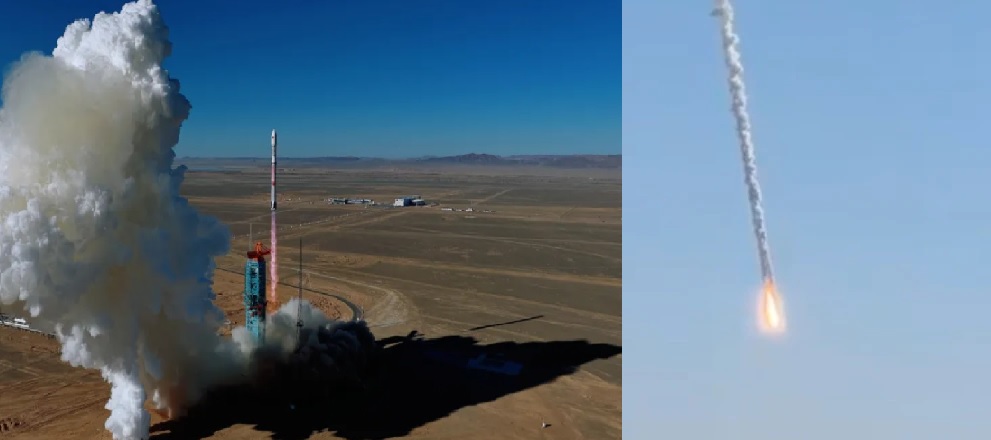
In a major milestone for India’s space program, the Indian Space Research Organisation (ISRO) has announced that it will conduct the first launch of the upgraded LVM3 rocket equipped with a semi-cryogenic stage in early 2027. This new variant is set to significantly boost payload capacity and reduce launch costs, marking a key step toward future deep-space missions and heavy satellite deployment.
The LVM3 (Launch Vehicle Mark-3), India’s most powerful rocket to date, currently uses a twin-Vikas engine liquid stage (L110) and a cryogenic upper stage. The new version will replace the L110 with a more powerful semi-cryogenic stage called SC120, powered by a high-thrust SE2000 engine that runs on liquid oxygen (LOX) and kerosene.
Key Upgrades
-
First Stage Modernization:
The SC120 semi-cryogenic stage will replace the older liquid stage, offering a thrust of around 200 tonnes, compared to the twin Vikas engines’ combined thrust of ~160 tonnes. The SE2000 engine uses a more efficient oxidizer-rich staged combustion cycle. -
Cryogenic Upper Stage Enhancement:
ISRO is also increasing the propellant load of the CE-20 cryogenic upper stage from 28 to 32 tonnes, enhancing mission flexibility and burn duration. -
Increased Payload Capacity:
With these changes, the upgraded LVM3 is expected to deliver up to 5,200 kg to Geosynchronous Transfer Orbit (GTO) — a significant improvement over the current 4,200 kg capacity. -
Cost Efficiency:
The semi-cryogenic design, based on kerosene and LOX, is not only more powerful but also more economical, potentially reducing per-launch costs by up to 25%.
Testing & Development
The SE2000 engine, developed by ISRO’s propulsion teams, has undergone successful hot-fire and ignition tests. These include powerhead validation, start-stop cycles, and partial thrust firings, with full-scale qualification expected by late 2026. All trials are being conducted at ISRO’s Semi-Cryogenic Integrated Engine Test Facility in Mahendragiri.
This engine is India’s first attempt at a large-scale staged-combustion engine — a technology used by advanced launch systems like the Russian RD-180 and SpaceX’s Raptor. It marks a leap forward in efficiency, allowing higher performance without increased mass.
Strategic Implications
The upgraded LVM3 is not only aimed at heavier commercial satellite launches but also forms the backbone for India’s upcoming crewed spaceflights and interplanetary missions. Its performance gains will also play a vital role in supporting missions under development for lunar exploration, the Venus orbiter, and India’s planned space station.
Furthermore, this semi-cryogenic version lays the foundation for the Next Generation Launch Vehicle (NGLV) — ISRO’s future heavy-lift and partially reusable rocket, expected in the 2030s.
ISRO’s announcement marks the beginning of a transformative phase in India’s launch vehicle capability. The successful debut of the semi-cryogenic LVM3 in 2027 will not only improve commercial competitiveness but also serve as a critical stepping stone for human spaceflight and beyond.
Further integration work and qualification tests will continue through 2025 and 2026, as the space agency prepares to bring this next-generation workhorse to the launchpad.
✍️ This article is written by the team of The Defense News.