ISRO and CNES to Launch TRISHNA Satellite for Global Climate and Water Monitoring
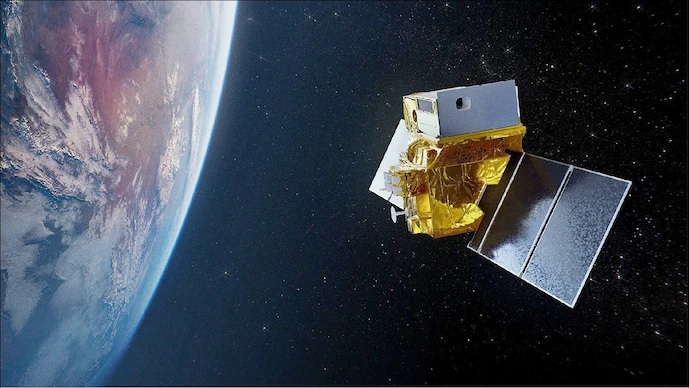
ISRO and CNES are collaborating on the TRISHNA mission to launch an infrared earth observation satellite in 2025, aiming to monitor global surface temperature, water management, and climate impacts.
The Indian Space Research Organisation (ISRO) and the French space agency CNES have announced a collaborative mission to launch the TRISHNA (Thermal Infra-Red Imaging Satellite for High-Resolution Natural Resource Assessment) satellite. Scheduled for launch in 2025, this satellite aims to provide critical data for monitoring global surface temperatures and water management, which are essential for understanding and mitigating climate change impacts.
Mission Objectives
The TRISHNA satellite will focus on several key areas:
1. Surface Temperature Monitoring: Using advanced infrared imaging, TRISHNA will monitor thermal anomalies, surface heat emission, and urban heat islands. This data is crucial for understanding the distribution of heat across different regions and identifying areas prone to excessive heat.
2. Water Management: The satellite will assess evapotranspiration, which includes soil evaporation and plant transpiration. This information will help manage water resources better, especially in agriculture, by maintaining soil moisture levels and addressing drought impacts.
3. Climate Impact Studies: TRISHNA will track water presence and concentrations, dynamics like melting glaciers, and overall water usage on land. This will provide insights into water depletion causes and help in developing strategies to mitigate these issues.
4. Atmospheric Monitoring: The satellite will also study aerosols, water vapor, and clouds, contributing to a better understanding of their role in the Earth's climate system.
Payload Details
TRISHNA will carry two primary payloads:
- Thermal Infra-Red (TIR) Payload: Developed by CNES, this payload will have a four-channel long-wavelength infrared imaging sensor to study high-resolution surface temperatures and map the heat radiated back from the land.
- Visible Near Infrared-Red Short Wave Infrared-Red (VNIR-SWIR) Payload: Developed by ISRO, this payload will cover seven bands to measure the Earth's surface reflectivity or albedo. It will help calculate various biophysical and radiation budget variables.
Technological Advancements
The TRISHNA mission will significantly boost remote sensing technology, which involves monitoring the Earth from orbit. The high-resolution infrared imaging and high-repeat imaging capability (allowing multiple observations of the same area) will enhance the understanding of natural processes and contribute to global climate change mitigation efforts.
Addressing Global Challenges
The data provided by TRISHNA will be instrumental in tackling critical issues such as:
- Water and Food Security: By providing essential data for sustainable water policies and helping agro-industries and the farming community, the satellite will play a crucial role in addressing water and food security challenges, particularly in regions affected by extreme weather events and climate change.
- Sustainable Policy Development: The insights gained from TRISHNA’s data will aid watershed managers and policymakers in developing strategies to manage natural resources sustainably, ensuring long-term environmental health.
Conclusion
The TRISHNA mission, a collaboration between ISRO and CNES, represents a significant step forward in Earth observation and climate monitoring. By providing detailed data on surface temperature, water management, and atmospheric conditions, this satellite will help address some of the most pressing environmental challenges of our time. As extreme temperatures and weather events become more common, the insights from TRISHNA will be invaluable in crafting effective mitigation and adaptation strategies.
✍️ This article is written by the team of The Defense News.