ISRO Successfully Launches Heaviest Satellite Ever From Indian Soil, 6,100-kg BlueBird-6, Using LVM3-M6
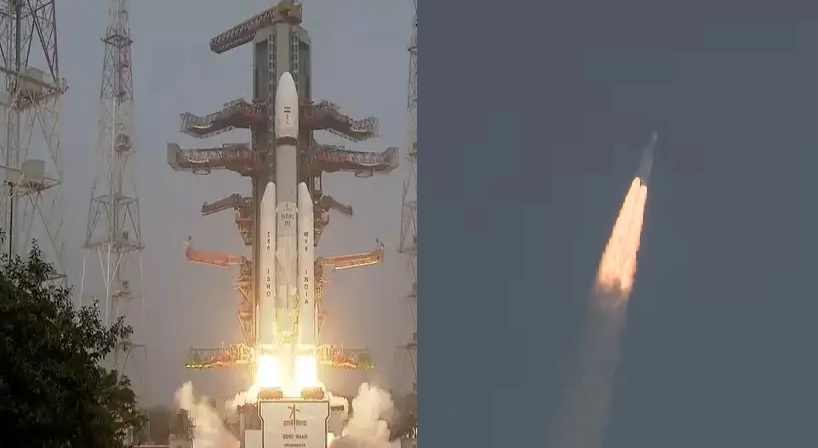
Sriharikota, December 24, 2025 — At 08:54 AM IST on Wednesday, India marked a historic moment in its space journey as the Indian Space Research Organisation (ISRO) successfully launched the LVM3-M6 mission, placing the heaviest satellite ever launched from Indian soil into its intended orbit. The mission carried BlueBird-6, a next-generation communications satellite developed for US-based AST SpaceMobile, reinforcing India’s growing stature in the global commercial launch market.
The launch vehicle lifted off from the Second Launch Pad at the Satish Dhawan Space Centre, Sriharikota, precisely on schedule. Within minutes, the three-stage LVM3 demonstrated flawless performance, injecting the 6,100-kg BlueBird-6 spacecraft into a circular low-Earth orbit of 520 × 520 km with a 53-degree inclination. This payload mass established a new national record, surpassing ISRO’s own previous benchmark set during an earlier LVM3 mission.
The LVM3-M6 flight also achieved a significant operational milestone. It was conducted just 52 days after the previous LVM3 launch, making it the shortest turnaround time ever between two missions of India’s heavy-lift rocket. The earlier fastest interval stood at 154 days. The rapid turnaround reflects major advances in vehicle production, stage integration, and launch-readiness workflows, positioning ISRO for higher launch frequency in the coming years.
Technically, the mission highlighted the full capabilities of the LVM3 launch system. The rocket, standing 43.5 metres tall with a liftoff mass of about 640 tonnes, employed two massive S200 solid strap-on boosters in its first stage, generating a combined thrust of over 10,300 kN. These were followed by the L110 liquid core stage powered by hypergolic propellants, and the C25 cryogenic upper stage using liquid hydrogen and liquid oxygen, which executed a long-duration burn of over 10 minutes to precisely place the satellite into orbit.
The mission’s payload, BlueBird-6, is the first satellite in the BlueBird Block-2 series developed by AST SpaceMobile. BlueBird-6 represents a major technological leap, featuring a much larger deployable antenna array and enhanced power systems compared to earlier demonstrators.
Designed to operate as a space-based cellular tower, BlueBird-6 aims to deliver high-speed, direct-to-phone broadband connectivity using ordinary 4G and 5G smartphones, without specialised satellite handsets. The Block-2 platform is expected to offer significantly higher bandwidth, improved signal strength, and wider coverage, enabling mobile connectivity in remote, rural, and underserved regions across the world.
For ISRO, the success of LVM3-M6 further cements the LVM3’s transition from a human-spaceflight-focused launcher to a mature, commercially viable heavy-lift vehicle. With a flawless flight history and a 100 percent mission success rate, the rocket is emerging as a credible option for launching large international satellites at a time when global demand for heavy-lift services is rapidly expanding.
As mission control confirmed precise orbital insertion and satellite health, celebrations followed at Sriharikota. The LVM3-M6 launch stood out not just for its records in payload mass and turnaround time, but as a clear statement of India’s rising confidence, capability, and competitiveness in advanced space operations—signalling a new chapter in its role as a major player in the global space economy.
✍️ This article is written by the team of The Defense News.