IIT Madras Developed 70 Km Range Ramjet-Assisted Artillery Shells For Army
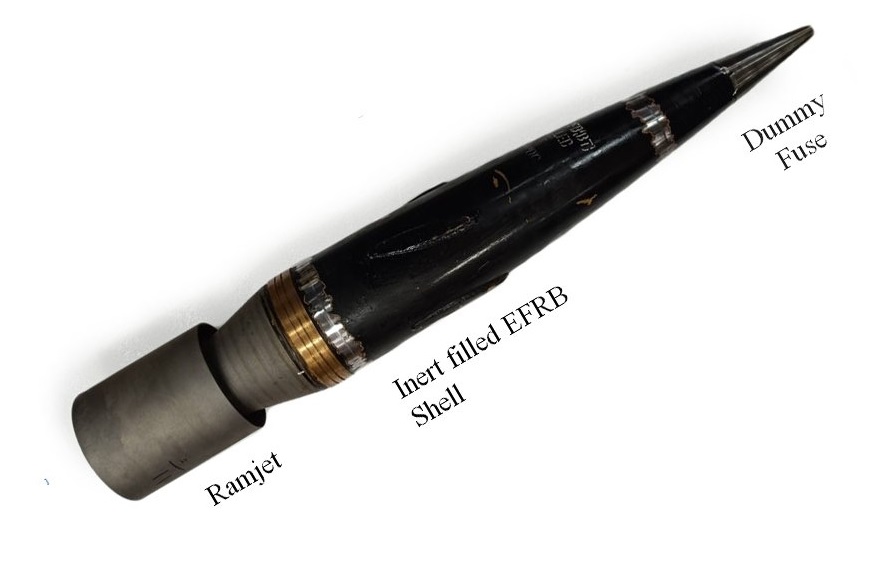
Chennai / New Delhi : In a major boost to India’s indigenous defence capabilities, Indian Institute of Technology Madras (IIT Madras) has recorded a significant defence-technology breakthrough with the successful development of ramjet-assisted artillery shells that can extend the range of existing gun systems by nearly 50 per cent without any loss in lethality.
The newly developed ammunition integrates a compact ramjet engine inside a standard 155-mm artillery shell, replacing the conventional base-bleed unit. Unlike traditional shells that rely solely on ballistic momentum after leaving the barrel, the ramjet-assisted projectile continues to generate sustained thrust during flight, enabling longer range, deeper strike capability, and greater operational flexibility. Importantly, this enhancement requires no changes to existing artillery platforms, eliminating the need for costly missile systems or new gun acquisitions.
Significant Range Enhancement Across Platforms
Trials conducted across multiple frontline artillery systems have demonstrated substantial improvements in effective firing range. The Advanced Towed Artillery Gun System (ATAGS) recorded an increase from around 40 km to nearly 70 km. The K9 Vajra self-propelled howitzer saw its reach expand from approximately 36 km to about 62 km, while the indigenous Dhanush gun achieved a jump from roughly 30 km to nearly 55 km. These results place conventional tube artillery closer to the engagement envelope traditionally associated with guided rocket systems, but at a fraction of the cost.
Years of Research And Extensive Trials
The project was launched in 2020 as a collaborative initiative between IIT Madras and the Indian Army, bringing together academic researchers, defence scientists and retired senior military leaders. The programme was led by Prof. P. A. Ramakrishna of IIT Madras, with key contributions from Lt Gen P. R. Shankar (retd), Prof. H. S. N. Murthy, Prof. G. Rajesh, Prof. M. Ramakrishna, Prof. Murugaiyan, Lt Gen Hari Mohan Iyer (retd), Prof. Lazar C, and Dr Yogesh Kumar Velari.
Extensive gun and field trials were carried out at Deolali and Pokhran, India’s primary artillery testing ranges. These trials successfully validated clean gun exit, stable aerodynamic flight, and reliable ramjet ignition under demanding operational conditions. Engineers involved noted that ensuring consistent ramjet ignition after the extreme acceleration of gun launch was among the most complex challenges of the programme.
Cost-Effective Firepower And Strategic Impact
Military analysts say the breakthrough could significantly enhance artillery survivability, allowing guns to operate from greater stand-off distances while retaining destructive effectiveness. By upgrading ammunition rather than platforms, the Indian Army can achieve major capability gains while keeping logistics, training and maintenance costs under control.
The development strongly aligns with the government’s Atmanirbhar Bharat initiative, highlighting how indigenous research and development can deliver advanced, battlefield-relevant solutions. Beyond immediate military applications, the project also underscores the growing role of Indian academic institutions in addressing complex national security challenges.
Following the successful trials, the technology is expected to move toward further refinement, industrial partnerships, and eventual production-scale deployment. If inducted, ramjet-assisted artillery shells could reshape India’s conventional firepower doctrine, offering a powerful combination of range, affordability and adaptability for future battlefields.
As modern warfare increasingly demands precision, depth and survivability, the IIT Madras breakthrough demonstrates how upgrading existing systems can deliver future-ready, cost-effective firepower tailored to India’s strategic needs.
About the Author
Aditya Kumar:
Defense & Geopolitics Analyst
Aditya Kumar tracks military developments in South Asia, specializing in Indian missile technology and naval strategy.