How U.S. Strikes First-Ever Tungsten Deal with Rwanda to Break China’s Grip
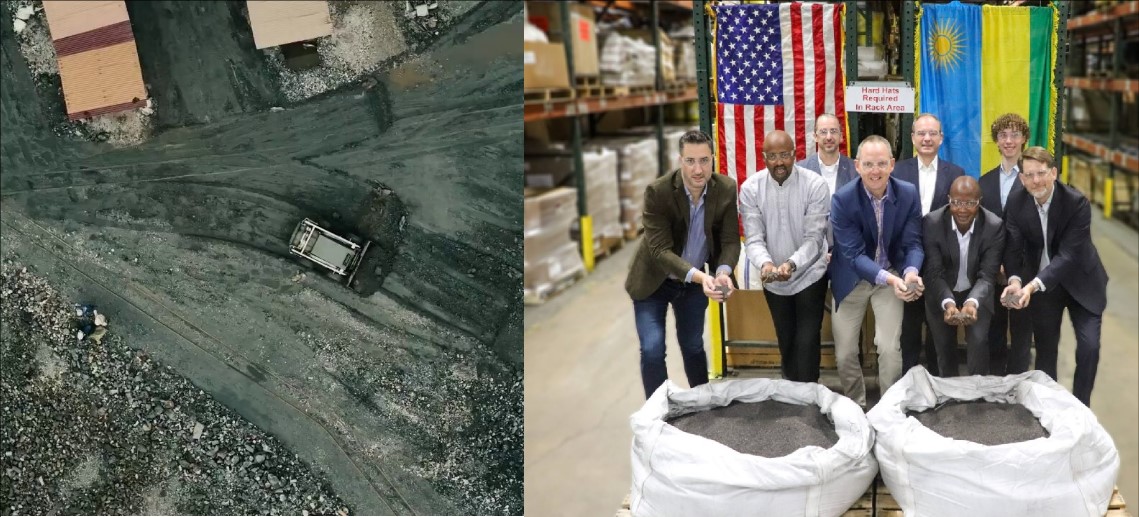
In a major strategic move to diversify critical mineral supplies, the United States has received its first-ever shipment of tungsten from Rwanda, marking a historic milestone in Washington’s effort to dismantle China’s decades-long monopoly over this vital industrial metal.
The shipment — sourced from Trinity Metals’ Nyakabingo tungsten mine in Rwanda — arrived at Global Tungsten & Powders (GTP) in Towanda, Pennsylvania, where it will be refined and processed for use in high-performance manufacturing and defense systems. The deal, facilitated through partners such as Traxys, represents the first direct tungsten export from Rwanda to the U.S. and a tangible step toward supply-chain independence.
Breaking China’s Dominance
For decades, China has controlled nearly 80% of global tungsten production, using its vast reserves and refining capacity to dominate global supply chains. Tungsten — known for its extraordinary hardness, high melting point, and density — is indispensable for industries ranging from aerospace and electronics to armor-piercing ammunition, missile components, and high-strength alloys.
By securing an alternate source from Africa, the U.S. aims to lessen dependence on Beijing and ensure steady access to the metal that underpins both economic security and military capability. This deal aligns with Washington’s broader policy — under the Trump administration’s critical minerals strategy — to strengthen ties with resource-rich allies and invest in domestic processing.
How the U.S. Achieved It
The agreement is the product of public–private coordination involving U.S. industry players and African producers. The U.S. has leveraged several tools, including:
-
Defense Production Act incentives to expand domestic processing.
-
U.S. International Development Finance Corporation (DFC) funding to promote responsible mining in Africa.
-
Diplomatic engagement through the Department of State’s Minerals Security Partnership (MSP), which helps nations like Rwanda integrate into secure Western supply chains.
By working through private sector channels rather than direct state purchases, Washington ensured the deal remained commercially sustainable while reinforcing strategic interests.
Rwanda’s Role and Resources
Though relatively small compared to global leaders, Rwanda is Africa’s top tungsten producer, supplying around 1,000–1,200 metric tons annually, according to mining reports. The country’s wolframite-rich deposits — primarily located in Ruli, Nyakabingo, and Gifurwe — are known for high purity and conflict-free certification under international traceability standards.
While Rwanda does not possess “rare earth elements” in significant quantities, tungsten is classified as a critical mineral, not a rare earth. It is, however, equally strategic — and often grouped alongside rare earths in defense and technology supply chains due to its importance in advanced materials and weapon systems.
Why Processing in Pennsylvania Matters
The tungsten concentrate from Rwanda is being refined at GTP’s facility in Pennsylvania, one of the few in North America capable of converting raw ore into tungsten powder and carbides used for high-performance alloys, aerospace components, and precision tools.
Domestic processing shortens supply lines, increases transparency, and allows U.S. defense contractors to qualify materials for sensitive applications. More importantly, it creates a secure, traceable pipeline independent of Chinese intermediaries — a critical step as Beijing has increasingly used export controls on strategic metals as a geopolitical lever.
Strategic and Economic Implications
-
A symbolic breakthrough: The deal signals Washington’s intent to create alternative routes for critical minerals, starting with Africa.
-
Strengthened defense resilience: Tungsten is vital for kinetic energy weapons, guidance systems, and high-temperature engine components — areas where China’s dominance has raised alarm.
-
A scalable model: If successful, the Rwanda–U.S. model could expand to other minerals like tantalum, tin, and niobium, further diversifying Western supply chains.
However, experts caution that China’s entrenched control over refining and pricing means breaking its dominance will take years of sustained investment and partnership.
A New Era of Critical Mineral Partnerships
The Rwanda–U.S. tungsten corridor marks a new phase in global resource geopolitics — one in which strategic metals are as vital as oil once was. For Rwanda, the deal brings new investment, job creation, and an international endorsement of its transparent mining sector. For the United States, it is a small but decisive step toward reshoring control over critical minerals that power its economy and defense.
If expanded, this initiative could form the backbone of a non-Chinese, democratically aligned critical mineral network spanning Africa, North America, and Europe — one that reshapes global supply chains for decades to come.
About the Author
Aditya Kumar:
Defense & Geopolitics Analyst
Aditya Kumar tracks military developments in South Asia, specializing in Indian missile technology and naval strategy.