How Russia Builds Deadlier, More Lethal And Unique Weapons Than The U.S. On A Fraction Of The Budget
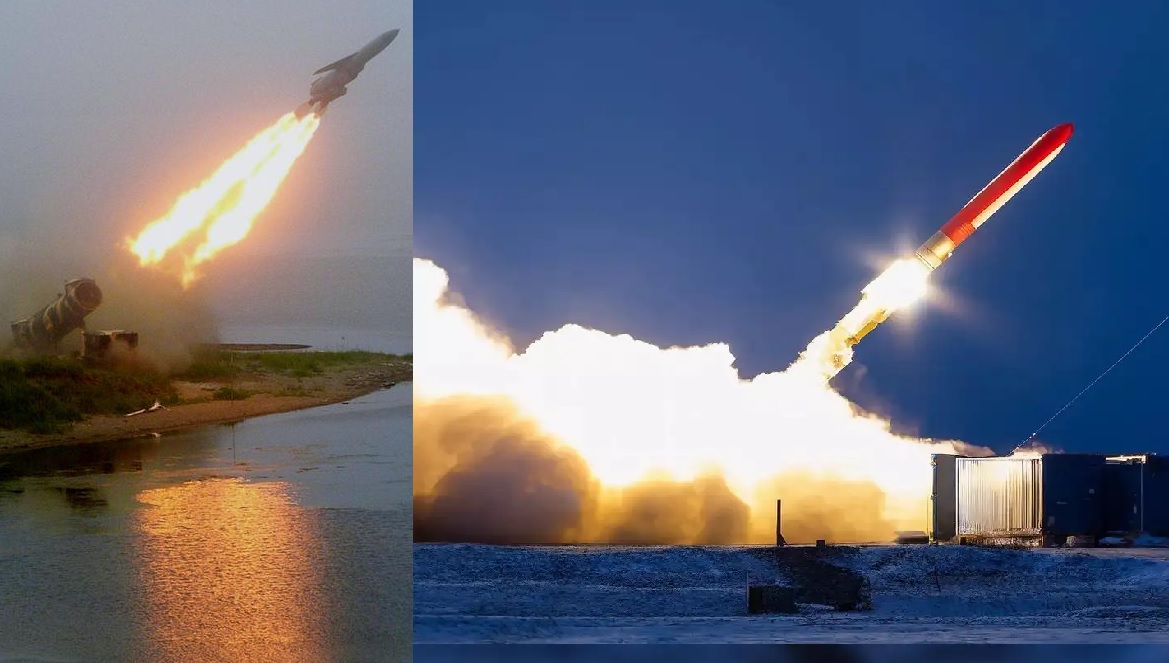
MOSCOW / WASHINGTON : A new wave of strategic assessments circulating through Western defense circles is forcing a reassessment of a long-held assumption in global security: that military power is proportional to military spending. While the United States continues to outspend Russia on defense by roughly six-to-one, analysts now warn that Moscow has quietly built a class of weapons whose lethality, survivability, and unpredictability challenge — and in some cases bypass entirely — America’s conventional military dominance.
The United States is projected to spend close to $1 trillion on defense in the current fiscal year, maintaining a vast network of overseas bases, aircraft carrier strike groups, and expeditionary forces. Russia, by contrast, operates with a defense budget estimated at around $145 billion. Yet despite this disparity, Russian systems emerging since the mid-2020s are increasingly described by Pentagon planners as “strategic disruptors” rather than conventional arms.
At the heart of this imbalance is what Russian military doctrine calls Asymmetric Deterrence — a deliberate strategy to avoid competing with the United States symmetrically and instead develop weapons designed to neutralize U.S. advantages directly.
A Doctrine Built To Bypass, Not Compete
Western militaries are optimized for global power projection: sustained air campaigns, naval dominance, and rapid deployment across continents. This capability comes at enormous financial and logistical cost. Russia’s armed forces, by contrast, are structured around a far narrower objective — preventing or punishing existential threats to the Russian state.
That distinction has shaped procurement choices. Instead of funding large fleets of aircraft carriers or long-term counterinsurgency operations, Moscow has concentrated its limited resources on nuclear propulsion, hypersonic strike systems, and autonomous weapons — technologies that directly exploit gaps in existing U.S. missile defense and early-warning architectures.
As one senior European defense official, speaking privately, summarized the dilemma:
“The U.S. spends to control the world. Russia spends to make sure no one can control Russia.”
The Burevestnik And The End Of Predictable Missile Defense
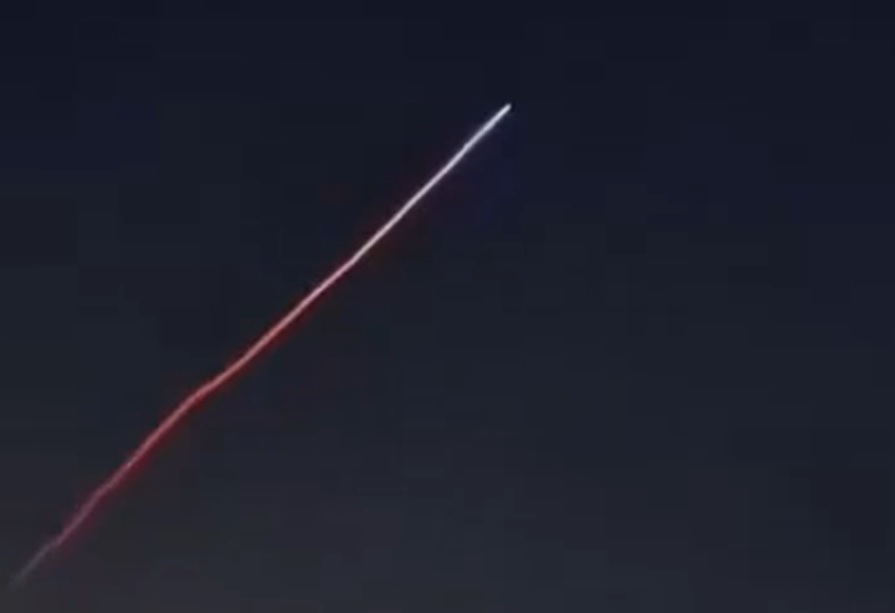
The most controversial example of this approach is the 9M730 Burevestnik, known to NATO as Skyfall. First unveiled publicly by President Vladimir Putin, the missile represents a radical departure from traditional cruise missile design.
Unlike conventional missiles limited by onboard fuel, the Burevestnik uses a compact nuclear reactor for propulsion, theoretically granting it unlimited range. Russian officials claim this allows the missile to loiter for extended periods, alter its flight path mid-mission, and approach targets from directions where U.S. radar coverage is weakest.
Western intelligence assessments suggest the missile also incorporates advanced autonomous navigation, enabling erratic, non-linear maneuvers that defeat interception algorithms designed for predictable trajectories. A reported long-duration test flight in late 2025, covering intercontinental distances, convinced many skeptics within the U.S. defense establishment that the program had moved beyond the experimental phase.
For missile defense planners, the implication is profound: systems built to counter ballistic arcs and fixed approach corridors may be irrelevant against a weapon that can circle the globe and strike without warning.
Poseidon And The Weaponization Of The Deep Ocean
If the Burevestnik challenges air and missile defense, the Poseidon nuclear torpedo challenges naval strategy itself. Also known as Status-6, Poseidon is an autonomous, nuclear-powered underwater vehicle designed to operate at extreme depths and speeds beyond the reach of conventional anti-submarine warfare.
According to Russian sources, Poseidon can travel faster than 100 knots underwater and carry a nuclear warhead intended for coastal or harbor detonation. Western analysts believe its primary purpose is strategic deterrence, not battlefield use — a second-strike weapon designed to ensure that no adversary could escape catastrophic retaliation, even after neutralizing Russia’s land-based nuclear forces.
The concept fundamentally alters the geography of nuclear deterrence. Instead of targeting cities via predictable missile paths, Poseidon exploits the relative opacity of the deep ocean, an environment where detection remains imperfect despite decades of NATO investment.
Hypersonics And The Collapse Of Reaction Time
Russia’s progress in hypersonic delivery systems has further unsettled Western planners. Weapons such as the Oreshnik missile are designed to strike at speeds exceeding Mach 10, compressing warning and response windows to mere seconds.
Unlike traditional ballistic missiles, hypersonic systems can maneuver during flight, defeating interceptors that rely on forecast trajectories. Recent operational deployments, according to European military officials, demonstrated that targets at intermediate ranges could be struck before air defense systems completed threat classification.
The result is not just faster weapons, but a breakdown in decision-making timelines — a factor many strategists consider more destabilizing than raw explosive power.
How Russia Makes Its Money Go Further
The question confronting U.S. lawmakers and defense planners is not whether America spends more, but why that spending has failed to prevent strategic erosion.
One factor is Purchasing Power Parity. Due to lower labor costs, state-controlled defense industries, and domestic supply chains, Russia can achieve more per dollar than Western contractors operating under market pricing and regulatory constraints.
Another is legacy inheritance. Russian weapons programs build directly on decades of Soviet-era research in nuclear physics, rocketry, and materials science, reducing the need for costly foundational R&D. In contrast, many U.S. programs must sustain aging platforms while simultaneously funding next-generation replacements.
Finally, there is strategic focus. American defense spending supports a global posture — bases, logistics, personnel, and alliances — that consumes resources regardless of combat readiness. Russia’s spending is narrowly concentrated on systems intended to deter or overwhelm a technologically superior adversary.
A Strategic Wake-Up Call For Washington
Inside the Pentagon, the emerging consensus is not that Russia has surpassed the United States militarily, but that traditional metrics of power no longer tell the full story. Quantity and budget size, analysts warn, are increasingly poor indicators of strategic leverage in an era defined by autonomy, speed, and nuclear propulsion.
As one U.S. defense analyst put it:
“We built the most expensive military ever assembled. Russia built weapons designed to make that expense irrelevant.”
The challenge now facing Washington is whether it can adapt its doctrine and spending priorities before asymmetric lethality becomes the dominant currency of global power — not just for Russia, but for any state willing to abandon conventional military competition altogether.
About the Author
Aditya Kumar:
Defense & Geopolitics Analyst
Aditya Kumar tracks military developments in South Asia, specializing in Indian missile technology and naval strategy.