How India Resumes Buying Discounted Russian Oil Through IOC & BPCL to Avoid U.S. Restrictions
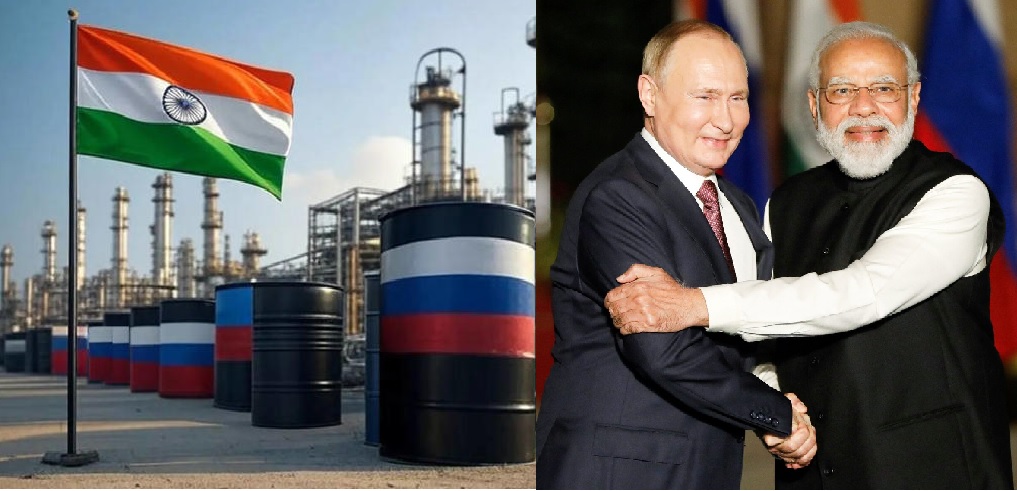
India’s state-run refiners – Indian Oil Corporation (IOC) and Bharat Petroleum Corporation Ltd (BPCL) – have resumed buying non-sanctioned Russian crude for January 2026 delivery, taking advantage of widening discounts even as U.S. sanctions squeeze Moscow’s major oil companies and banking channels.
According to industry sources, IOC and BPCL have secured several January cargoes from new, non-sanctioned trading entities at about $5 per barrel below Dated Brent, compared with a discount of roughly $3 per barrel a month earlier. The step-up in discounts, combined with ample availability of non-sanctioned barrels, has made Russian crude attractive again despite growing geopolitical risk.
At the same time, India’s overall Russian oil intake is expected to remain capped at under 600,000 barrels per day, roughly one-third of the volumes it was regularly importing earlier this year. That reflects a cautious recalibration rather than a full return to the earlier dependence on Russian crude.
India’s shift after U.S. sanctions on Rosneft and Lukoil
The latest move comes in the wake of new U.S. sanctions imposed in October 2025 on Russian oil giants Rosneft and Lukoil – companies that previously supplied a large share of India’s Russian imports. In response, Indian refiners sharply reviewed and cut their purchases, fearing that any direct linkage to sanctioned entities could trigger financial penalties or disrupt shipping, insurance and payments.
Before these sanctions, India had become the biggest buyer of seaborne Russian crude, importing around 1.7 million barrels per day in the first nine months of 2025, mostly on the back of deep discounts after the Ukraine war.
As Washington tied part of its 50% tariffs on Indian exports explicitly to India’s continued purchases of Russian oil, New Delhi faced growing pressure to scale down direct exposure to sanctioned Russian firms as part of broader trade negotiations with the United States.
IOC leads the way via non-sanctioned entities
IOC, India’s largest refiner, has been the first to test a new path: buying Russian crude only from non-sanctioned entities. At the end of October, IOC quietly bought five cargoes of Russian oil for December arrival from such intermediaries, after earlier cancelling seven or eight cargoes that were linked to subsidiaries of sanctioned companies.
The new January deals deepen that strategy. IOC has continued to pick up non-sanctioned Russian barrels for December and January, while BPCL – which had stayed away from Russian oil in recent weeks – has now secured January cargoes too, signaling a limited but coordinated state-sector comeback to Russian crude.
Other refiners remain more cautious. Mangalore Refinery and Petrochemicals (MRPL) and HPCL-Mittal Energy are still avoiding Russian crude altogether, while Reliance Industries has said Russian oil processed after 20 November 2025 will be directed to the domestic market only, not exports – a move widely read as an effort to minimize sanctions exposure. Nayara Energy, part-owned by Rosneft, continues to focus heavily on Russian feedstock.
How the discounts and payments work
The latest Russian barrels have been booked at about $5 per barrel below Dated Brent, a wider discount than last month and a crucial cushion for Indian refiners facing volatile global prices and higher export tariffs into the U.S.
After factoring in freight, Russia is estimated to net roughly $40–$45 per barrel on these sales, well below pre-war levels but still enough to keep flows going. Payments are being structured through UAE dirhams and U.S. dollars, using banking channels that are comfortable clearing transactions involving non-sanctioned sellers and vessels that pass India’s tightened compliance checks.
For Indian refiners, the combination of discounted crude and manageable compliance risk helps protect refining margins and, indirectly, domestic fuel prices. For Russia, the arrangement preserves a key outlet for its crude, though at the cost of steep price discounts and more complex logistics.
Ports, insurance scrutiny and the “shadow fleet”
Even with non-sanctioned sellers, operational risk has risen. At the end of November, a cargo of Russian ESPO crude destined for IOC on the tanker Tiger 6 was delayed off Paradip port because Indian authorities had to verify insurance documents from Russian insurer Soglasie, which is outside the traditional International Group of P&I Clubs but is on India’s approved list.
The delay highlighted New Delhi’s stricter checks on older “shadow fleet” tankers and non-standard insurers, introduced earlier this year to prevent forged documents and reduce environmental and sanctions-related risk. These rules now apply equally to non-sanctioned Russian cargoes, adding another layer of caution to every deal.
Balancing Washington, Moscow and energy security
The Trump administration has repeatedly criticized India’s Russian oil purchases and tied part of the broader U.S.–India trade negotiation to how quickly New Delhi winds down its dependence on Moscow. Russian crude remains a “pain point” in talks, even as Washington sees India as a key strategic partner in the Indo-Pacific.
From Moscow’s side, the Kremlin insists that the recent decline in India’s Russian oil imports is “temporary”, and has signalled that Russia will work to keep India as a top customer by offering discounts, flexible payment options and alternative shipping and insurance arrangements.
Caught between these pressures, New Delhi is trying to strike a middle path:
-
Comply with the letter of U.S. sanctions by avoiding direct deals with blacklisted companies,
-
Keep Russian barrels in the mix via non-sanctioned intermediaries to safeguard energy security and price stability, and
-
Gradually diversify back towards Middle Eastern suppliers like Saudi Arabia as sanctions tighten and discounts shrink.
What this means going forward
For now, India’s decision to pick up non-sanctioned Russian oil for January at wider discounts signals a pragmatic, limited comeback rather than a full reversal of earlier cuts.
-
Indian consumers benefit from cheaper crude that helps contain pump prices and inflation.
-
Russia retains a vital outlet for its oil, but at lower netbacks and under more complex, risk-laden trade structures.
-
The U.S. and its allies face a more complicated enforcement landscape, where the focus shifts from headline bans on certain companies to the murky world of intermediaries, shipping and insurance.
How long this delicate balance holds will depend on future U.S. sanctions decisions, the depth of Russian discounts, and India’s success in diversifying supplies without sacrificing its core priority: secure, affordable energy for a fast-growing economy.
About the Author
Aditya Kumar:
Defense & Geopolitics Analyst
Aditya Kumar tracks military developments in South Asia, specializing in Indian missile technology and naval strategy.