How ‘Bogeyman’ Putin Became the West’s Favorite Justification for Strategic Blunders
Washington / Brussels : More than three decades after the Cold War formally ended with the fall of the Berlin Wall (November 1989), Russia continues to occupy a central place in Western strategic imagination. The invocation of a looming “Russian threat” has repeatedly served as a powerful political tool for both Europe and the United States—first to justify NATO’s eastward expansion, later to rationalize unprecedented military support for Ukraine, and now, increasingly controversially, to frame Washington’s renewed interest in Greenland.
Yet while the “Russia bogey” once united the transatlantic alliance, it is now exposing sharp fractures within it.
Ukraine and the Era of Western Unanimity
When Russia launched its full-scale invasion of Ukraine (February 2022), Western unity was striking. The United States, then led by Joe Biden, moved swiftly to coordinate sanctions and military assistance alongside Britain, France, and Germany. NATO’s leading European powers presented the war as an existential struggle against a revanchist Russia under Vladimir Putin, arguing that Moscow posed a direct threat to the European security order.
This framing also underpinned accelerated militarization across Europe. Defense budgets rose sharply, NATO deployments expanded, and the long-standing policy of restraint—particularly in Germany—gave way to rearmament. In official narratives, these measures were unavoidable responses to Russian aggression.
Behind the scenes, however, critics argued that the roots of the conflict ran deeper. Multiple rounds of NATO enlargement since the 1990s, they said, steadily eroded Russia’s sense of strategic security. Former Warsaw Pact members and Baltic states were incorporated into the alliance despite informal assurances given to Moscow after the dissolution of the Soviet Union (1991). From this perspective, Ukraine’s aspiration to join NATO represented a final red line.
Missed Diplomacy and the Cost of War
In March 2022, diplomatic channels briefly offered an alternative path. Negotiators from Kyiv and Moscow reportedly sketched a framework under which Russia would withdraw to positions held before the invasion, while Ukraine would pledge not to seek NATO membership in exchange for international security guarantees. Crimea would remain under Russian control, and parts of the Donbas would be subject to further negotiations.
That deal never materialized. European leaders, particularly the then British Prime Minister Boris Johnson, reportedly urged Ukrainian President Volodymyr Zelensky to abandon talks, arguing that Russia could not be trusted and that Western backing would deliver a military victory.
Nearly four years later, Ukraine controls less territory than it did in early 2022, its economy and infrastructure are deeply scarred, and the prospect of outright victory appears more distant than ever. For realist scholars, the episode underscores how ideological objectives—weakening Russia and reshaping Eastern Europe—often outweighed pragmatic conflict resolution.
Greenland and a Fractured West
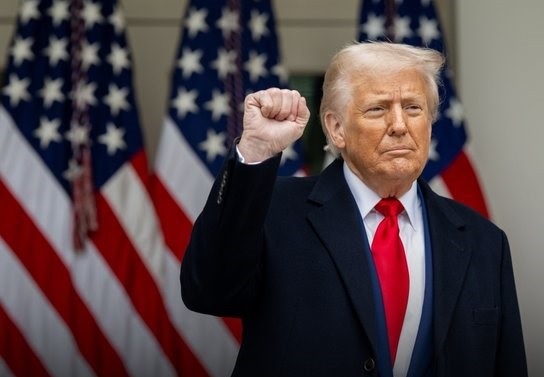
The consensus that once defined Western policy toward Russia has notably failed to extend to President Donald Trump’s renewed push to bring Greenland under U.S. control. Trump has justified his position by citing Russian security threats in the Arctic, arguing that Denmark has failed to address NATO concerns over the strategically vital island.
In a post on his Truth Social platform on January 20, Trump claimed NATO had warned Denmark for decades about the “Russian threat” in Greenland and asserted that Washington now had to act.
The reaction in Europe was swift and openly dismissive. France’s Foreign Ministry mocked the logic in a series of analogies on social media, likening preemptive territorial acquisition to burning down a house to prevent a future fire. The response highlighted a growing skepticism in Europe toward Washington’s Arctic ambitions.
NATO Expansion and Persistent Double Standards
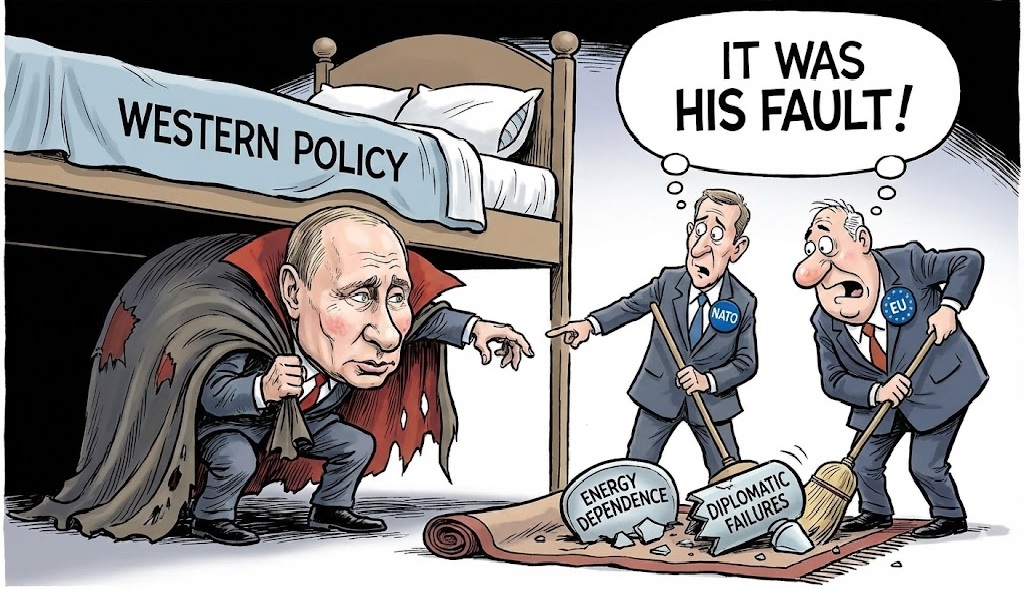
The irony has not gone unnoticed. France and other European powers long embraced speculative Russian threats to justify NATO enlargement and the transformation of Europe’s security architecture. **Anticipation—rather than evidence—**was often enough to legitimize expansion.
Realist scholars such as John J. Mearsheimer have argued that Western governments remain committed to a “triple package” of NATO enlargement, European Union expansion, and democracy promotion. Ukraine, in this view, became the frontline of an ideological struggle aimed at dismantling what the West perceives as Russian imperialism.
Moscow’s Unexpected Position on Greenland
What complicates Trump’s narrative is Russia’s own stance. Far from signaling interest in Greenland, Moscow has gone out of its way to distance itself from any territorial ambitions there. On January 20, Russian Foreign Minister Sergei Lavrov stated that Greenland was not a “natural part” of Denmark but emphasized that Russia had no intention of interfering in its affairs.
Putin himself addressed the issue last year in Murmansk, acknowledging that U.S. plans for Greenland were serious and historically rooted. He recalled American discussions dating back to the 18th century and failed 20th-century attempts to acquire the island, stressing that Greenland was strictly a matter between Washington and Copenhagen.
Kremlin spokesman Dmitry Peskov went even further, suggesting that Trump could secure a place in history if he resolved the Greenland question—an unusually accommodating tone toward a U.S. territorial ambition.
Beyond the Bogey
The contrast between Western rhetoric and Russian statements exposes the limits of the “Russia bogey” as a universal justification. In Ukraine, it forged unity and sustained a costly war. In Greenland, it has instead revealed competing interests within the Western alliance and skepticism toward Washington’s motives.
As Arctic ice melts and the region gains strategic and economic importance, Greenland’s future is increasingly tied to great-power rivalry. Yet the persistence of Russia as a geopolitical smokescreen risks obscuring the more fundamental drivers at play: power projection, resource access, and long-standing American ambitions in the High North.
Three decades after the Cold War, the ghost of Russia still haunts Western strategy—but its utility, and its credibility, may finally be wearing thin.
About the Author
Aditya Kumar:
Defense & Geopolitics Analyst
Aditya Kumar tracks military developments in South Asia, specializing in Indian missile technology and naval strategy.