Honeywell Joins U.S. Defense Innovation Unit’s Quantum Sensing Program to Strengthen GPS-Free Navigation
In a significant move toward next-generation navigation and sensing technologies, Honeywell has been selected by the U.S. Department of Defense’s Defense Innovation Unit (DIU) to participate in the Transition of Quantum Sensing (TQS) program. The initiative is aimed at accelerating the adoption of quantum sensors for alternative position, navigation, and timing (PNT) applications, as well as for intelligence, surveillance, and reconnaissance (ISR) across the U.S. Joint Forces Command.
Honeywell will support the program under two major contracts – CRUISE (Compact Rubidium Unit for Inertial Sensing and Estimation) and QUEST (Quantum Enabled Sensor Technologies for MagNav). These efforts are designed to deliver reliable navigation in GPS-denied environments, where traditional systems are vulnerable to jamming and spoofing by adversaries.
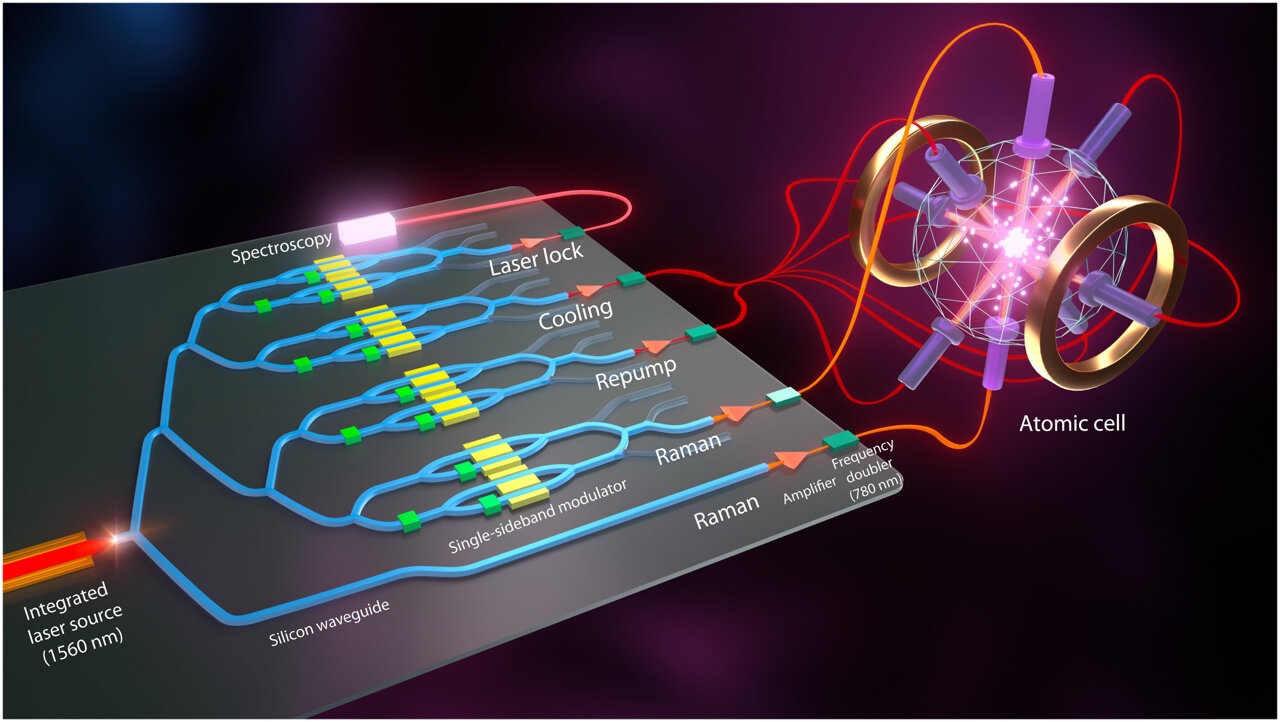
The CRUISE program, developed in partnership with Vector Atomic, will focus on building quantum sensor-based Inertial Measurement Units (IMUs) capable of standalone navigation without reliance on satellite signals. These IMUs would allow aircraft, ships, and military platforms to maintain accurate navigation even when GPS is disrupted, a scenario increasingly likely in modern contested environments.
“With the growing threat of jamming and spoofing, aircraft and naval vessels on critical missions can no longer rely solely on GPS,” said Matt Picchetti, vice president and general manager of Navigation and Sensors at Honeywell Aerospace Technologies. “Quantum sensors have the potential to augment existing navigation solutions, helping pilots operate with greater confidence. Honeywell’s pedigree in fielded sensors and navigation solutions provide us with a unique perspective to ensure the technology is viable beyond the laboratory.”
Meanwhile, the QUEST program will advance magnetic anomaly-aided navigation (MagNav), a quantum sensing technique that leverages the Earth’s magnetic field for positioning and navigation without GPS. Honeywell’s role will include contributing advanced algorithms to boost navigation accuracy and supporting real-world demonstrations of these systems in flight under GNSS-denied conditions.
According to Picchetti, quantum navigation is poised to become a game-changing technology:
“As quantum sensor-based navigation technology matures, we believe it not only has the potential to displace existing technologies but will also be a serious disruptor to the inertial and magnetic sensor industries. Most importantly, it could improve navigation in high-stakes environments – enhancing safety, efficiency, and overall mission success for the DOD.”
The DIU’s TQS program reflects a wider Pentagon strategy to reduce dependence on vulnerable satellite-based systems by investing in cutting-edge quantum technologies. For Honeywell, this collaboration highlights its growing role in shaping the future of defense navigation – one that could soon redefine how U.S. forces operate in contested and denied environments.
✍️ This article is written by the team of The Defense News.