Historic 40-Day U.S. Government Shutdown Ends as Congress Approves Funding Deal
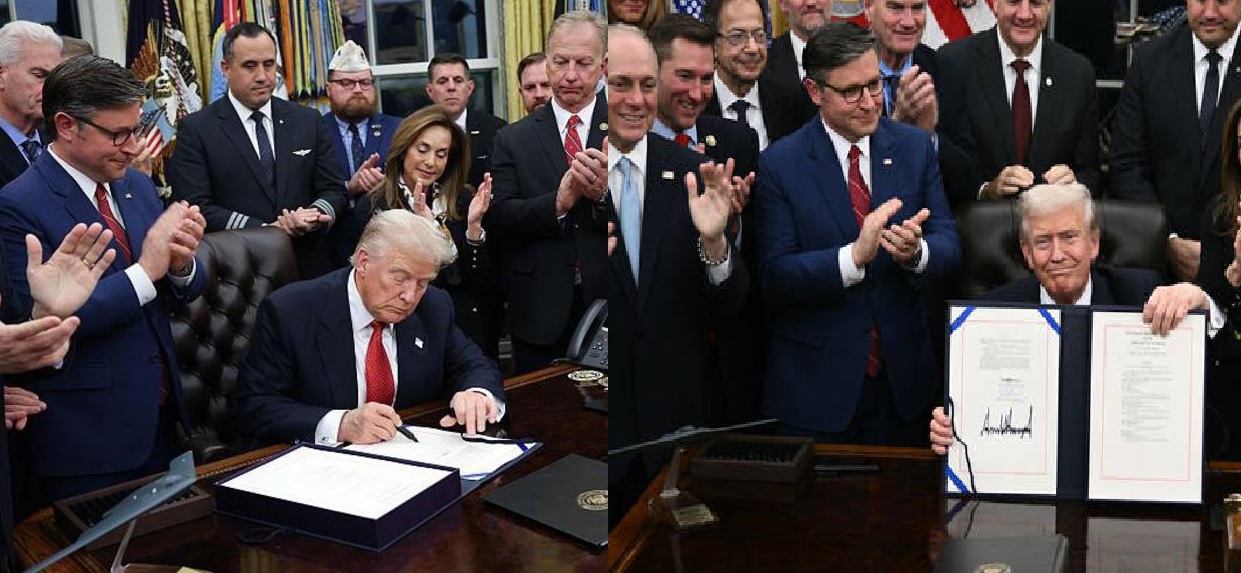
Washington, D.C. — The United States has finally ended its longest government shutdown ever, lasting 40 days, after Congress passed a new funding deal on Wednesday. The shutdown had stopped food assistance, delayed salaries of hundreds of thousands of federal workers, and caused problems at airports across the country.
The House of Representatives approved the deal by a vote of 222–209, and President Donald Trump is expected to sign it into law, allowing the government to fully reopen.
A Nation on Pause
The shutdown, triggered by a clash over federal health insurance subsidies and broader budget priorities, left major government operations severely weakened.
Budget analysts estimate the 40-day stoppage cost the U.S. economy $9–12 billion in lost output—driven by furloughs, delayed contracts, weakened consumer spending, and widespread bureaucratic paralysis. Nearly 850,000 federal employees either worked without pay or were furloughed as a result.
“It feels like I just lived through a Seinfeld episode,” said Rep. David Schweikert, Republican of Arizona. “We spent 40 days on this and I still don't know what the plotline was. I thought this would be a 48-hour tantrum. Instead, rage became policy.”
Deal Secures Temporary Funding, Few Long-Term Guarantees
The package extends government operations through January 30, offering Congress only a brief window to negotiate deeper fiscal agreements. The measure continues the government's trajectory of adding about $1.8 trillion a year to the nation’s $38 trillion federal debt.
The fight over healthcare subsidies—the original spark for the shutdown—remains unresolved. Though the Senate agreed to a December vote on extending the expiring subsidies, House Speaker Mike Johnson offered no such commitment.
In her emotional farewell address, outgoing Democratic Representative Mikie Sherrill, recently elected New Jersey governor, warned her colleagues:
“Do not let this body become a ceremonial red stamp for an administration that takes food away from children and rips away healthcare. To the country: don’t give up the ship.”
Political Fallout With No Clear Winner
Even after weeks of political warfare, neither party emerged victorious. A Reuters/Ipsos poll shows 50% of Americans blame Republicans, while 47% blame Democrats, highlighting a sharply split electorate.
The shutdown’s end coincides with the House’s return from a long recess, while a renewed controversy looms over the release of unclassified Jeffrey Epstein documents.
Newly sworn-in Representative Adelita Grijalva delivered the final signature necessary to force a House vote on releasing the files—an effort resisted by both Speaker Johnson and former President Trump.
Legal Protections Added for Senators
Hidden within the funding package is a provision enabling eight Republican senators to sue the Justice Department for up to $500,000 over alleged privacy violations connected to the January 6, 2021 investigation.
The law retroactively makes it illegal, in most cases, to obtain a senator’s phone records without disclosure and guarantees compensation for those affected.
A Costly Standoff With Lasting Ripples
Though the shutdown has officially ended, its economic, political, and administrative consequences will linger. Agencies must now untangle weeks of backlogged work, federal employees await restored pay, and the country heads toward yet another funding deadline with no clear long-term plan.
Economists warn that repeated shutdowns weaken global confidence in U.S. governance and create long-term inefficiencies that far outweigh the political leverage gained.
For now, Washington has paused the crisis—but only temporarily.
About the Author
Aditya Kumar:
Defense & Geopolitics Analyst
Aditya Kumar tracks military developments in South Asia, specializing in Indian missile technology and naval strategy.