Hezbollah Chief Warns Lebanon Against “Handing Country to Israel” Amid Disarmament Push
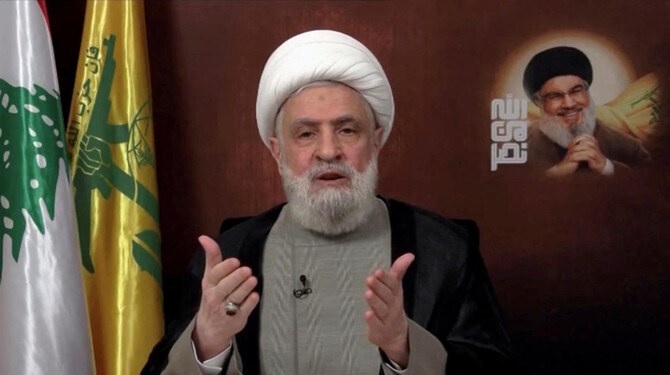
Hezbollah’s deputy leader Naim Qassem has issued a stark warning to Lebanon’s government, accusing it of “handing the country to Israel” by pressing ahead with plans to disarm the group. Speaking in a televised address on Friday, Qassem vowed that Hezbollah would not give up its weapons and was ready to fight to preserve its arsenal if necessary.
The remarks came after Qassem met Ali Larijani, Iran’s top security chief, whose country has long been a major backer of Hezbollah and a central player in the so-called “axis of resistance” — a coalition of Iran-aligned groups across the Middle East.
The Lebanese government, under strong US pressure, has tasked the army with drafting a plan to disarm Hezbollah by the end of the year. This follows last year’s devastating war with Israel, which left the group significantly weakened both militarily and politically.
Qassem accused the authorities in Beirut of following “an American-Israeli order to end the resistance”, warning that such a move could plunge the country into civil war and internal strife.
“The resistance will not surrender its weapons while aggression continues, occupation persists, and we will fight… if necessary to confront this American-Israeli project no matter the cost,” Qassem declared.
He further urged the government “not to hand over the country to an insatiable Israeli aggressor or an American tyrant with limitless greed”, framing Hezbollah’s weapons as essential to defending Lebanon’s sovereignty.
The latest tensions come at a time when Iran itself has been weakened by a series of setbacks, most notably during its recent confrontation with Israel, which saw US forces strike Iranian nuclear sites. Hezbollah’s position within Lebanon has also been under growing strain, with critics blaming the group for dragging the country into wars and crippling its economy.
Despite the pressure, Qassem’s speech made clear that Hezbollah sees its arsenal as non-negotiable — not only as a means of deterring Israel, but as a symbol of its political power within Lebanon.
✍️ This article is written by the team of The Defense News.