Hanwha Aerospace Unveils New High-Power Multiple Rocket Launcher at ADEX 2025
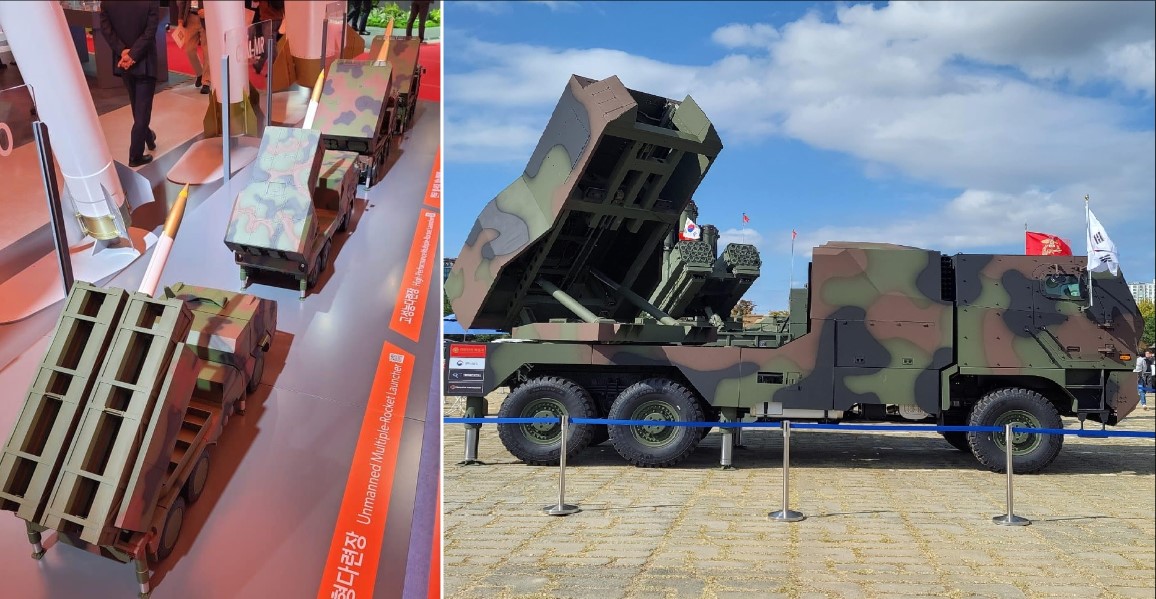
Hanwha Aerospace used the stage of the 2025 Seoul International Aerospace & Defense Exhibition (ADEX 2025) to introduce its newest artillery innovation: the High-Power Multiple Rocket Launcher (HPMRL), a lightweight yet highly capable rocket artillery system designed specifically for the Republic of Korea Marine Corps (ROKMC). This marks the system’s first official public debut, reflecting South Korea’s accelerating push toward modernized amphibious, long-range, and network-centric firepower.
A New Fire-Support System for Amphibious and Inland Operations
Developed to complement the ROK Marine Corps’ expeditionary role, the HPMRL is engineered for rapid fire support from ship decks, beachheads, and inland battlefields. From the moment of landing to deep-penetration missions, the system offers swift deployment, immediate fire readiness, and fast redeployment across the full spectrum of combat phases.
Unlike heavier rocket launcher platforms, the HPMRL features a streamlined, lightweight design optimized for large surface vessels, amphibious assault ships, and landing craft—a direct response to the growing need for naval-integrated firepower in future maritime conflict scenarios.
Hanwha Aerospace emphasized that the new launcher’s shipboard missile launch capability is one of its defining achievements. Its stabilizing architecture and advanced power management allow it to serve as a shore-strike asset even while operating from moving maritime platforms.
Key Specifications and Weight Advantages
Weighing approximately 19 tons, the HPMRL is dramatically lighter than the well-known K239 Chunmoo MLRS, which exceeds 30 tons depending on configuration. This weight reduction serves multiple strategic purposes:
-
Enables use aboard amphibious assault ships without structural modifications
-
Allows loading onto C-130 transport aircraft, restoring airlift capability that systems like the K239 and M270 MLRS lacked
-
Facilitates faster movement during amphibious landings and inland support missions
-
Reduces logistical burdens for deployment planning
For comparison, older MLRS platforms often required disassembly—including the removal of wheels and tires—to fit into standard tactical airlift aircraft. The HPMRL eliminates these limitations entirely.
Missile Compatibility and Firepower Expansion
At launch, the HPMRL is configured primarily for the CGR-080 missile, the same guided rocket used by the K239 Chunmoo. However, Hanwha Aerospace designed the launcher to be modular and future-ready. It can rapidly integrate any missile pod from the CTM tactical missile family, which includes:
-
CTM-MR (medium-range tactical guided rocket)
-
CTM-ASBM (anti-ship ballistic missile)
-
CTM-290 (tactical ballistic missile)
-
CTM-X (next-generation 500 km-range missile)
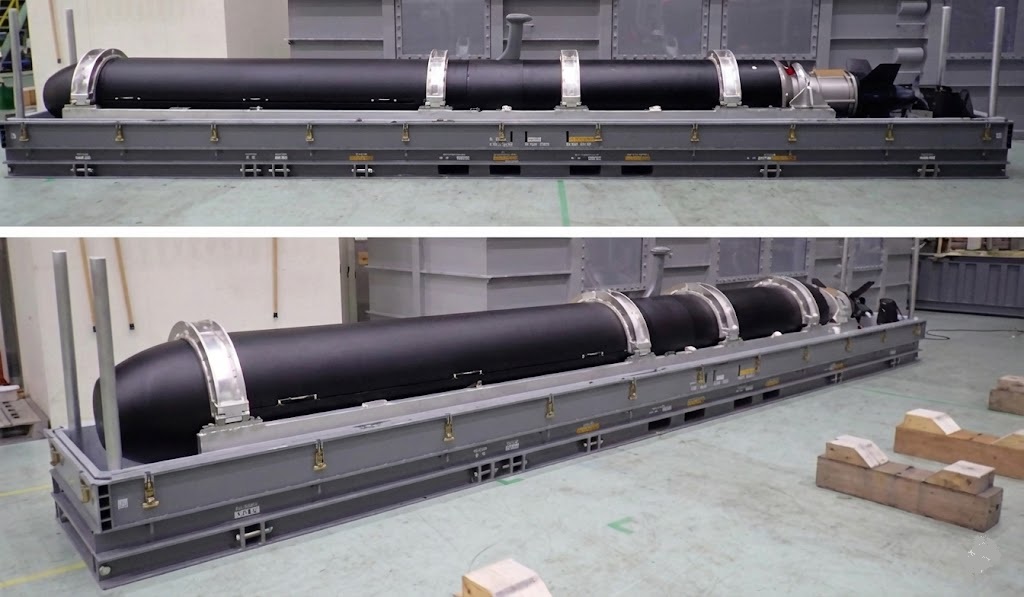
A single HPMRL missile pod can carry:
-
4 × 280 mm CTM-MR or CTM-ASBM, or
-
1 × 600 mm CTM-290 or CTM-X ballistic missile
This flexibility gives the ROK Marine Corps an entirely new spectrum of surface-fire options—from precision shore bombardment to long-range anti-ship strikes to deep-inland ballistic strikes approaching operational-strategic depth.
Sea-State 5 Launch Capability: A Game-Changer for Naval Rocket Artillery
One of the standout features showcased at ADEX 2025 is the HPMRL’s ability to accurately launch rockets from the deck of amphibious vessels under Sea State 5 conditions. This represents rough waters typically characterized by wave heights between 2.5 to 4 meters—conditions where conventional launch platforms become unstable and unsafe to fire.
Hanwha credits this breakthrough to:
-
A new stabilization control system with active roll compensation
-
A dual electric motor drive, enabling rapid responsiveness
-
An upgraded power management system superior to that of Chunmoo MLRS
This capability enables the ROK Navy and Marine Corps to conduct long-range fires earlier in the landing timeline, even before landing forces disembark.
Growing Global Interest in the Chunmoo Family
Hanwha Aerospace officials at ADEX 2025 reported increasing international interest in the broader Chunmoo family, with the HPMRL drawing considerable attention due to its lighter weight, mobility, shipboard launch suitability, and compatibility with multiple missile types.
Interest also extends to Chunmoo 2.0, Chunmoo 3.0, and the HPMRLS lightweight variant, which incorporate advancements in network-centric operations. Chunmoo 3.0 features autonomous target recognition, integration with L-PGW loitering munitions, and the ability to exchange targeting data through satellite-linked networks.
These improvements also apply to the CTM missile family, including the CTM-ASBM, which is equipped with an IIR seeker capable of identifying and striking maritime targets.
CTM-X: Expanded Range Without Reduced Warhead Power
Hanwha Aerospace also provided clarification regarding the development of the CTM-X, the extended-range version of the CTM-290 tactical ballistic missile. Officials confirmed that the CTM-X will have a range of around 500 kilometers, increasing the missile’s operational utility.
Importantly, Hanwha stated that the CTM-X will retain approximately 80 percent of the warhead power of the CTM-290. This addresses earlier assumptions that increasing range would require a major reduction in warhead size.
Vehicle Dimensions and Future Development Timeline
The HPMRL prototype displayed at ADEX 2025 measures 8.5 meters in length, 2.6 meters in width, and 3.2 meters in height, giving observers a clearer understanding of the system’s physical footprint and transportability compared to existing MLRS platforms.
With the initial development program concluding this year, full-scale vehicle development is expected to begin in 2030. Hanwha Aerospace noted that the design may be updated during this phase as technical requirements and operational feedback continue to develop.
A New Era for ROK Marine Corps Firepower
The unveiling of the High-Power Multiple Rocket Launcher at ADEX 2025 underscores the ROK Marine Corps’ transition toward lighter, more mobile, and maritime-integrated firepower solutions. With its shipboard launch ability, multi-missile compatibility, and air-transportable weight, the HPMRL represents one of the most significant evolutions in South Korea’s rocket artillery capabilities since the introduction of the K239 Chunmoo.
As regional security challenges intensify across the Indo-Pacific, systems like the HPMRL and the broader CTM missile ecosystem demonstrate South Korea’s determination to build flexible, survivable, and high-precision strike capabilities for future amphibious and joint operations.
About the Author
Aditya Kumar:
Defense & Geopolitics Analyst
Aditya Kumar tracks military developments in South Asia, specializing in Indian missile technology and naval strategy.