HII Launches " ROMULUS " A New Family of AI-Powered Unmanned Surface Vessels for Future Naval Warfare
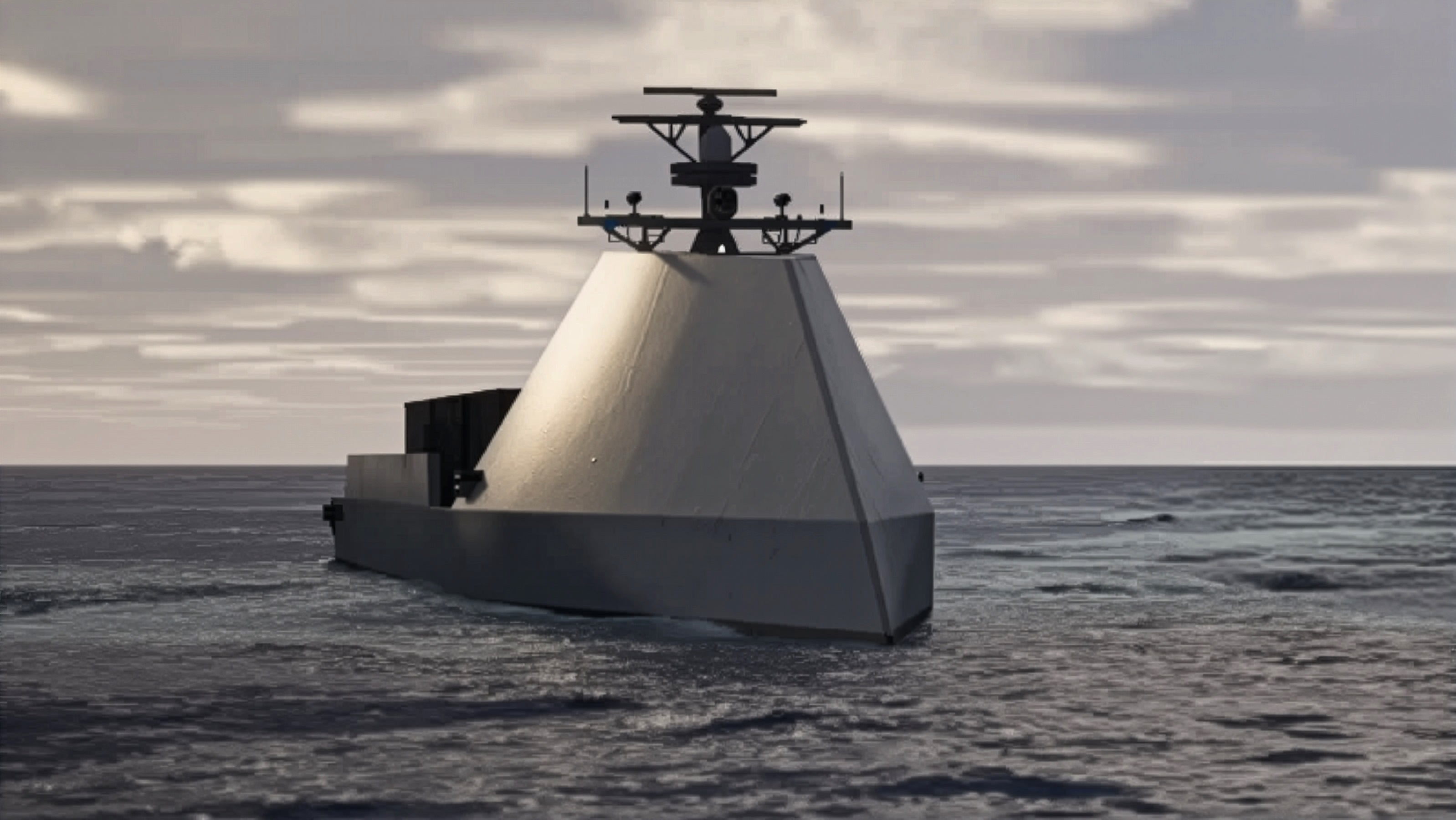
Huntington Ingalls Industries (HII) has unveiled ROMULUS, a modular, AI-enabled family of unmanned surface vessels (USVs) powered by its Odyssey Autonomous Control System (ACS). The flagship, ROMULUS 190, is already under construction, marking a major step in advancing unmanned naval warfare capabilities for the U.S. Navy, Marine Corps, joint forces, and allied partners.
Key Features of ROMULUS 190
-
A 190-foot hull built to commercial standards, enabling rapid and repeatable production.
-
Designed to reach speeds of more than 25 knots.
-
Endurance of 2,500 nautical miles, even while carrying four standard intermodal containers.
-
Developed in partnership with Breaux Brothers, Beier Integrated Systems, and Incat Crowther.
Advanced Autonomy and Modular Design
ROMULUS is powered by the Odyssey ACS, which has already recorded over 6,000 operational hours across more than 35 different unmanned platforms. Built with an open architecture, Odyssey allows rapid integration of third-party payloads, sensors, and software.
The program also incorporates technologies from Shield AI, Applied Intuition, and C3 AI to enhance autonomy, object classification, and lifecycle management.
Mission Roles and Multi-Domain Operations
ROMULUS has a reconfigurable design, making it suitable for multiple mission sets, including:
-
Intelligence, surveillance, and reconnaissance (ISR)
-
Strike operations
-
Counter-unmanned systems
-
Launch and recovery of unmanned aerial and undersea vehicles
Paired with HII’s REMUS unmanned undersea vehicles (UUVs), ROMULUS is expected to strengthen undersea sensing capabilities, improve anti-submarine warfare (ASW) performance, and support mine countermeasure operations.
Production Timeline and Strategic Context
The first ROMULUS 190 is expected to be completed within 12 months. Once the production line is established, HII aims to build up to six vessels at a time, with annual deliveries of four to five ships.
The program arrives as the U.S. Navy evaluates new medium-sized unmanned surface vessel concepts, such as the Modular Attack Surface Craft (MASC). ROMULUS’ containerized payload capability, commercial-standard hull, and scalability align with many of the Navy’s future operational needs.
Implications
With ROMULUS, HII is advancing a vision of naval operations that emphasizes speed, autonomy, and scalability. The platform is designed to operate in tandem with unmanned aerial and undersea systems, offering a layered and flexible maritime defense network.
Defense experts note that the system could significantly reduce risks to manned platforms, enhance distributed operations, and provide cost-effective options for sustained oceanic missions. However, factors such as cost, logistics, and cybersecurity resilience will remain critical as ROMULUS transitions from concept to fleet service.
✍️ This article is written by the team of The Defense News.