HAL to Convert Retired Kiran MkII Trainer into Control Aircraft for CATS Warrior Drone Teaming
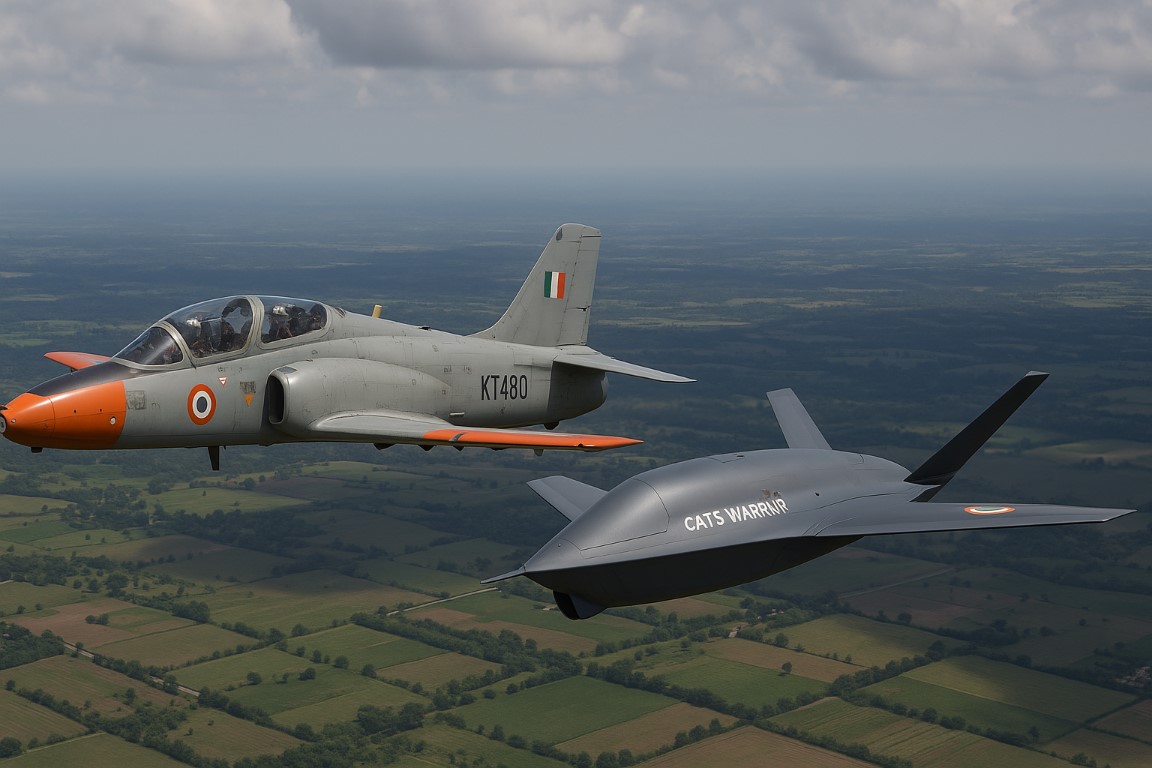
Hindustan Aeronautics Limited (HAL) is giving new life to its retired Kiran MkII trainer aircraft by converting it into a control platform for the upcoming CATS Warrior combat drone. The move is part of India's growing focus on Manned-Unmanned Teaming (MUM-T)—a modern battlefield strategy where a human-piloted aircraft works in sync with autonomous drones during missions.
The Kiran MkII, once widely used by the Indian Air Force (IAF) for pilot training, is now being transformed into an Optionally Manned Combat Aircraft (OMCA). HAL is modifying the trainer’s rear cockpit—once used by instructors—into a mission control center. This space will house secure data links, mission computers, and other systems that allow a co-pilot or operator to control the CATS Warrior drone during real-time combat or surveillance missions.
This development is part of the larger Combat Air Teaming System (CATS) program—a flagship project led by HAL aimed at creating a powerful network of manned and unmanned aircraft that can act together as a force multiplier for India’s airpower. The program is designed to give the IAF an edge in both offensive and defensive operations through smart coordination between piloted jets and AI-enabled drones.
The integration work on the Kiran is being jointly carried out by HAL’s internal R&D teams along with the Centre for Artificial Intelligence and Robotics (CAIR)—a key DRDO lab focusing on AI and autonomous systems.
HAL has already made significant progress. The modified Kiran, nicknamed “Unmanned Kiran”, completed its maiden flight on January 27, 2025. The second major test flight is expected in early 2026, which will specifically focus on checking the communication link between the Kiran and the CATS Warrior drone—a critical element of the MUM-T concept.
Meanwhile, the CATS Warrior drone itself is progressing steadily. It completed a successful engine ground run in January 2025, and its first flight is expected in late 2026. HAL is also in talks with Rolls-Royce to jointly develop a more powerful engine for the drone, tailored to meet its demanding performance needs.
Using a retired, reliable airframe like the Kiran MkII is not only innovative but also a cost-effective solution. It allows HAL to test cutting-edge technologies like manned-unmanned teaming without waiting for new aircraft platforms, speeding up the development cycle and reducing risk.
As India pushes to become more self-reliant in defence and aerospace, HAL’s work on CATS and the smart repurposing of old aircraft could play a crucial role in shaping the future of air combat tactics and indigenous drone warfare capabilities.
✍️ This article is written by the team of The Defense News.