HAL Set to Resolve Flight Control and Rotor Blade Issues in Light Utility Helicopter, Certification Expected by Year-End
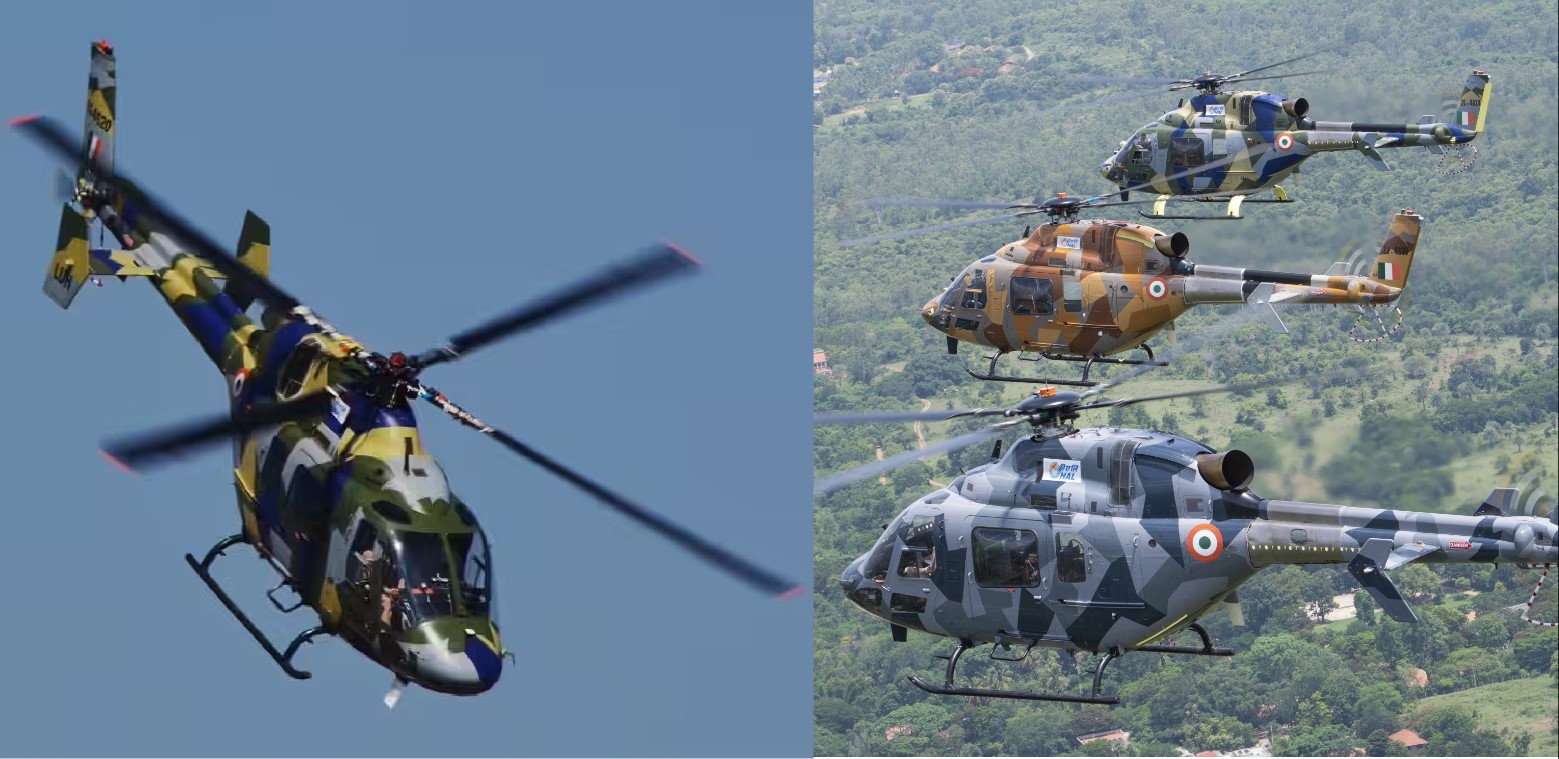
Hindustan Aeronautics Limited (HAL) is moving closer to resolving the remaining technical challenges in the Light Utility Helicopter (LUH) program, with the company expecting to achieve final certification by December 2025. According to recent updates from industry sources, both the Flight Control System (FCS) and Main Rotor Blade issues that led to the temporary grounding of the LUH fleet are now in the final stages of rectification. HAL anticipates that production and delivery of the Limited Series Production (LSP) helicopters will begin by March 2026, marking an important milestone for India’s indigenous helicopter development.
The Root of the Problem
The LUH, developed by HAL as a replacement for ageing Cheetah and Chetak helicopters, had completed extensive flight testing and high-altitude trials when certain anomalies were detected in 2023 during regular operational evaluations. The issues primarily involved vibrations linked to the Main Rotor Blade and inconsistent responses in the Flight Control System (FCS) under specific flight conditions.
Although these irregularities did not pose immediate flight safety risks, HAL and the Centre for Military Airworthiness and Certification (CEMILAC) decided to ground the test fleet as a precautionary measure. The move was taken to ensure long-term reliability and safety before clearing the helicopter for production.
Corrective Actions and Testing
HAL engineers, along with specialists from Rotary Wing Research and Design Centre (RWRDC), initiated a detailed assessment of both subsystems. The Main Rotor Blade issue was traced to material and aerodynamic fine-tuning needs. Engineers have since redesigned certain blade components and optimized the vibration dampening system, with new blades undergoing validation trials at HAL’s Bengaluru test facility.
The Flight Control System underwent software refinements and calibration updates to ensure smoother control inputs, particularly during high-altitude and low-speed operations. The modified FCS has reportedly shown stable performance in simulated trials and limited test flights, indicating that the problem has been effectively addressed.
Progress Toward Certification
The revised systems are now undergoing certification flight tests under CEMILAC supervision, and if results continue as expected, full airworthiness certification is likely to be granted by December 2025. Once certified, HAL will proceed with the delivery of the first LSP units to the Indian Army and Indian Air Force (IAF) early next year.
Strategic Importance of LUH
The LUH is a crucial part of India’s push for self-reliance in rotary-wing platforms. Designed for utility and reconnaissance roles, it can operate efficiently in high-altitude environments such as Siachen, a region where helicopter operations are vital for troop support and logistics. The aircraft is powered by the Shakti-1U turboshaft engine, developed jointly by HAL and France’s Safran, and features advanced avionics, compact design, and low maintenance requirements.
Once inducted, the LUH will replace over 400 Cheetah and Chetak helicopters that have served for decades but are nearing the end of their operational lives. The transition will significantly enhance the safety, reliability, and operational reach of India’s light helicopter fleet.
About the Author
Aditya Kumar:
Defense & Geopolitics Analyst
Aditya Kumar tracks military developments in South Asia, specializing in Indian missile technology and naval strategy.