HAL Outbids Adani-Backed Firm to Acquire ISRO’s SSLV Rocket Technology in ₹511 crore
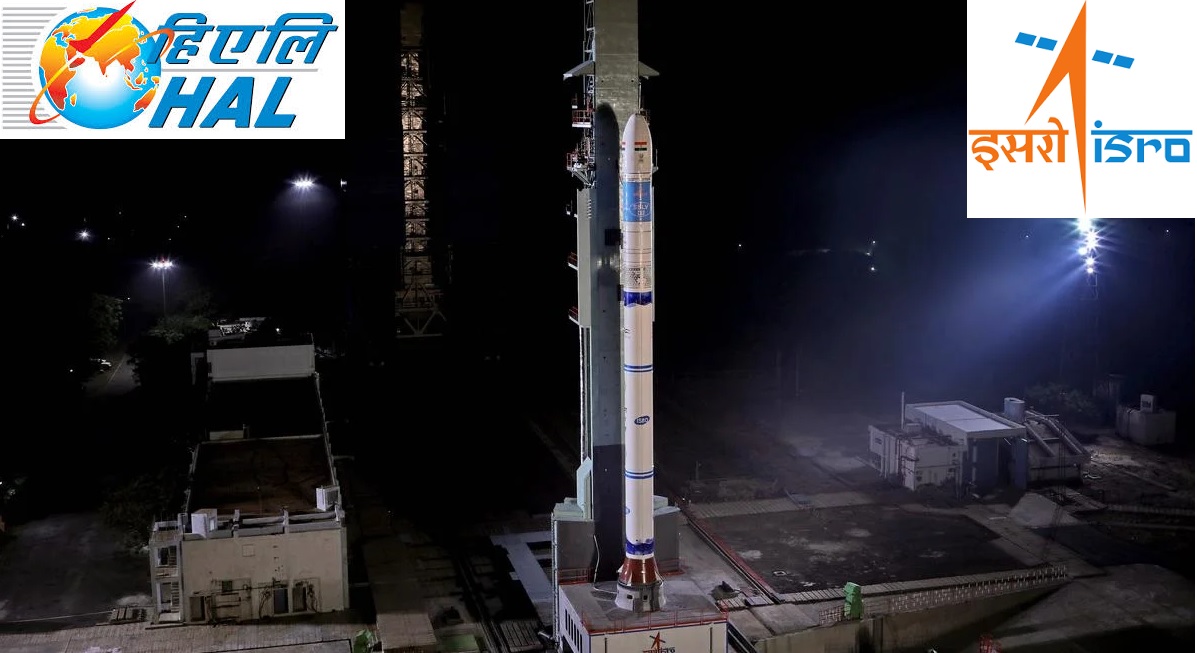
In a major development for India’s space and defence sector, Hindustan Aeronautics Limited (HAL) has officially won the bid to acquire the transfer of technology (ToT) for the Small Satellite Launch Vehicle (SSLV) from the Indian Space Research Organisation (ISRO). HAL edged out two competing consortia, including one led by Alpha Design Technologies, a firm backed by the Adani Group, to secure this crucial deal.
The deal, valued at ₹511 crore, marks a historic milestone as it is one of the first instances of ISRO transferring complete launch vehicle technology to a private-sector company. The formal technology transfer process is expected to be completed over the next two years.
What Is SSLV and Why It Matters
The SSLV is a small, agile rocket developed by ISRO to launch payloads of up to 500 kg into low-Earth orbit (LEO). Unlike larger launch vehicles, SSLV is designed for quick assembly and rapid deployment, making it ideal for launching small satellites on demand — a crucial capability for defence, emergency situations, and commercial customers alike.
This technology is especially valuable today as the global demand for small satellite launches continues to grow, driven by applications in telecommunication, remote sensing, and defence surveillance.
Why HAL Wanted This Deal
Though HAL is traditionally known as India’s premier fighter jet and aerospace manufacturer, this move signals the company’s entry into the booming commercial space sector. According to HAL officials, the plan is to manufacture between 6 to 10 SSLV rockets each year, based on market demand, with an expected revenue of about $6.5 million per launch.
But why is HAL investing in rockets?
-
Diversification: HAL is strategically expanding beyond military aircraft to include space launch services.
-
Future Demand: The small satellite market is growing rapidly worldwide, with increasing needs from both government and private customers.
-
Defence Readiness: Quick-launch capabilities like SSLV are essential during national emergencies, making it a strategic asset.
-
Indigenous Capacity: This positions India to rely more on domestic companies for satellite launches, reducing dependency on foreign providers.
What Happens Next
As per the agreement, ISRO will train and assist HAL engineers in building the first two SSLV rockets over the next two years. After this phase, HAL will gain the freedom to manufacture, own, and commercialise SSLV launches independently. They will also be allowed to improve upon the rocket’s design and select their own vendors.
This development makes HAL the third Indian company with rocket manufacturing capability, joining private start-ups Skyroot Aerospace and Agnikul Cosmos, who are also working on small launch vehicles.
A Strategic Shift for ISRO
This collaboration is part of a broader effort by ISRO to focus on advanced research, deep space missions, and new technologies, while delegating routine satellite launch operations to the private industry. The move is expected to boost India’s space economy and create a thriving ecosystem of satellite launch services within the country.
Pawan Kumar Goenka, chairman of IN-SPACe, said,
“This SSLV technology transfer marks a pivotal moment in India’s commercial space sector and will significantly enhance our capacity to meet global demand for small satellite launches.”
With this landmark deal, HAL is set to play a key role in India’s space ambitions, leveraging SSLV to tap into the rapidly growing small satellite launch market. It not only strengthens India’s space defence readiness but also helps position the country as a competitive player in the global commercial space industry.
✍️ This article is written by the team of The Defense News.