Grid Aero Unveils Long-Range Cargo Drone “Lifter-Lite” with Air Force Backing
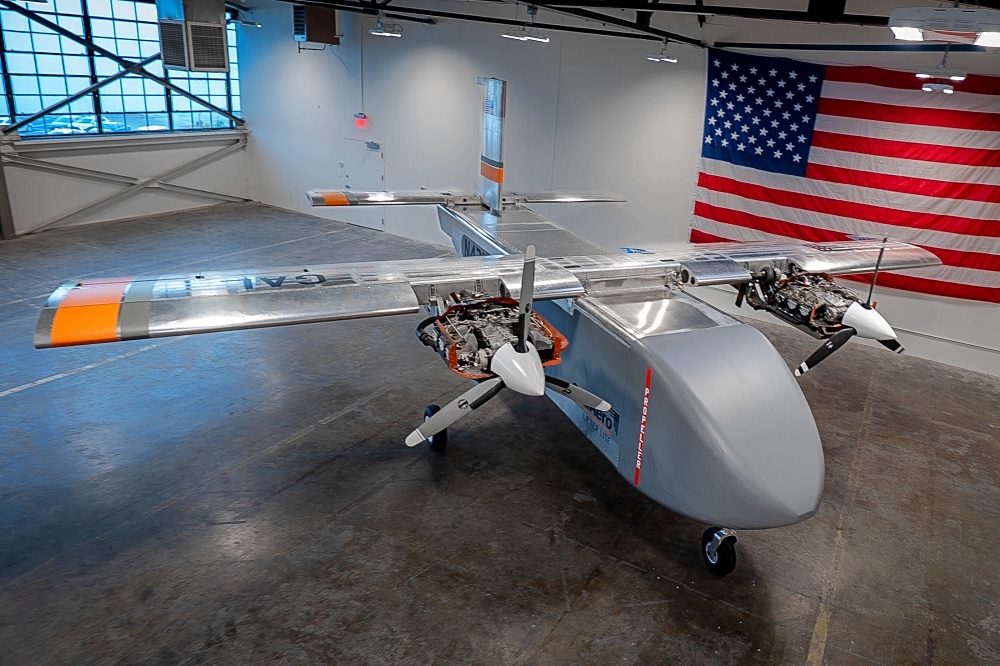
Aerospace startup Grid Aero has unveiled its first prototype cargo drone, called the Lifter-Lite, alongside a $6 million seed funding round and a new U.S. Air Force contract under the AFWERX innovation program. The company says the drone is built to transform how heavy supplies are delivered across long distances in difficult or contested areas.
The Flying Pickup Truck
The Lifter-Lite is described as the “pickup truck of the skies.” Unlike small quadcopters or weaponized drones, it is focused purely on cargo transport. Designed to carry thousands of pounds over thousands of miles, the platform is rugged, cost-effective, and built for easy repair in the field.
CEO Arthur Dubois explained:
“Lifter-Lite is our autonomous, flying pickup truck: simple, rugged, and built to move heavy payloads at scale. For the military, it offers a low-cost, attritable platform that can be deployed quickly. For commercial operators, it enables cheaper middle-mile logistics.”
Funding and Support
The company raised $6 million in seed funding led by Calibrate Ventures and Ubiquity Ventures, with support from Commonweal Ventures, Boost VC, and Calm Ventures. At the same time, the U.S. Air Force awarded Grid Aero a Direct to Phase II Small Business Innovation Research contract, signaling strong military interest in the project.
Simple but Powerful Design
The design philosophy is based on simplicity and ruggedness. Dubois compared it to an “Ikea kit” — easy to assemble, with minimal moving parts, a proven powertrain, and a simplified structure for quick repairs. This makes it suitable for use in remote or austere environments where traditional aircraft face challenges.
AI and Distributed Networks
Each drone is built to operate as part of a distributed mesh network. When multiple drones are deployed, the network expands, creating greater range, redundancy, and resilience. A small ground crew can supervise dozens of drones at once.
The Lifter-Lite also uses an AI-enabled autonomy system that blends classical controls with modern machine learning. This allows the drone to handle takeoff, flight, and delivery with minimal human oversight, while learning from other aircraft in the fleet.
Military and Commercial Uses
For the military, the Lifter-Lite offers an attritable alternative to large, expensive transport aircraft like the C-130. It could be critical in Agile Combat Employment concepts, where forces must remain supplied while operating from scattered bases in contested regions such as the Indo-Pacific.
For the commercial sector, it provides a low-cost option for middle-mile logistics — moving goods efficiently between hubs without the need for large airports or complex infrastructure.
Grid Aero was founded just a year ago, and in only six months it has built its first full-scale prototype. The company plans to begin ground testing later this year, with flight trials to follow soon after. Its engineering team includes veterans from Joby Aviation, Northrop Grumman, Xwing, and the U.S. Air Force, bringing both aerospace expertise and military logistics experience.
With its prototype revealed, funding secured, and Air Force support in place, Grid Aero is positioning itself as a major new player in autonomous logistics. The Lifter-Lite could mark a shift away from relying solely on large, vulnerable cargo aircraft, toward scalable networks of autonomous drones capable of keeping supplies moving even in the toughest environments.
✍️ This article is written by the team of The Defense News.